

A New Way to See the Light
Imagine stepping from a dim hallway into blazing sunlight and instantly having the perfect shade of sunglasses without waiting for a lens to darken. For decades, photochromic lenses—also known as transition lenses—were the only option for glasses that adjust to changing light. These lenses rely on ultraviolet (UV) light to trigger chemical dyes that darken the lens; they usually take a minute or more to reach full tint and sometimes underperform behind car windshields. In cold weather they respond even slower, fading more than five times longer when temperatures drop. That delay is inconvenient and can even be unsafe for drivers or athletes.
A new technology called electrochromic lenses is quietly emerging. Instead of waiting for sunlight, these smart lenses change tint when a tiny electric current flows through a multi‑layer stack. With the tap of a finger or an automatic sensor, electrochromic lenses darken or clear in about a second and work even inside cars or airplanes. This article explains how electrochromic lenses work, compares them with traditional photochromic lenses, explores their advantages and limitations and looks ahead at the future of adaptive eyewear.
What Are Electrochromic Lenses?
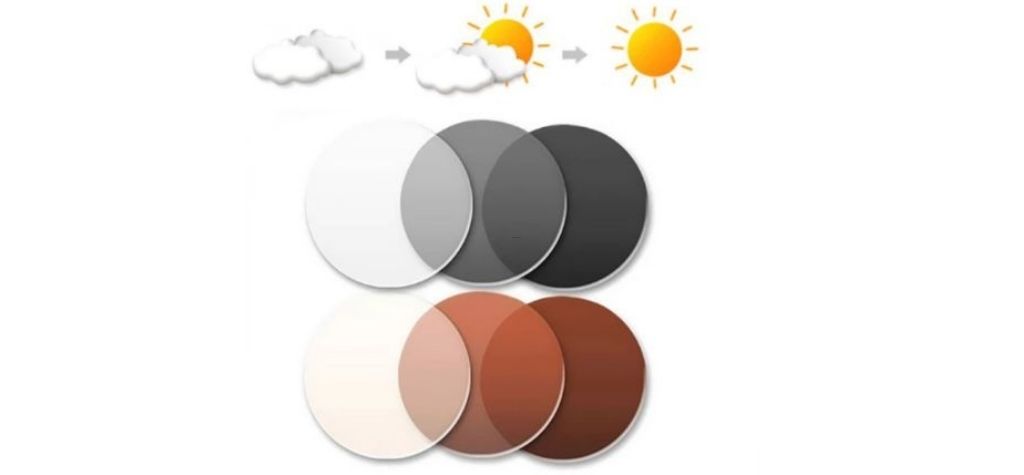
Electrochromic lenses are adaptive eyewear that changes its tint when a low voltage is applied. Unlike photochromic lenses that depend on UV light, electrochromic lenses use electricity to move ions inside the lens material. This movement changes the way the lens absorbs or transmits visible light, making it darker or lighter on demand. Because the reaction is reversible, removing or reversing the voltage returns the lens to its original state. In many systems, the tinted state can be maintained with little or no extra power, so the battery is used only when switching.
Key definition: Electrochromic materials are substances that change color or transparency when an electric field is applied. Electrochromic devices (such as smart windows or lenses) consist of layers—an electrochromic layer, an ion‑conducting electrolyte and a counter electrode—sandwiched between transparent electrodes.
In eyewear, electrochromic lenses typically include:
- Substrate layer – optical‑grade plastic or glass providing structure and clarity.
- Electrochromic layer – a special material (often a transition metal oxide or organic polymer) that changes optical properties when ions move in or out.
- Ion conductor – a thin electrolyte that allows ions to shuttle during switching.
- Counter electrode – balances the electrochemical reaction and contributes to tint uniformity.
- Transparent conductive layers – carry the electrical signal across the lens while remaining clear.
When a low voltage (typically 1–5 V) is applied, ions migrate into the electrochromic layer, causing it to absorb more light and darken. Reversing the voltage drives the ions back, bleaching the lens. Because electricity is only needed during the changeover, battery life can be measured in weeks or months, even with daily use.
How Do Photochromic Lenses Work?
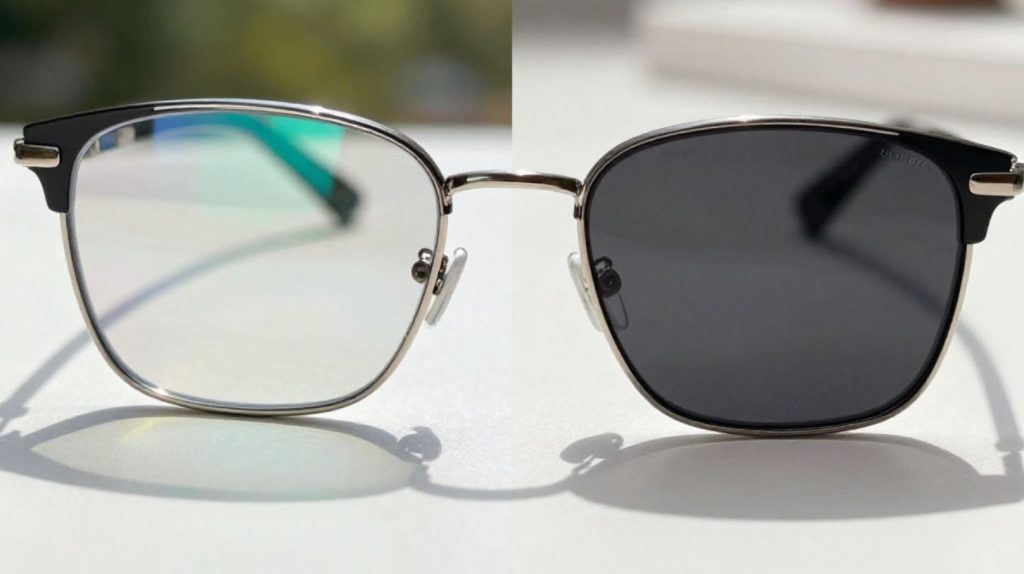
Understanding electrochromic lenses is easier when contrasted with photochromic technology. Photochromic lenses contain dyes that undergo a reversible chemical reaction when exposed to UV light. The first commercial photochromic lenses were released in the 1960s. Modern versions use special dyes embedded in or coated onto the lens that darken when UV rays are present and return to a clear state indoors.
Photochromic lenses offer convenience and continuous UV protection, but they have drawbacks:
- Slow response – they darken and lighten at different rates. Consumers often complain that the lenses take minutes to lighten after returning indoors.
- Temperature sensitivity – cold weather slows the fading rate. Research shows that at cold temperatures the fading rate is 2.7–5.4 times slower and the time to reach 80 % transmittance can be over six times longer than at warm temperatures.
- UV dependence – they don’t darken effectively inside cars or behind glass that blocks UV rays.
- Limited control – the wearer cannot choose intermediate tint levels; the lens darkens according to light intensity and brand formulation.
Photochromic lenses remain popular due to their convenience and lower cost, but the above limitations have motivated researchers and companies to explore electrochromic alternatives.
Electrochromic vs Photochromic Lenses: A Quick Comparison
Below is a concise comparison of the two technologies. Each feature is summarized with short phrases rather than long sentences.
| Feature | Electrochromic Lenses | Photochromic Lenses |
|---|---|---|
| Trigger | Electric signal (manual or automatic) | Ultraviolet light exposure |
| Response speed | Instant or very fast (usually within 1 s) | Slow; darken faster than they lighten; fading can take minutes |
| User control | Multiple tint levels; manual adjustment; works in vehicles | Passive; no user control; poor performance behind car windshields |
| Power needs | Low power required only during switching | No battery needed (reaction triggered by UV) |
| Temperature sensitivity | Less affected by temperature | Fading slower in cold weather |
| Color range & precision | Precise, adjustable colors; can offer several shade levels | Fixed colors set by dyes |
| Availability & cost | Emerging technology; higher price; limited models as of 2026 | Widely available; various materials; lower cost |
This table illustrates why electrochromic lenses are drawing interest. They address many of the pain points associated with photochromic lenses, such as slow transitions and lack of control.
Military and Automotive Roots: How the Technology Evolved
Electrochromic technology isn’t new—it has been used for decades in smart windows, rear‑view mirrors and aircraft cabin windows. Smart windows modulate light transmission with low voltage and require electricity only during mode switching. These windows have been installed in commercial aircraft like the Boeing 787 Dreamliner and in some cars to reduce glare. The advantages of electrochromic windows include low power consumption and the ability to provide various tints.
Bringing this technology to eyewear required miniaturizing the electrochromic stack and integrating a power source and control circuit into a lightweight frame. ZEISS, a leading optical manufacturer, presented a prototype for prescription glasses with electrochromic lenses at trade fairs starting in 2026. The company highlighted that users want control over darkness rather than leaving it up to the sun. Their prototype aims to be completely clear like high‑quality lenses, yet able to provide full sun protection at the tap of a finger. ZEISS notes that earlier electrochromic glasses were bulky and heavy, but their new design is lightweight and slim, making it suitable for daily wear.
The start‑up POVEC launched one of the first consumer electrochromic sunglasses. According to the company’s product page, POVEC C1 glasses offer instant, on‑demand tint with a swipe on the temple, advanced contrast optics, UV 400 protection and a solid‑state core designed to withstand impact. The lenses can switch between clear, balance and shade modes in one second and are powered by a small rechargeable battery that provides up to 28 days of use (4 hours/day). The page compares electrochromic and photochromic sunglasses, emphasizing active control and durability. These consumer products signal that electrochromic technology has moved from research labs and military applications into everyday eyewear.
Advantages of Electrochromic Lenses
Electrochromic lenses offer several benefits for wearers across different lifestyles. Below are the main advantages, supported by research and industry sources.
Fast, Adaptive Comfort
Because the tint is controlled electronically, the transition between light and dark states can be engineered to occur very quickly—often in a second or less. This rapid adaptation reduces eye strain when moving between light environments. For example, athletes moving from open sun to shaded trails or drivers entering tunnels no longer need to wait for lenses to adjust.
Precise Control and Multiple Tint Levels
Electrochromic lenses allow multiple intermediate shades, so users can choose a tint appropriate for indoor lighting, cloudy days or bright sun. Some systems offer manual controls via touch strips on the temple, while others automatically adjust based on ambient light sensors. This precision isn’t possible with photochromic dyes, which typically switch between nearly clear and a predetermined dark state.
Reliable Performance in Cars and Planes
Because electrochromic lenses don’t rely on UV radiation, they work effectively behind windshields and windows. This makes them attractive for drivers and pilots who need adaptive sun protection inside vehicles. Traditional photochromic lenses may remain too clear inside cars because windshields block much of the UV light.
Consistency Across Temperatures
Electrochromic systems can be engineered to deliver consistent performance across a wide range of temperatures. In contrast, photochromic lenses darken more in cold weather and fade slowly in low temperatures. For people living in cold climates, electrochromic lenses provide more predictable comfort.
Energy Efficiency and Low Power Use
Electrochromic devices require electrical energy only during switching. Once the lens reaches the desired tint, minimal or no power is needed to maintain the state. This feature allows for small batteries that can last weeks between charges. Some designs, like the POVEC C1, automatically turn on when the glasses are unfolded and sleep when stored.
Enhanced Visual Clarity and Contrast
By carefully tuning tint levels, electrochromic lenses can improve contrast and reduce glare, making it easier to see details in complex environments. The ability to adjust brightness on demand can help reduce eye strain and potentially improve safety in activities such as cycling, skiing and driving at dusk.
Convenience and Reduced Need for Multiple Pairs
Like photochromic lenses, electrochromic options can replace separate prescription glasses and sunglasses. Because they transition quickly and can be manually controlled, users can carry one pair of glasses for indoor and outdoor use. People who wear contact lenses may also benefit from pairing them with electrochromic sunglasses during activities.
Limitations and Considerations

No technology is perfect. Electrochromic lenses have potential drawbacks that consumers should consider.
- Higher cost: As a new technology, electrochromic glasses cost significantly more than standard photochromic lenses. Early models like the POVEC C1 retail near US$300. Prices are expected to decrease as more companies enter the market, but cost is still a barrier.
- Battery maintenance: Electrochromic lenses need a power source. While energy consumption is low, wearers must remember to charge the glasses or replace batteries periodically. A drained battery may leave the lenses stuck at a particular tint.
- Durability and longevity: The electronic components and multi‑layer structures must withstand everyday wear, drops and exposure to moisture. ZEISS acknowledges that early electrochromic glasses were bulky and heavy, and questions remain about long‑term durability and cost. Some researchers worry about the lifetime of electrochromic materials, although the technology is improving.
- Limited designs and availability: As of mid‑2026, only a few companies offer electrochromic eyewear. Color options, lens shapes and prescriptions may be limited compared with traditional glasses. Availability should expand as the technology matures.
- Tint range and color fidelity: Some electrochromic materials can introduce a slight color cast (e.g., blue or brown). Manufacturers strive for color‑neutral lenses, but users may notice subtle differences compared with non‑tinting lenses.
- Not a medical treatment: Electrochromic lenses can reduce glare and improve comfort, but they do not correct refractive errors or treat eye diseases. People with vision problems still need prescriptions from an optometrist or ophthalmologist. Always consult an eye care professional before switching lenses or relying on new technology for safety purposes.
Who Should Consider Electrochromic Lenses?
Electrochromic lenses may appeal to several groups:
- Drivers and pilots who encounter rapidly changing light and need sun protection inside vehicles.
- Outdoor enthusiasts such as cyclists, runners, hikers, skiers and kayakers who move between sun and shade and require fast adaptation.
- People sensitive to glare or those who experience migraines triggered by bright light. Quick tint adjustment can ease discomfort, although medical advice is essential.
- Professionals working in variable lighting, including photographers, construction workers and first responders.
- Technology enthusiasts who enjoy cutting‑edge gadgets. Electrochromic glasses often integrate with smart features and sensors.
Electrochromic lenses may not be necessary for everyone. If you are satisfied with photochromic lenses and rarely need manual control, the premium cost may not be justified. Discuss your lifestyle and vision needs with an eye care professional to decide which technology is best.
The Future of Adaptive Vision
Electrochromic lenses represent one step toward fully adaptive, connected eyewear. Researchers are exploring smart contact lenses and augmented reality (AR) glasses that display information directly in your field of view. For example, the Daily Eyewear Digest article “Smart Contact Lenses: Are They Actually Coming Soon?” explores how contact lenses might one day measure health signals or display data right on your eye. This is part of a broader trend toward digital eyes, as discussed in another article “Augmented Vision in 2026 — How Close Are We to ‘Digital Eyes’?”. These pieces highlight the possibilities and challenges of merging vision correction with wearable technology.
Electrochromic technology could eventually be integrated into AR glasses, providing both display capabilities and adaptive tinting. Combining variable tint lenses with heads‑up displays may reduce eye strain and improve outdoor readability. As battery technologies improve and materials become more durable, electrochromic lenses could become standard for high‑performance eyewear and potentially replace photochromic lenses entirely.
Conclusion: A Practical Takeaway
Electrochromic lenses are transforming how we manage light. Unlike traditional photochromic lenses that rely on UV light and respond slowly—especially in cold weather—electrochromic lenses darken almost instantly with a low‑voltage signal and allow manual adjustment. They perform reliably in cars, offer multiple tint levels and maintain consistent comfort across temperatures. However, they are currently more expensive, require battery maintenance and are still limited in design options.
If you often move between different lighting conditions or want more control over lens tint, electrochromic glasses might be worth trying. Remember that these lenses do not replace professional eye care. Always have regular eye exams and discuss new eyewear technologies with an optometrist or ophthalmologist. As innovation continues, electrochromic lenses could soon become the standard for adaptive vision, quietly replacing the familiar photochromic lenses of the past.
