

The Secret Training Tool Most Athletes Overlook
Most athletes spend hours working on strength, speed, and endurance. They track their nutrition. They study film. They hire coaches for every part of their game.
But very few train their eyes.
That’s starting to change. Vision training — also called sports vision training — is becoming one of the fastest-growing areas of athletic performance. And the science behind it is hard to ignore.
Let’s look at why so many athletes are investing in it, how it actually works, and what you should know before you try it yourself.
What Is Vision Training?
Vision training is a set of exercises and techniques designed to improve how your visual system works. It’s not the same as correcting blurry vision with glasses or contacts. It goes deeper than that.
Sports vision training targets the skills that help athletes process what they see — quickly and accurately.
Visual skill vs. visual acuity: Visual acuity is how clearly you can see (measured by an eye chart). Visual skill is how well your eyes and brain work together — tracking, reacting, judging distance, and focusing under pressure. You can have 20/20 eyesight and still have weak visual skills.
Vision training often includes:
- Eye tracking exercises — Training the eyes to smoothly follow moving objects
- Contrast sensitivity drills — Recognizing objects in varying light conditions
- Reaction time training — Responding faster to visual cues
- Peripheral vision expansion — Widening the field of useful vision
- Depth perception work — Judging distances more accurately
- Hand-eye coordination tasks — Syncing visual input with physical response
These skills can be practiced with specialized equipment, software, or even low-tech tools like strobe goggles and balance boards.
Why Are Athletes Paying Attention Now?
Vision training isn’t a brand-new idea. Sports medicine professionals have used it for decades. But it’s recently moved from niche clinics into mainstream athletic programs, and there are a few reasons why.
The Data Is Getting Better
Research on sports vision has grown significantly in recent years. Studies have looked at athletes across baseball, soccer, basketball, tennis, and combat sports. The findings consistently show that visual skills vary widely among athletes — and that those skills can be trained.
Research published in peer-reviewed sports science journals has found measurable improvements in reaction time, batting performance, and gaze control after targeted vision training programs. As the evidence base grows, more coaches and teams are taking notice.
Professional Teams Are Investing
A number of professional sports organizations now employ sports vision specialists as part of their performance staff. Baseball teams use vision training to help batters read pitches. NBA teams incorporate it into pre-season conditioning. Motorsport teams use it to sharpen reaction times and spatial awareness at high speed.
When elite organizations invest in something, it gets attention. And that trickle-down effect is bringing sports vision training to college programs, high school athletes, and serious recreational competitors.
Technology Has Made It More Accessible
Until recently, sports vision training required visits to specialized clinics. Now, tools like strobe training glasses, vision training apps, and digital reaction boards have made it easier and more affordable to train visual skills outside of a clinical setting.
This accessibility has fueled growing interest at every level of sport.
The Key Visual Skills That Drive Athletic Performance

Not every sport demands the same visual abilities. But there are core skills that matter across nearly all athletic disciplines.
1. Dynamic Visual Acuity
This is the ability to see clearly while you or your target is moving. Static visual acuity (reading an eye chart) is tested in a still environment. Dynamic visual acuity matters in the real world of sport — tracking a fastball, reading a defender’s movements, or following a tennis ball off a racket.
2. Saccadic Eye Movements
Saccades are the rapid, jumping movements your eyes make as they shift from one point to another. In sport, this happens constantly — scanning the field, switching between the ball and a target, or monitoring multiple players at once.
Faster, more accurate saccades mean quicker decision-making and better situational awareness.
3. Vergence and Depth Perception
Vergence is the ability of both eyes to work together to focus on objects at different distances. It directly affects depth perception — knowing how far away something is and how fast it’s approaching.
In sports like baseball, cricket, or tennis, depth perception errors can mean the difference between a hit and a miss. Training vergence can improve an athlete’s ability to judge balls in flight.
4. Contrast Sensitivity
This is the ability to distinguish objects from their background — especially in low light or poor weather. Athletes competing in outdoor environments, or under artificial stadium lighting, rely on contrast sensitivity more than many realize.
5. Peripheral Vision
Elite athletes are often described as having “eyes in the back of their head.” What that actually means is exceptional peripheral awareness — the ability to detect motion and information outside the central line of sight.
Basketball players reading teammates cutting to the basket, soccer players sensing pressure from defenders, and quarterbacks detecting open receivers all depend on peripheral vision. This skill responds well to targeted training.
What Does the Research Say?
The science supporting sports vision training is growing, though researchers continue to refine the understanding of how much benefit is possible and for which sports.
According to information published by the American Academy of Ophthalmology, visual demands vary considerably across sports, and visual performance is increasingly recognized as a trainable athletic skill — not just a fixed trait.
A body of research reviewed in sports medicine literature has found that structured vision training programs can produce measurable improvements in:
- Reaction time
- Eye-tracking accuracy
- Decision-making speed
- Hitting and catching performance
The National Eye Institute notes that the visual system is adaptable — the eyes and brain can develop stronger processing habits with consistent practice, much like a muscle responds to physical training.
It’s worth noting that results vary. Vision training is not a shortcut or a guaranteed performance booster. It works best as part of a complete training program, ideally guided by a sports vision specialist or optometrist with experience in this area.
Sports Where Vision Training Has the Biggest Impact
While all athletes can benefit from better visual skills, some sports place especially high demands on the visual system.
Baseball and Softball
Hitting a pitched ball is one of the hardest skills in all of sport. The ball travels from pitcher to plate in less than half a second. Batters rely on split-second visual processing to read spin, trajectory, and speed. Many professional teams now integrate vision training into their player development pipelines specifically for this reason.
Tennis
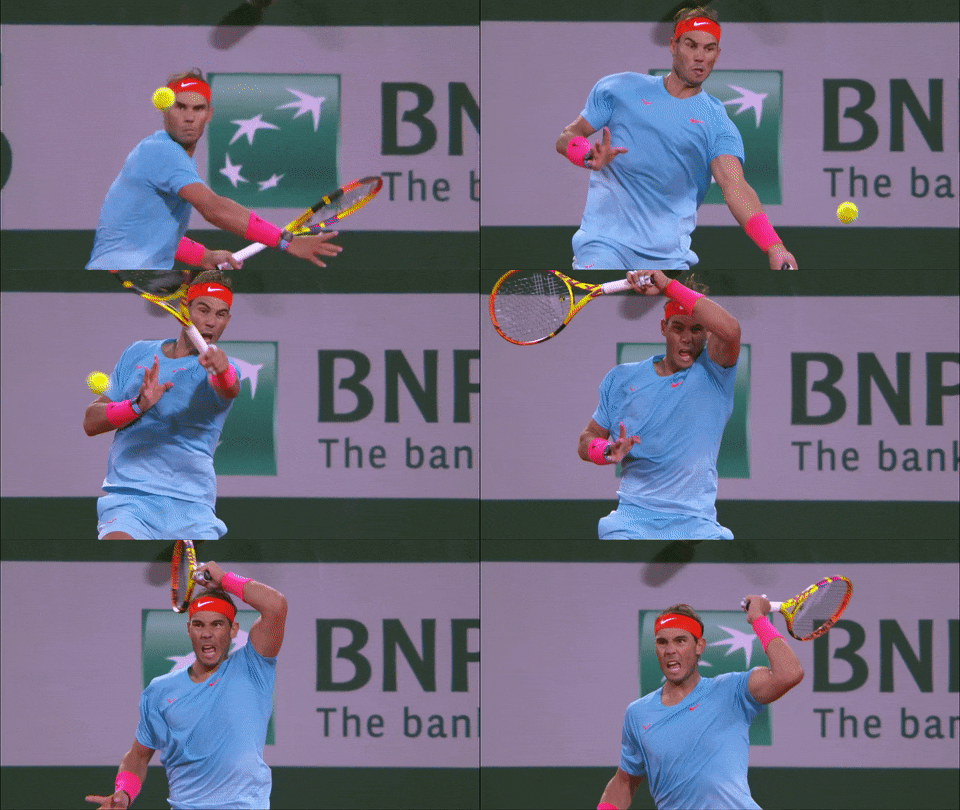
Reading a serve, tracking a rally, and anticipating an opponent’s shot all demand rapid visual processing. Studies of tennis players have found that eye-tracking training and reaction time drills can improve return accuracy and response speed.
Soccer and Basketball
Both sports require constant scanning of a dynamic environment — multiple players in motion, a ball changing direction, and split-second decisions. Peripheral vision and saccadic eye movement training are particularly relevant here.
Motorsport
Racing drivers face extreme visual demands at high speeds. They must process large amounts of environmental information while simultaneously maintaining vehicle control. Vision training targeting reaction time, contrast sensitivity, and peripheral awareness has been part of elite motorsport preparation for years.
Combat Sports
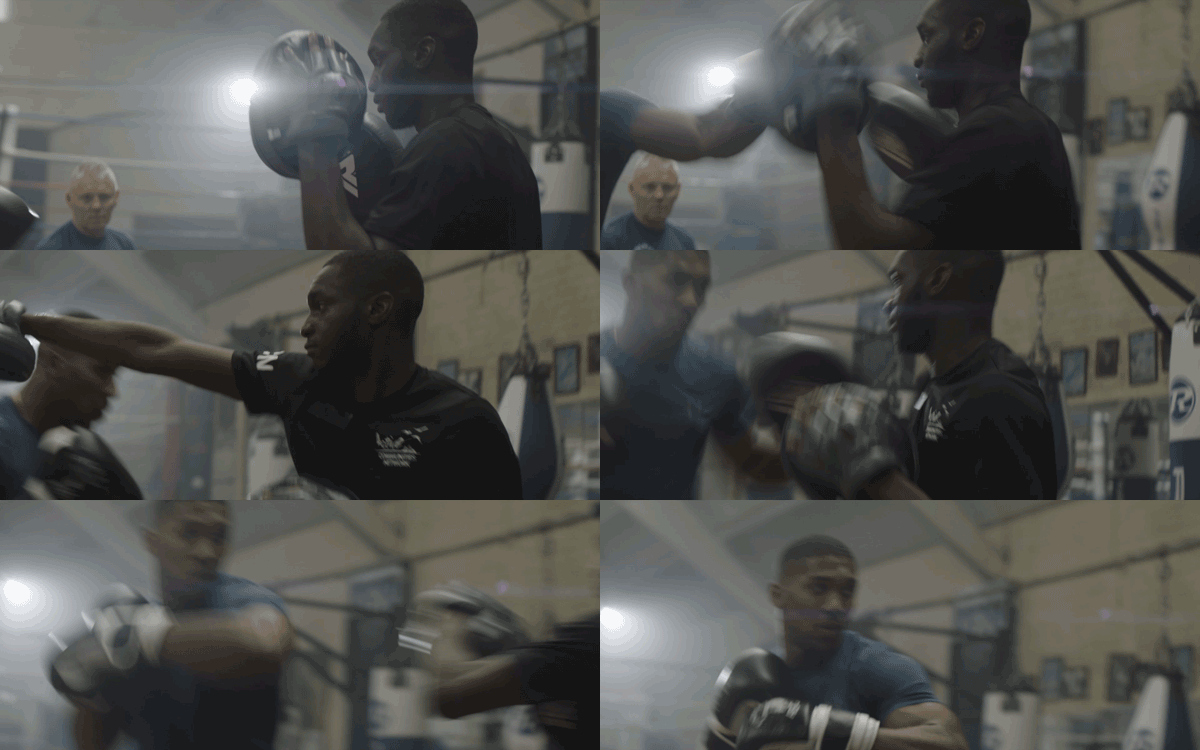
In boxing, wrestling, and martial arts, reading an opponent’s movements — often before they fully commit to a strike — is a critical skill. Visual processing speed and anticipation are central to performance and safety.
How Athletes Can Get Started With Vision Training

If you’re curious about adding vision training to your routine, here are the practical steps to consider.
Step 1: Get a Comprehensive Eye Exam First
Before starting any vision training program, see an optometrist or ophthalmologist. A standard eye exam checks for refractive errors (like nearsightedness or astigmatism), but a sports vision assessment goes further — evaluating tracking, convergence, depth perception, and reaction time.
Knowing your baseline visual strengths and weaknesses helps you train smarter. If you haven’t had a recent eye exam, our guide on why routine eye exams are essential for your health is a helpful starting point.
Step 2: Work With a Qualified Specialist
Not all vision training programs are created equal. Look for a licensed optometrist or sports vision therapist — ideally one with experience working with athletes in your sport. They can design a program around your specific visual needs.
Be cautious of unqualified programs or apps that promise dramatic improvements without any professional guidance.
Step 3: Use Evidence-Based Tools
Common tools used in sports vision training include:
- Strobe training glasses — Lenses that flash on and off, forcing the brain to process visual information faster during gaps
- Tachistoscopes (digital or analog) — Briefly flashing images or symbols to train rapid recognition
- Reaction boards — Panels with random light targets that athletes must respond to as quickly as possible
- Ball tracking software — Programs that simulate moving objects at varying speeds for tracking practice
- Brock string exercises — A low-tech tool used by optometrists to train vergence and eye teaming
Step 4: Be Consistent
Visual skills, like physical skills, require consistent repetition to improve. Vision training programs typically run for 6 to 12 weeks, with sessions several times per week. Don’t expect dramatic changes overnight.
Step 5: Protect Your Eyes During Sport
Vision training develops your visual system — but protecting it matters just as much. Wearing appropriate sports eyewear reduces the risk of eye injuries that could permanently affect your visual performance.
According to the American Academy of Ophthalmology, sports are one of the leading causes of eye injuries — most of which are preventable with proper protective eyewear.
Our articles on the role of eyewear in sports performance and protection and the importance of eye protection in extreme sports cover this in detail.
Vision Training Beyond Elite Athletes
You don’t have to be a professional athlete to benefit from vision training. Weekend athletes, recreational players, and people who play competitive amateur sports can all see improvements from targeted visual skill work.
Even outside of sport, vision training has applications. Occupational vision therapy is used in fields where visual processing is critical — pilots, surgeons, and first responders among them.
For everyday athletes, the most accessible entry points are:
- Working with a sports optometrist for a customized program
- Using structured apps or tools under professional guidance
- Incorporating simple exercises — like smooth pursuit tracking drills or near-far focus shifts — into a warm-up routine
If you’re looking to support your visual health more broadly, small daily habits make a real difference. Our piece on lifestyle changes to improve your eye health covers practical steps you can take beyond the training room.
A Practical Takeaway
Vision training for athletes is no longer a fringe idea. It’s a growing field backed by solid research and adopted by elite sports organizations around the world. The visual system is trainable — and for athletes who rely on fast decisions, precise tracking, and sharp awareness, that’s a significant opportunity.
The key is to approach it the right way. Start with a comprehensive eye exam. Work with a qualified professional. Use evidence-based methods. And protect your eyes so your visual investment is never undone by a preventable injury.
Your eyes are at the center of everything you do in sport. Training them deserves the same attention you give everything else.
FAQs
1. What is sports vision training, and how is it different from regular eye care?
Regular eye care focuses on diagnosing and correcting vision problems like nearsightedness, farsightedness, or astigmatism. Sports vision training goes further — it develops the visual skills that affect athletic performance, such as reaction time, eye tracking, depth perception, and peripheral awareness. It’s designed for people whose eyes are healthy but whose visual processing can be made faster and more efficient.
2. Can vision training actually improve athletic performance?
Research suggests it can, particularly for skills like reaction time, tracking accuracy, and hand-eye coordination. Results vary by individual and sport, and the benefits are strongest when training is consistent and guided by a specialist. Vision training works best as part of a broader performance program, not as a standalone fix.
3. What sports benefit most from vision training?
Sports with fast-moving objects (baseball, tennis, cricket), high-speed environments (motorsport), complex spatial awareness demands (basketball, soccer), and close opponent reading (boxing, martial arts) tend to benefit most. That said, virtually any athlete who relies on visual processing — which is almost all of them — can find value in some form of vision training.
4. How long does it take to see results from vision training?
Most structured programs run for 6 to 12 weeks, with multiple sessions per week. Many athletes notice changes in their awareness and reaction speed within the first few weeks. Measurable improvements in performance metrics often appear after 8 or more weeks of consistent training.
5. Do I need a sports vision specialist, or can I train on my own?
A qualified sports vision specialist — typically a licensed optometrist with sports vision training — can assess your current visual skills and design a program suited to your sport and weaknesses. This is strongly recommended before starting. Some follow-up training can be done independently using the tools and exercises recommended by your specialist.
6. Is vision training safe for all athletes?
For most healthy athletes, vision training is safe when done correctly. However, anyone with existing eye conditions — such as amblyopia (lazy eye), strabismus (eye turn), or a recent eye injury — should consult their eye doctor before starting a program. A comprehensive exam beforehand is always the right first step.
7. How much does sports vision training typically cost?
Costs vary widely depending on location, provider, and program length. An initial sports vision assessment with an optometrist might range from $100 to $300 or more. Full training programs at specialized clinics can cost several hundred to a few thousand dollars. Some tools and apps for home practice are available at lower price points, but these work best as a supplement to professional guidance rather than a replacement.
This article is for informational purposes only and does not constitute medical or eye care advice. If you have concerns about your vision or eye health, please consult a licensed optometrist or ophthalmologist.
