
A Hidden Threat in Sunshine
When you step outside on a bright day, you probably reach for sunscreen to shield your skin. But how often do you think about your eyes? Many people underestimate the damage that sunlight can do to their vision. UV radiation doesn’t just tan or burn the skin; it also penetrates delicate ocular tissues and can lead to painful or sight‑threatening conditions. Understanding the risks is the first step toward preserving your eye health.
What Are UV Rays?
Ultraviolet light is a form of electromagnetic radiation emitted by the sun. It falls just beyond the violet end of the visible spectrum. There are three categories of UV rays:
- UVA (320–400 nm): These rays have the longest wavelengths and can penetrate deep into skin and eye tissues. According to the Centers for Disease Control (CDC), UVA rays penetrate deeper into the skin than UVB.
- UVB (290–320 nm): Shorter wavelengths are mostly absorbed by the ozone layer, but some UVB reaches Earth’s surface and can cause sunburn and eye damage.
- UVC (100–290 nm): These rays are absorbed by the atmosphere and normally don’t reach the ground; therefore they pose little risk.
While UVA and UVB are often discussed in the context of skin cancer, they also pose serious threats to your eyes. The National Eye Institute notes that UV light penetrates eye tissues more easily than visible light and can harm the cornea, lens and retina.
How UV Rays Interact With Your Eyes
When UV rays strike your eyes, several structures can be affected:
- Eyelids and surrounding skin: The thin skin around the eyes is especially prone to UV damage. The Mayo Clinic warns that ultraviolet light can harm delicate eyelid skin and increase the risk of skin cancer around the eyes.
- Cornea: The cornea is the clear, front layer of the eye. Acute overexposure to UV can inflame the cornea, causing photokeratitis, sometimes called “snow blindness.” The Cleveland Clinic describes photokeratitis as a painful eye burn that affects both the cornea and conjunctiva.
- Lens: The lens focuses light on the retina. Long‑term UV exposure can damage lens proteins, leading to cataracts—clouding of the lens that causes blurry vision. The National Eye Institute notes that prolonged UV radiation modifies lens proteins and contributes to cataract formation.
- Conjunctiva and sclera: The white of the eye and its surrounding membrane can develop yellowish, fleshy growths called pinguecula or pterygium when chronically exposed to UV.
- Retina: High‑energy UV and blue light can reach the retina and may contribute to age‑related macular degeneration (AMD), a leading cause of blindness. Studies cited by the National Eye Institute suggest that cumulative UV exposure may be linked to AMD.
Eye Conditions Caused by UV Exposure
Photokeratitis: Sunburn of the Eye
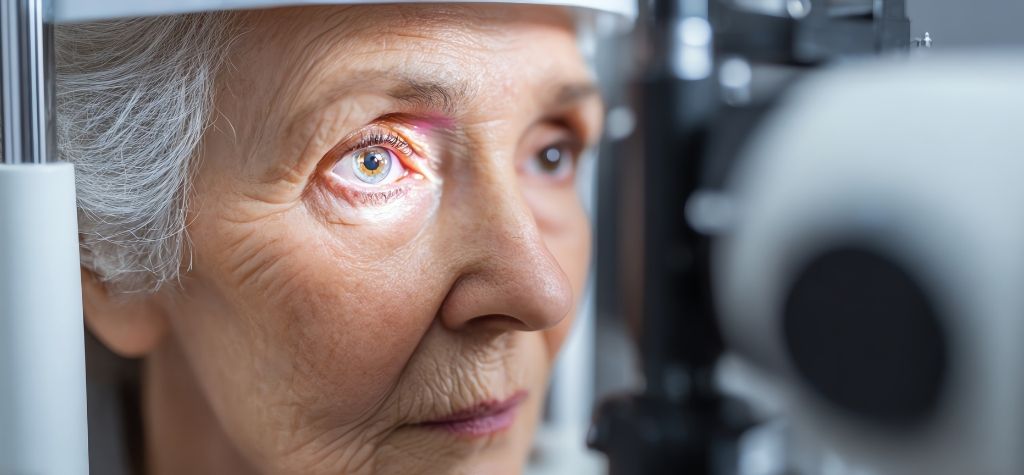
Photokeratitis is essentially a sunburn of the cornea. The Cleveland Clinic defines it as a painful condition caused by exposure to UV rays from the sun, reflective surfaces (snow, water, sand) or artificial sources like welding arcs and tanning lamps. It can occur after only a short period of intense exposure, such as skiing on a sunny day without eye protection.
Symptoms:
- Eye pain and redness
- Tearing or watery eyes
- Blurry vision
- Swelling and sensitivity to light
- Gritty sensation or feeling like something is in the eye
- Temporary vision loss or seeing halos around lights
These symptoms often appear within hours of exposure and typically resolve within 48 hours. However, repeated episodes of photokeratitis can cause lasting damage.
Risk factors: Spending time at high altitudes, skiing, surfing, sunbathing, using tanning beds or welding without protective gear all increase your risk. Individuals living near the equator or in snowy environments are also more vulnerable due to increased UV reflection.
Long‑term effects: While photokeratitis itself is usually temporary, chronic exposure to UV light can increase your risk of cataracts, macular degeneration, pinguecula and pterygia.
Cataracts
A cataract forms when the normally clear lens of your eye becomes cloudy. This process is part of aging, but UV radiation accelerates it. The National Eye Institute explains that prolonged UV exposure modifies proteins in the lens, causing them to clump together and cloud vision.
The American Academy of Ophthalmology (AAO) warns that UV rays can damage the lens and raise the risk of cataracts. Symptoms include blurred or cloudy vision, difficulty seeing at night, halos around lights and faded colors. Cataracts are the world’s leading cause of blindness, but they can often be prevented or delayed by protecting your eyes from UV rays.
Age‑Related Macular Degeneration (AMD)
AMD is a progressive disease affecting the macula, a small area in the retina responsible for sharp central vision. Although aging is the biggest risk factor, UV exposure may contribute to its development. The National Eye Institute reports that research suggests a link between cumulative UV exposure and AMD.
There are two forms: dry (more common) and wet (less common but more severe). Early signs include difficulty reading fine print and distorted vision. There is no cure, but protective measures can slow progression.
Pinguecula and Pterygium
Pinguecula are yellowish bumps that form on the conjunctiva (the membrane covering the white of the eye). Pterygium (“surfer’s eye”) is a fleshy, wing‑shaped growth that extends from the conjunctiva onto the cornea. Both conditions are associated with chronic UV exposure and may cause irritation, redness and blurred vision. The Cleveland Clinic notes that long‑term exposure to even small amounts of UV radiation can lead to these tissue elevations.
The Cleveland Clinic further states that pterygium is more common in people who spend significant time outdoors without eye protection, especially near the equator. Wearing UV‑blocking sunglasses and wide‑brim hats can reduce the risk.
Photodermatitis and Skin Cancer Around the Eyes
The delicate skin on the eyelids and surrounding area is highly susceptible to UV damage. The Mayo Clinic highlights that sunglasses help prevent skin cancer around the eyes and guard against vision loss. Basal cell carcinoma is the most common type of skin cancer affecting the eyelids.
Eye Cancers
UV radiation has been implicated in rare but serious eye cancers such as ocular melanoma, squamous cell carcinoma of the conjunctiva and basal cell carcinoma of the eyelid. The American Academy of Ophthalmology notes that excessive UV exposure can lead to cancers on the eye’s surface and inside the eye. Although these cancers are uncommon, the risk underscores the importance of diligent protection.
Factors That Influence UV Exposure
Understanding the circumstances that increase UV exposure helps you make smarter decisions:
- Latitude and altitude: UV intensity increases closer to the equator and at higher elevations. For every 1,000 meters of altitude, UV levels rise by up to 10 %.
- Time of day: Midday (10 a.m. to 4 p.m.) sunlight has the highest UV intensity. Even on cloudy days, up to 80 % of UV rays penetrate clouds.
- Reflection: Surfaces like snow, water, sand and pavement can reflect up to 80 % of UV radiation back into your eyes. This effect, known as the Coroneo effect, intensifies exposure from the side.
- Pollution and ozone: Ozone depletion and air pollutants can alter the amount of UV reaching the ground. The EPA warns that ozone depletion decreases protection from UV radiation, increasing the risk of cataracts and other eye damage.
- Personal behavior: Spending long hours outdoors without protective eyewear, using tanning beds or welding without shields raises your exposure.
Who Is Most at Risk?
While everyone should protect their eyes from UV rays, some groups have higher risk:
- Children and adolescents: Kids’ lenses are more transparent, allowing more UV to reach the retina. The Mayo Clinic urges parents to choose sunglasses with UVA and UVB protection for children.
- Outdoor workers and athletes: People who spend most of the day outdoors—farmers, construction workers, surfers, skiers—receive more cumulative UV exposure.
- People living near the equator or at high altitudes: UV radiation is stronger in tropical climates and at high elevations.
- Individuals with light‑colored eyes or fair skin: Less pigment provides less natural protection against UV damage.
- Contact lens wearers: Some contact lenses offer UV protection, but many do not. Always pair contacts with sunglasses.
- Those taking photosensitizing medications: Certain antibiotics, birth control pills and acne treatments can make eyes more sensitive to UV.
How to Protect Your Eyes
Safeguarding your eyes from UV rays involves multiple strategies. Consider adopting the following habits:
Choose the Right Sunglasses
- Look for 100 % UVA and UVB protection. Wraparound styles or oversized frames block light coming from the sides. The CDC recommends wearing sunglasses that block both UVA and UVB rays to prevent eye diseases.
- Consider polarized lenses to reduce glare from reflective surfaces like water and snow. Polarization does not increase UV protection, but it improves visual comfort.
- Opt for gray or brown tints to maintain color recognition while reducing brightness.
- Check lens coatings. Photochromic (transition) lenses darken when exposed to UV light and can provide consistent protection. Always verify that they offer full UV blocking.
Wear a Wide‑Brimmed Hat
A hat with at least a 7.5 cm (3 inch) brim can block up to half of UV rays from reaching your eyes. Pairing a hat with sunglasses offers double protection.
Seek Shade and Plan Outdoor Activities Wisely
- Limit outdoor activities between 10 a.m. and 4 p.m., when UV radiation is strongest. Clouds don’t provide full protection.
- Use shade structures like umbrellas, trees or canopies when relaxing outside.
Protect Children
Children’s eyes are especially vulnerable. Encourage kids to wear sunglasses and hats whenever they’re outdoors. The National Eye Institute advises checking the UV index and keeping infants under six months out of direct sunlight.
Avoid Tanning Beds and Sunlamps
Artificial sources of UV, such as tanning beds and certain lamps, can cause the same eye damage as sunlight. The CDC warns that using tanning beds without eye protection increases risk of blinding eye diseases. Always wear goggles rated for UV protection if you must use them.
Use Appropriate Eye Protection for Work and Recreation
If your job involves welding, lasers or other intense light sources, wear specially designed goggles or face shields. Snow sports and water sports also require protective eyewear that wraps around and shields against reflected UV.
Regular Eye Exams
Comprehensive eye exams can detect early signs of cataracts, macular degeneration and other conditions. Eye care professionals may recommend sunglasses or prescription lenses with UV protection. The American Academy of Ophthalmology emphasizes regular checkups, especially for people over 40 and those with risk factors.
Nutrition and Lifestyle
Some studies suggest that a diet rich in antioxidants—found in leafy greens, colorful fruits, nuts and fish—supports eye health. Smoking cessation, controlling blood pressure and managing chronic conditions like diabetes also reduce the risk of vision problems.
Select Protective Contact Lenses or Add‑On Clips
Some contact lenses come with built‑in UV protection. However, they only protect the cornea, not the entire eye. Consider using clip‑on or fit‑over sunglasses if you wear prescription glasses or contacts. Transition lenses can also be useful but should be verified for 100 % UVA and UVB blocking.
Myths and Misconceptions
- Myth: All sunglasses provide UV protection. Only lenses labeled as blocking 99 %–100 % of UVA and UVB rays offer full protection. Dark tinted lenses without UV filters can actually dilate pupils and let more harmful rays in.
- Myth: UV damage only occurs on sunny days. Up to 80 % of UV radiation penetrates clouds. Snow, water and sand reflect UV rays and can worsen exposure even on overcast days.
- Myth: Kids don’t need sunglasses. Children’s eyes transmit more UV to the retina because their lenses are clearer. Starting protective habits early is essential.
- Myth: A baseball cap is enough. Caps block sunlight from above but not from the sides. Wide‑brim hats combined with wraparound sunglasses offer better protection.
Practical Takeaways
- UV radiation is invisible but dangerous. It can damage your cornea, lens and retina, leading to painful burns, cataracts and macular degeneration.
- Cumulative exposure matters. The damage from daily UV exposure adds up over time, so develop protective habits early.
- Choose certified sunglasses. Look for labels stating “100 % UVA/UVB protection” or “UV 400.” Wraparound or oversized frames offer better coverage.
- Pair sunglasses with hats and shade. Hats reduce UV hitting your eyes from above; shade reduces exposure at midday.
- Protect children and high‑risk groups. Encourage kids to wear sunglasses and hats. Older adults and outdoor workers need extra protection.
- See your eye doctor regularly. Early detection of cataracts, AMD and other conditions can preserve vision.
Frequently Asked Questions (FAQs)
- Can UV rays really damage my eyes if I’m just outside for a short time? Yes. Brief periods of intense UV exposure—such as a day at the beach or skiing—can cause photokeratitis, a painful sunburn of the eye. Over time, repeated short exposures add up and increase the risk of cataracts and macular degeneration.
- Are cheap sunglasses effective? Cost doesn’t always reflect quality. What matters is the label. Ensure your sunglasses block 99–100 % of UVA and UVB rays. Dark lenses without UV protection can be worse than no sunglasses at all.
- Do contact lenses with UV protection replace sunglasses? No. UV‑blocking contacts protect only the cornea. You still need sunglasses to shield other eye structures and the surrounding skin.
- Is it necessary to wear sunglasses on cloudy days? Yes. Clouds block some visible light but allow most UV rays to pass through. Protective eyewear should be worn whenever you’re outdoors during the day.
- How do I know if my sunglasses provide enough protection? Look for labels such as “UV 400,” “100 % UV protection,” or “blocks 99–100 % UVA/UVB.” If you’re unsure, ask your optometrist to test them.
- Can UV exposure lead to skin cancer around the eyes? Yes. The Mayo Clinic notes that sunglasses help prevent skin cancer on the eyelids and around the eyes. Choosing large frames and pairing them with a hat provides extra protection.
- Does window glass block UV rays? Most car windshields filter out UVB but allow some UVA to pass through. Side and rear windows provide less protection. Consider wearing sunglasses even in the car during daylight.
Conclusion
Your eyes are precious and irreplaceable. UV rays are an unseen danger that can burn, age and even blind your eyes. By understanding the risks and making protective choices—like wearing certified sunglasses, a wide‑brim hat and seeking shade—you can enjoy the sun without sacrificing your vision. Regular eye exams and informed choices will help you maintain clear sight for years to come.
