

Your eye color may be the first thing people notice about you. But can blue, green, hazel, or brown eyes reveal hidden health risks?
The short answer is: a little, but far less than social media suggests.
Eye color mainly reflects the amount and pattern of pigment in your iris. It may be linked with a few eye conditions. However, it cannot diagnose disease or predict your future health.
Some connections are supported by research. Others remain uncertain or come from small studies. Your age, family history, health, and daily habits usually matter much more.
Here is what scientists actually know about eye color health risks—and what your eye color cannot tell you.
What Determines Your Eye Color?
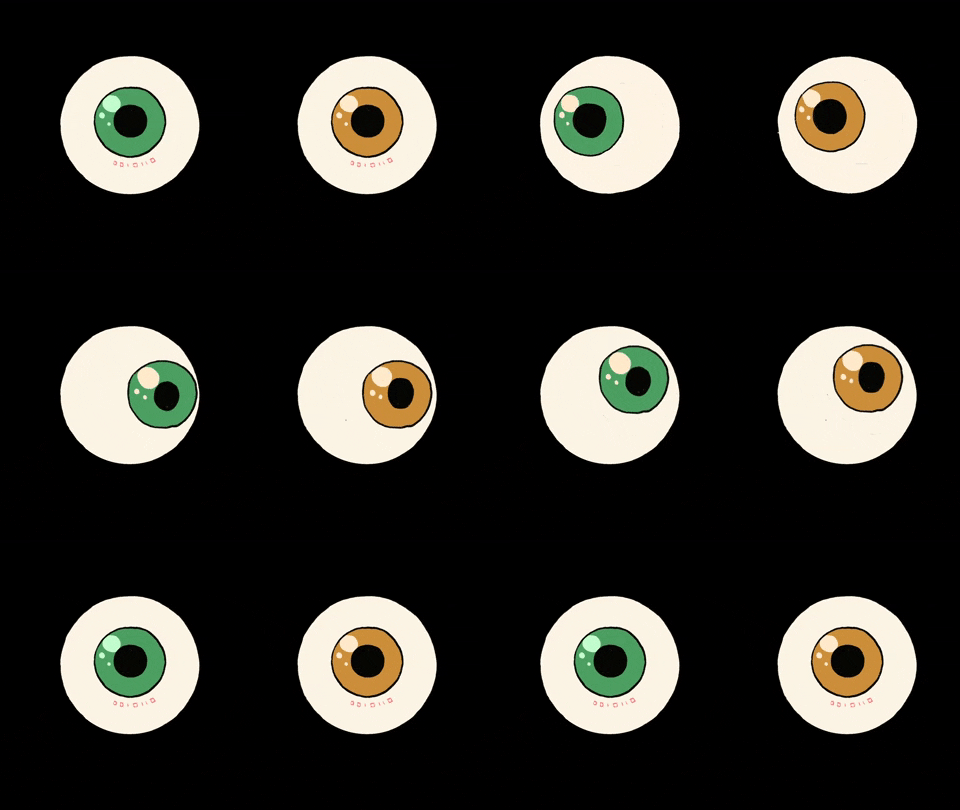
The iris is the colored ring around your pupil. Your pupil is the dark opening that controls how much light enters the eye.
Eye color depends largely on melanin. This is the same natural pigment involved in skin and hair color.
Brown eyes usually contain more melanin in the front layers of the iris. Blue eyes contain less. Green and hazel eyes fall between these broad groups.
Still, eye color is not controlled by one simple “brown” or “blue” gene. Several genes work together to influence how much pigment develops and where it appears.
Lighting can also change how an iris looks. Clothing, camera settings, pupil size, and reflections may make eyes seem lighter or darker. That is not the same as a true color change.
Key takeaway: Eye color is a visible pigment trait, not a medical test. It may slightly change certain risks, but it cannot show whether you have an eye disease.
What Eye Color Health Risks Are Supported by Evidence?

The strongest research does not show that one eye color is “healthy” and another is “unhealthy.” Instead, it points to a few modest associations.
An association means two things appear together more often. It does not prove that eye color caused the condition.
It also does not tell you whether one person will become ill. A rare condition remains rare even when a trait raises the relative risk.
Light eyes may be more sensitive to bright light
People with blue, gray, or light green eyes have less pigment in the iris. That pigment helps absorb scattered light.
With less pigment, some light-eyed people notice more glare or discomfort. Bright sunlight, headlights, snow, and reflective water may feel especially harsh.
This does not mean every blue-eyed person has photophobia. Photophobia is the medical term for unusual or painful light sensitivity. It can also occur with migraine, dry eye, inflammation, injury, or certain medicines.
Eye color may affect comfort, but it is only one small part of the picture. A person with brown eyes can still have severe light sensitivity. A person with blue eyes may have none.
Readers who want a deeper explanation can visit our guide to why people with certain eye colors feel light differently.
If light suddenly becomes painful, do not assume your eye color is responsible. New or severe sensitivity deserves professional attention.
Light eye color is linked with uveal melanoma risk
Uveal melanoma is a rare cancer that begins inside the eye. It develops in the uvea, the eye’s middle layer. The uvea includes the iris, ciliary body, and choroid.
Light-colored eyes are a recognized risk factor. A systematic review of earlier meta-analyses found higher odds among people with light eyes. Fair skin, certain moles, and a tendency to burn were also linked with risk.
This finding needs context. Uveal melanoma is rare. Having blue or green eyes does not mean you are likely to develop it.
Eye color also cannot be used to screen for cancer. There is no home mirror check that can rule it in or out.
Possible warning signs can include lasting blurred vision, new flashes or floaters, or a changing dark spot on the iris. Some tumors cause no early symptoms and are found during an eye exam. These symptoms also have many more common causes.
The most useful response is not fear. It is knowing your personal history and attending recommended eye examinations. More information about intraocular melanoma risks and symptoms is available for readers who need it.
Darker irises may be associated with cataracts
A cataract forms when the normally clear lens inside the eye becomes cloudy. It can cause faded colors, glare, blurry vision, and trouble seeing at night.
Some observational studies have linked darker iris color with a higher chance of age-related cataracts. A broad review of iris color and eye disease reported this pattern across several studies.
However, this does not make brown eyes a strong cataract predictor. The research has limits, and eye color is not usually treated as a major stand-alone risk factor.
Age remains much more important. Diabetes, smoking, long-term sun exposure, eye injuries, steroid medicines, and family history can also affect risk.
People with dark eyes do not need to expect cataracts. People with light eyes are not protected from them. Everyone benefits from UV protection and routine care.
Does Eye Color Predict Macular Degeneration?
Age-related macular degeneration, or AMD, damages the macula. This is the central part of the retina that helps you read and recognize faces.
You may have read that blue eyes greatly increase AMD risk. The evidence does not support such a confident claim.
Some older studies found a link between lighter irises and AMD. Others found little or no connection. Reviews have not confirmed eye color as a consistent, major cause of AMD.
Known factors such as age, smoking, family history, and certain genetic differences are more useful. An eye doctor also looks for changes in the retina, not simply the shade of the iris.
That means people with light eyes should not panic. It also means people with dark eyes should not assume they are protected.
For a clearer overview, see our article on macular degeneration and its warning signs.
Does Eye Color Affect Glaucoma Risk?
Glaucoma is a group of diseases that damage the optic nerve. The optic nerve carries visual information from the eye to the brain.
Ordinary eye color is not a dependable way to estimate glaucoma risk. The relationship is more complicated than “brown eyes versus blue eyes.”
Age, family history, ancestry, eye pressure, corneal thickness, and certain medical conditions can matter. Some forms of glaucoma involve pigment inside the eye, but visible iris color alone cannot identify them.
This distinction is important. A dark iris does not mean someone has too much harmful pigment. A light iris does not mean the eye is safe from pressure-related damage.
Many types of glaucoma begin without clear symptoms. Proper testing is more useful than looking at eye color.
What Your Eye Color Does Not Reveal

Eye color attracts myths because it is easy to see. Health risks are usually much harder to measure.
Your natural iris color cannot reliably tell you:
- Whether you have diabetes or high blood pressure
- Whether you will need glasses
- Whether you have “strong” or “weak” eyesight
- Whether you will develop glaucoma
- Whether your night vision is normal
- Whether you are more intelligent or trustworthy
- Whether you have a certain personality
- Whether you can safely skip eye exams
Studies sometimes find small links between eye color and health or behavior. These results may be affected by ancestry, location, age, or other traits.
A small group-level association is not a useful diagnosis for one person. It should not guide treatment or major health decisions.
Natural Eye Color Is Different From a New Color Change
The color you have had since childhood is usually a normal inherited trait. A new change is different.
One eye may always have been a different color from the other. This is called heterochromia. It may affect the whole iris or only one section. Many lifelong cases are harmless.
However, a new difference between the eyes should be examined. The same applies if one part of an iris becomes darker or lighter.
Possible causes include:
- Eye inflammation
- An eye injury
- Bleeding inside the eye
- Certain glaucoma medicines
- Changes in iris pigment
- A growth or unusual spot
These causes range from harmless to serious. A photograph cannot sort them out.
Contact an optometrist or ophthalmologist if you notice a true color change. Seek prompt care when it appears with pain, redness, light sensitivity, a changed pupil, or reduced vision.
Are Freckles and Dark Spots Part of Eye Color?
Small spots on the iris are not the same as your general eye color. Some are freckles. Others are iris nevi, which are similar to moles.
Many spots are harmless and never cause trouble. Still, an eye-care professional may photograph or measure one over time.
Have a new or changing spot checked. Changes in size, shape, thickness, or nearby blood vessels may need closer evaluation.
Do not judge the spot only by whether your eyes are light or dark. A professional exam can look at its structure and depth.
Every Eye Color Needs UV Protection

People with light eyes may feel more glare. That does not mean UV protection belongs only to them.
Ultraviolet radiation can affect the eyes of people with every iris color. Long-term exposure is linked with several eye problems, including cataracts.
Use sunglasses labeled to block 99% to 100% of UVA and UVB rays. A close-fitting or wraparound frame can reduce light entering from the sides.
Dark lenses without proper UV protection are not enough. Lens darkness controls visible brightness. It does not prove that the lenses block UV radiation.
A wide-brimmed hat adds protection during long periods outdoors. Children need eye protection too, especially around water, sand, and snow.
Our guide to protecting your eyes from UV damage explains how to choose practical protection.
Your Personal Risk Profile Matters More Than Iris Color
Eye color is one small piece of information. Your wider health profile gives an eye doctor far more useful clues.
Important details may include:
- Your age
- Family history of eye disease
- Diabetes or high blood pressure
- Smoking history
- Past eye injuries or surgery
- Medicines you take
- Your work and UV exposure
- New vision symptoms
- Findings from previous eye exams
These details help determine which tests you need and how often you need them.
A comprehensive dilated exam lets the doctor see inside the eye. It can help find problems that are invisible in a mirror. Current dilated-eye-exam guidance recommends discussing timing with your doctor because individual risks differ.
Do not schedule care based only on your eye shade. Follow the interval recommended for your age, health, family history, and examination results.
When Should You Speak With an Eye Doctor?
Most natural differences in eye color are not emergencies. Even so, certain changes deserve attention.
Arrange an eye examination if you notice:
- A new change in the color of one eye
- A growing or changing dark spot on the iris
- Persistent light sensitivity
- Ongoing redness or eye pain
- A pupil that has changed shape
- New blurred or distorted vision
- New flashes, floaters, or a shadow in your vision
Sudden vision loss, severe eye pain, or a curtain-like shadow needs urgent medical care. Do not wait for a routine appointment.
The Practical Truth About Eye Color and Health
So, what does your eye color actually reveal?
It mainly reveals how pigment is distributed in your iris. Light eyes may be more prone to glare. They are also linked with a higher relative risk of rare uveal melanoma.
Darker eyes may have an association with cataracts. However, the evidence is not strong enough for personal predictions.
Eye color does not diagnose disease. It also does not replace an examination, family history, or healthy habits.
The best approach is the same for every eye shade. Wear proper UV protection, avoid smoking, manage health conditions, and notice real changes. Most importantly, follow an eye-exam schedule suited to you.
Your eyes may be blue, brown, green, gray, or hazel. Their color is interesting. Their health depends on much more.
Frequently Asked Questions
Which eye color has the highest health risks?
No eye color is unhealthy overall. Light eyes are linked with more glare and a higher relative risk of rare uveal melanoma. Darker irises may be associated with cataracts in some studies. These eye color health risks are small parts of a much larger picture.
Are blue eyes naturally more sensitive to light?
Some people with blue or gray eyes experience more glare because their irises contain less melanin. However, this varies widely. Severe or new light sensitivity should not be blamed on blue eyes alone. Dry eye, migraine, inflammation, injury, and medicines can also cause it.
Are people with brown eyes more likely to develop cataracts?
Several observational studies have reported an association between darker iris color and age-related cataracts. The link is not strong enough to predict who will develop one. Age, diabetes, smoking, sun exposure, steroid use, eye injury, and family history are more useful risk factors.
Does having blue or green eyes increase macular degeneration risk?
Research has produced mixed results. Some studies found an association between lighter irises and AMD, while others did not. Reviews have not confirmed eye color as a major independent cause. People of every eye color should manage known risks and attend recommended eye exams.
Can an adult’s eye color change naturally?
Lighting and pupil size can make eyes appear different without changing the iris. A true new color change in adulthood is less common. It may follow injury, inflammation, medicine use, or pigment changes. An optometrist or ophthalmologist should examine a new change, especially in one eye.
Do hazel and green eyes have special health risks?
Hazel and green eyes usually contain less iris pigment than dark brown eyes but more than very light blue eyes. Research often groups them with other light colors, which limits precise comparisons. Their color alone does not provide a useful personal risk score or diagnosis.
Should people with light eyes have more frequent eye exams?
Not automatically. Exam timing should be based on age, symptoms, family history, medical conditions, and earlier findings. People with a suspicious iris spot or other risk factors may need monitoring. Ask an eye-care professional to recommend a schedule that fits your circumstances.
