Is 20/20 Vision the Gold Standard?
You may have been told you have 20/20 vision and proudly announced that your eyesight is perfect. After all, the phrase is used as the gold standard for sharp sight. Eye doctors, however, view it very differently. A 20/20 score means your visual acuity — your ability to see small details at a distance — is normal, not necessarily perfect. Only about 35 % of adults have natural 20/20 vision without glasses or contacts, and the number of people with 20/20 vision increases to roughly 75 % when corrective lenses are used. Many people need at least 20/40 vision for an unrestricted driver’s license, while legal blindness is defined as 20/200 or worse.
This article breaks down what the numbers on the eye chart really mean, why 20/20 vision doesn’t equal perfection, and what else matters for healthy eyes.
Understanding the Numbers: What 20/20 Vision Means
Visual Acuity Defined
Visual acuity is a measurement of the sharpness or clarity of your vision at a specific distance. It is written as a fraction, such as 20/20, 20/40 or 20/10. The top number is the distance you stand from the eye chart (20 feet in the United States). The bottom number is the distance at which a person with normal vision can read the same line. For example:
- 20/20 vision: You can see details at 20 feet that a typical eye sees at 20 feet. This is considered normal visual acuity.
- 20/40 vision: You need to stand 20 feet away to read what a person with normal acuity can see at 40 feet. This indicates reduced sharpness.
- 20/10 vision: You can discern details at 20 feet that most people need to be 10 feet away to see. This is sharper than average.
Outside the United States, measurements use meters instead of feet. 6/6 vision means the same as 20/20.
How the Eye Chart Works
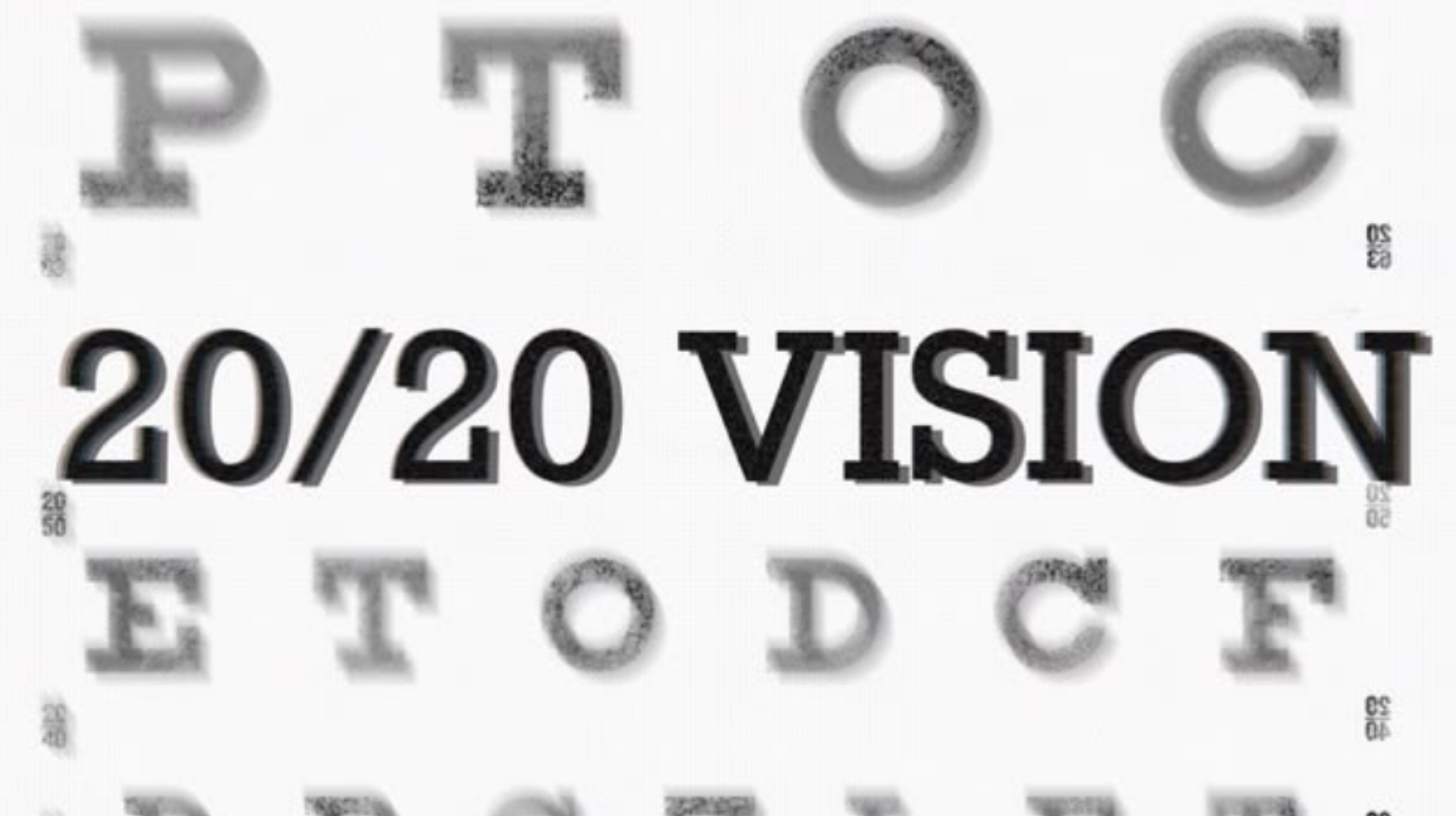
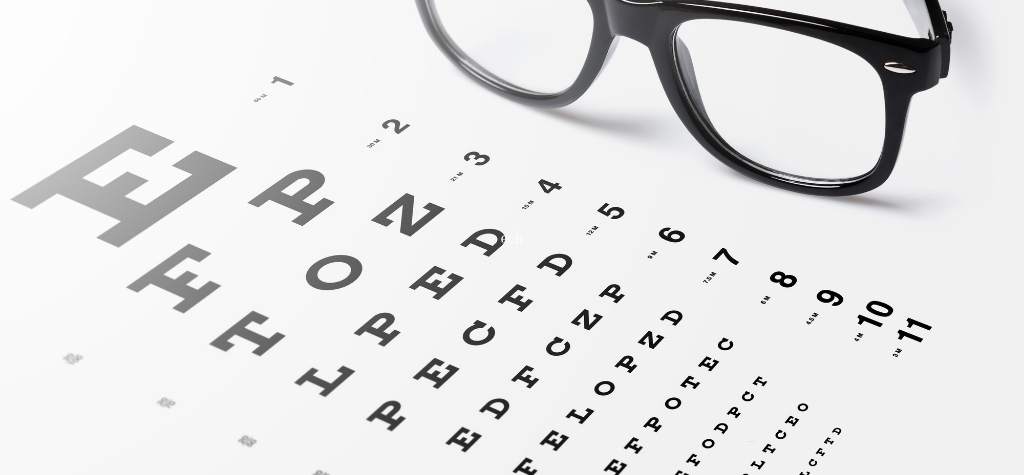
Most eye doctors use the Snellen chart, which has rows of letters decreasing in size. You cover one eye and read the smallest line you can see clearly. Each line corresponds to a different visual acuity. The Snellen chart was created in 1862 and is still widely used. Some practices use variations like tumbling‐E charts (rows of rotated letter Es) for young children or those who can’t read.
Normal vs. Better‑Than‑Normal Vision
Many people think 20/20 vision is the best you can have, but some individuals see better than 20/20. Children and young adults often achieve 20/15 or even 20/10 vision. Having better-than-normal acuity does not mean your eyes are healthier; you can still develop eye diseases that affect other parts of your vision.
Why 20/20 Vision Isn’t “Perfect” Vision

20/20 is simply a measure of how clearly you see distant letters on a high-contrast chart. It does not measure many other visual functions that are crucial for everyday tasks. According to eye care professionals, focusing exclusively on that number can be misleading. Visual acuity tests do not measure:
- Peripheral vision: Your side vision, which helps you detect motion and avoid obstacles.
- Depth perception: The ability to judge distances and perceive three-dimensional space.
- Color vision: Your ability to distinguish different colors and shades.
- Contrast sensitivity: How well you discern subtle differences between light and dark or between objects and their background.
- Eye coordination and focusing speed: How quickly and accurately your eyes switch focus from near to far objects.
Because visual acuity tests are performed under ideal conditions (high contrast, good lighting, stationary target), they may not reflect how you see in real life — such as driving at night, navigating a dimly lit room, or tracking a moving ball. Someone with 20/20 vision can still struggle with tasks like reading, sports, or driving if other visual skills are deficient.
Eye Health Isn’t Guaranteed by 20/20 Vision
Healthy eyes require more than sharp distance vision. Serious eye conditions — including glaucoma, macular degeneration, diabetic retinopathy and optic nerve damage — may develop without affecting your visual acuity until they are advanced. In fact, glaucoma is often called the “silent thief of sight” because it gradually damages your peripheral vision without early symptoms. That’s why comprehensive exams that assess retinal health, eye pressure and visual fields are essential even for people who read the entire chart without difficulty.
Who Has 20/20 Vision?
Studies estimate that only about one in three adults (≈35 %) has 20/20 vision naturally. Including those who wear glasses or contact lenses, roughly 75 % of adults achieve 20/20 acuity. The remaining 25 % have less than 20/20 even with correction. Visual acuity varies by age and genetics; children often have sharper acuity than older adults. However, many children lose their 20/20 vision around age eight or nine, and presbyopia (age‑related near‑vision loss) typically begins after 40.
In most U.S. states, you must have 20/40 vision or better (with or without correction) to obtain an unrestricted driver’s license. Drivers with worse acuity may need restrictions (e.g., daytime driving only) or cannot legally drive. On the other end of the spectrum, legal blindness is defined as 20/200 vision or worse in the better eye with glasses or contacts.
Common Reasons for Less‑than‑20/20 Vision
Acuity below 20/20 often results from refractive errors, meaning the eye does not focus light properly on the retina. The most common refractive errors are:
- Nearsightedness (myopia): Distant objects appear blurry because the eye is too long or the cornea is too curved.
- Farsightedness (hyperopia): Close objects appear blurry because the eye is too short or the cornea is too flat.
- Astigmatism: The cornea or lens is irregularly shaped, causing distorted or blurred vision at all distances.
- Presbyopia: Age‑related loss of near focusing ability, typically starting in the 40s.
Other conditions that can reduce visual acuity include cataracts (clouding of the lens), glaucoma, corneal diseases and retinal disorders. In some cases, nerve or brain conditions affect how visual information is processed.
How Vision Is Tested
During a comprehensive eye exam, eye care professionals use several tests to assess your vision and eye health:
- Visual acuity test: Reading letters on a Snellen chart from 20 feet to determine your acuity.
- Retinoscopy: Shining light into your eye while switching lenses to estimate your prescription.
- Autorefraction: An automated device measures how light reflects off your retina to find your prescription.
- Refraction test: You look through different lenses (“Which is better, 1 or 2?”) to fine‑tune your correction.
- Near vision test: Reading small print up close to check for presbyopia.
- Peripheral vision and eye pressure tests: Assessing your visual field and glaucoma risk.
- Color vision and contrast sensitivity tests: Determining how well you discern colors and contrast.
Together, these measurements provide a fuller picture of your visual system than a single acuity fraction.
Correcting Vision: Glasses, Contacts and Surgery
Glasses and Contact Lenses
Eyeglasses and contact lenses bend incoming light so that it focuses properly on the retina. The type of lens you need depends on your refractive error. Glasses remain the most common corrective method; single-vision lenses, bifocals or multifocal lenses are prescribed based on whether you need distance, near or both.
Contact lenses sit directly on the cornea and provide a wider field of view than glasses. According to the U.S. Centers for Disease Control and Prevention (CDC), about 45 million Americans wear contact lenses. These medical devices are safe when cared for properly, but failing to clean and replace them as directed increases the risk of infections such as microbial keratitis.
Vision Correction Surgery
Surgical procedures can reshape the cornea or replace the lens to correct refractive errors:
- LASIK: A laser reshapes the cornea to correct myopia, hyperopia or astigmatism. More than 90 % of LASIK patients achieve 20/20 vision.
- PRK and SMILE: Alternative laser surgeries for those who don’t qualify for LASIK.
- Cataract surgery: The cloudy lens is removed and replaced with an artificial intraocular lens. Some premium lenses can correct multiple refractive errors simultaneously.
While surgery can reduce dependence on glasses or contacts, it’s not right for everyone. Factors like corneal thickness, eye health and pre‑existing conditions influence candidacy. Discuss options with your ophthalmologist to determine whether surgery is appropriate.
Eye Health and Lifestyle Tips

Regular Eye Exams
Even if you have 20/20 vision, regular eye exams are essential. The American Academy of Ophthalmology recommends a baseline eye exam before age 40 to detect early signs of eye disease. Adults should have an eye exam every one to two years thereafter, or as advised by their doctor. Children need periodic vision screening to catch problems early, especially around age eight when visual acuity may change.
Practice the 20‑20‑20 Rule
Prolonged screen time can cause digital eye strain or computer vision syndrome, leading to dry eyes, headaches and blurred vision. To reduce strain, optometrists recommend the 20‑20‑20 rule: every 20 minutes, look at something 20 feet away for 20 seconds. This brief break relaxes the focusing muscles in your eyes and reduces fatigue. Other tips include adjusting your monitor so it is slightly below eye level, increasing font size and reducing glare.
Protect Your Eyes
- Wear sunglasses: Ultraviolet (UV) exposure can increase the risk of cataracts and macular degeneration. Choose sunglasses that block 99–100 % of UVA and UVB rays.
- Use protective eyewear: Safety goggles protect against injury when playing sports or doing home projects.
- Eat for eye health: Diets rich in leafy greens, colorful fruits, omega‑3 fatty acids and vitamins A, C and E support eye health. A balanced diet also helps manage conditions like diabetes, which can affect vision.
- Quit smoking: Tobacco use increases the risk of cataracts, macular degeneration and optic nerve damage.
- Rest your eyes: Give your eyes regular breaks when doing close‑up work. Adequate sleep helps maintain eye function.
Monitor Chronic Conditions
Health issues such as diabetes, high blood pressure and autoimmune disorders can affect your eyes. Managing these conditions reduces the risk of diabetic retinopathy, hypertensive retinopathy and other complications. Inform your eye doctor about your medical history so they can tailor your exam and care.
Why Perfect Vision Is a Myth
No single number can capture the complexity of your vision. 20/20 vision simply means you can see what most people can see at 20 feet, but it doesn’t account for peripheral awareness, depth perception, color discrimination, contrast sensitivity or the health of your eyes. Eye conditions can silently damage your sight even if you read the smallest letters on the chart.
In other words, perfect vision isn’t just 20/20; it’s a combination of clear distance vision, strong visual skills and healthy eyes. Achieving this involves regular exams, proper corrective lenses if needed, healthy lifestyle habits and protecting your eyes from strain and injury.
FAQs About 20/20 Vision
- Is 20/20 vision the best you can have?
No. 20/20 vision is considered normal acuity. Some people see better than 20/20 (e.g., 20/15 or 20/10). Better acuity means you can see fine details at a greater distance, but it does not guarantee perfect eye health. - Why might I need glasses if I have 20/20 vision?
You could still have problems like presbyopia, astigmatism or poor focusing ability. Visual acuity measures only clarity at a distance; it doesn’t assess near vision, depth perception, color vision or eye alignment. Glasses may improve comfort and reduce eye strain even if you see 20/20 on the chart. - What’s the difference between 20/20 and 20/40 vision?
If you have 20/40 vision, you must be 20 feet away to see what a person with normal vision can see at 40 feet. Many states require at least 20/40 vision (with correction) for an unrestricted driver’s license. - How often should I get my eyes examined?
The American Academy of Ophthalmology recommends a baseline eye exam by age 40 and comprehensive exams every one to two years thereafter. Children should be screened at regular intervals starting in infancy, and more frequently if they have vision problems. - Can I improve my vision to 20/20?
Yes, many people achieve 20/20 vision with glasses, contact lenses or surgery. LASIK surgery produces 20/20 or better in more than 90 % of patients. However, not everyone needs 20/20 to function well, and overall eye health matters more than achieving a particular number. - What is the 20‑20‑20 rule?
It’s a guideline to reduce digital eye strain: every 20 minutes, look at something 20 feet away for 20 seconds. This helps relax your eye muscles and relieve fatigue during prolonged screen use. - Does having 20/20 vision mean I’ll never get eye diseases?
No. Conditions like glaucoma, cataracts and macular degeneration can occur even if you have 20/20 vision. Regular eye exams detect these problems early so they can be treated before causing vision loss.
Takeaway: 20/20 vision represents normal clarity at a distance, not perfection. Eye health depends on multiple visual functions and the overall condition of your eyes. Regular exams, proper correction, healthy lifestyle choices and awareness of strain and disease are essential for maintaining clear and comfortable vision.