

More Than Daydreaming
Do you ever catch yourself gazing out the window when you’re tired of staring at a screen? That impulse isn’t just daydreaming. Our eyes evolved to look at varied distances, colors and brightness. Spending long hours glued to a phone or computer forces them into unnatural positions. By contrast, looking outside engages different muscles, offers natural light and can even lower stress levels. This article explores what happens when you stare out a window, how it differs from focusing on screens, and why regular breaks to look far away support healthier eyes and minds.
Understanding Digital Eye Strain

What is digital eye strain?
Prolonged screen use can lead to computer vision syndrome, often called digital eye strain. According to the Cleveland Clinic, it refers to vision‑related problems that arise when you look at computers, tablets or smartphones for several hours. Symptoms include irritated or dry eyes, blurred vision, headaches and even neck and shoulder pain.
Why do screens cause problems?
Experts interviewed by TIME note two key factors: reduced blinking and constant near focusing. When you focus on a screen, you blink far less than normal, which dries your eyes. At the same time, your eye muscles must hold a fixed position to keep near objects in focus. Over hours, these muscles tire, causing temporary blur and discomfort. Cleveland Clinic specialists add that screens demand constant refocusing because letters and images are made of tiny pixels. The contrast between text and background is also lower on screens than on paper. Furthermore, you blink less often—about a third of your usual rate—while reading digital text.
Risk factors and impacts
Two hours of continuous screen time can increase the risk of computer vision syndrome. Children are particularly susceptible because their eyes are still developing; persistent near work without breaks may contribute to myopia (nearsightedness). Most digital eye strain symptoms are temporary, but constant strain can affect productivity and overall well‑being.
The Science of Looking into the Distance

Why distance viewing relaxes the eyes
Our eyes have muscles that adjust the lens to focus on near or far objects. Continuous near work keeps these muscles contracted. Looking at distant objects allows them to relax. That’s why optometrists recommend the 20‑20‑20 rule: every 20 minutes, look at something 20 feet away for 20 seconds. Cleveland Clinic guidelines suggest adding a 15‑minute break every two hours and limiting total daily screen time when possible. The Mayo Clinic likewise advises taking regular breaks and resting your eyes by looking away from the page or screen.
Staring out a window naturally shifts your gaze to farther distances. The horizon or treetops provide that 20‑foot‑plus focal point without forcing you to leave your desk. It allows the ciliary muscles in the eyes to relax, reduces accommodative stress and refreshes your ability to focus when you return to the screen.
Preventing myopia in children
Time outdoors and distance viewing also help prevent myopia in children. The MyKidsVision resource explains that spending at least two hours per day outdoors can reduce the likelihood of children developing nearsightedness. Researchers believe that bright outdoor light stimulates chemical signals in the retina that regulate normal eye growth. Indoor environments, even next to windows, are much dimmer; outdoor light can be hundreds of times brighter than indoor lighting. When kids play outside—even in the shade, wearing hats and sunglasses—the brightness is still high enough to provide protective benefits. Looking across a yard or park exercises their distance‑focusing abilities and may slow myopia progression.
Natural Light vs Artificial Light
Brightness matters
Natural daylight is significantly brighter than artificial indoor light. Even a cloudy day outdoors provides more brightness than a well‑lit room. Sitting near a window offers some benefit, but it does not replicate outdoor light intensity. That intensity triggers retinal responses that support healthy eye development and reduce myopia risk. For adults, natural light can help maintain comfortable vision and reduce fatigue.
A Cornell University study reported that office workers exposed to optimized natural light experienced an 84 percent drop in eyestrain, headaches and blurred vision. Workers sitting near windows with smart glass also reported decreased drowsiness and improved productivity. This research underscores how daylight—properly controlled to reduce glare—supports visual comfort better than artificial lighting.
Glare and contrast
While natural light is beneficial, glare can negate its advantages. Cleveland Clinic recommends positioning screens to minimize reflections and closing curtains or blinds when sunlight causes glare. Mayo Clinic echoes this advice: when reading printed materials or doing close work, direct light onto the page and avoid shining it directly into your eyes. Proper ambient lighting helps maintain contrast and reduces pupil strain.
Mental and Physiological Benefits of Natural Views

Reduced stress and improved mood
Looking out a window does more than rest your eye muscles. It can lower stress and improve mood. A systematic review of controlled experiments found that viewing natural environments leads to stress and fatigue recovery. In one study, participants who viewed a forest scene showed a decrease in oxyhemoglobin concentrations in the right prefrontal cortex, indicating relaxation. Another experiment found that people cycling while watching forest videos experienced lower systolic blood pressure compared to those viewing urban scenes. Studies comparing natural and urban scenes consistently show lower brain activity and stress levels when participants look at green landscapes.
Another study evaluated how viewing real plants versus artificial ones affects mood. Adults who looked at real foliage plants had increased alpha and theta brain waves and lower stress markers, indicating a relaxed state. Participants reported feeling more comfortable and calm, with reduced anxiety and tension. These findings align with the broader evidence that natural views—whether through a window or indoor plants—can induce physiological relaxation and uplift mood.
Impacts on cognitive performance and circadian rhythms
Natural light and views can also influence alertness and sleep. Research funded by the National Eye Institute highlights that specialized retinal neurons regulate circadian rhythms and respond to a broad spectrum of light, including blues, oranges and yellows typical of sunrise and sunset. Exposure to the right light spectrum during the day boosts alertness, learning and mood. By contrast, excessive exposure to artificial blue light at night can disrupt sleep patterns. Viewing natural landscapes during breaks may help reset these rhythms and improve cognitive function.
Why a Window View Differs from a Screen
Broader field of view and varied focal distances
Screens occupy a narrow visual field and require your eyes to maintain focus at a fixed distance. Windows, however, offer expansive vistas with varied distances. You might focus on a tree across the street, a cloud on the horizon, or people walking by. This constant shifting exercises different eye muscles and stimulates peripheral vision. The MyKidsVision article notes that outdoor environments stimulate the entire field of vision more evenly than indoor settings. When you look out a window, your eyes scan wide scenes, preventing the tunnel vision effect common with screen use.
Natural colors and patterns
Digital images consist of pixels that your eyes constantly refocus on. Natural scenes are continuous and complex; they include subtle variations in color and pattern that don’t tax your focusing system as intensively. Greens and blues, common in nature, are soothing to the visual system. Artificial screens often emit significant blue light, which can lead to glare and circadian disruption when used at night. Natural light exposure, especially near sunrise and sunset, supports healthy circadian signaling.
Blink and tear production
When staring at screens you blink less, reducing tear production and leading to dry eye symptoms. Looking away from the screen toward a window encourages normal blinking rates. The American Optometric Association suggests that conscious blinking and using artificial tears can counter dryness. Window gazing naturally promotes blinking and may relieve dry eye discomfort.
Practical Tips for Healthy Eye Habits
Follow the 20‑20‑20 rule
Make a habit of looking out the window or at distant objects every 20 minutes for at least 20 seconds. If possible, stand up every two hours and take a 15‑minute break. These brief pauses relax your focusing muscles and reduce fatigue.
Adjust your workspace
- Position your screen: Place your monitor 4–5 inches below eye level so you look slightly down. This reduces strain on neck and shoulder muscles.
- Control glare: Use curtains, blinds or anti‑glare filters to minimize reflections.
- Optimize contrast: Adjust screen contrast to around 60–70 percent; increase text size if needed.
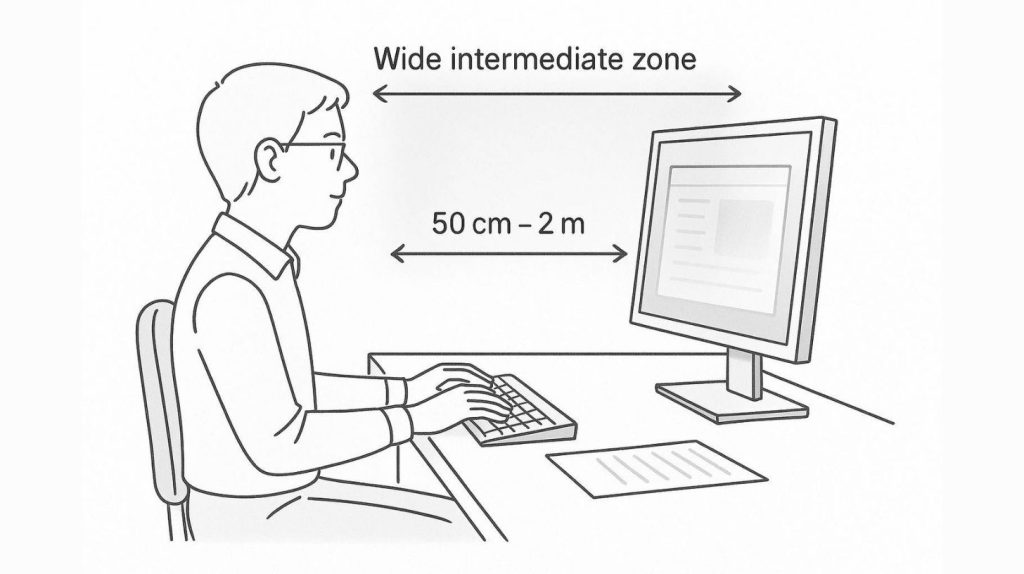
- Maintain proper distance: Keep small devices 13–20 inches away and monitors more than 20 inches from your eyes.
Improve lighting
- Use ambient light: Mayo Clinic recommends softly lit rooms when watching TV and directing task lighting onto your page or keyboard. Avoid strong overhead light or harsh shadows.
- Choose daylight when possible: Work near a window to benefit from natural light, but adjust blinds to avoid glare.
- Take care at night: Reduce screen brightness and consider using night modes in the evening to minimize blue light exposure.
Protect against dry eye
- Blink intentionally: Remind yourself to blink often. Regular blinking replenishes the tear film and smooths the ocular surface.
- Use artificial tears: Non‑prescription, preservative‑free drops can prevent dryness, especially if you know you’ll spend hours on screens.
- Humidify your space: Mayo Clinic suggests using a humidifier and adjusting the thermostat to reduce blowing air.
Encourage outdoor time for children
Children need bright light and distance viewing to develop healthy vision. Aim for at least two hours of outdoor play per day. Activities can include walking, cycling or simply playing in the yard. Even if they use a device outside, the environment’s brightness provides some protection against myopia. Always ensure proper sun protection with hats and sunglasses while still allowing plenty of light exposure.
These internal links should be spread throughout the article rather than clustered in one paragraph. Use natural language around the anchor text so that it fits seamlessly.
Conclusion: Make Window Gazing a Habit
Our modern lives revolve around screens, but our eyes still crave distance, natural light and variety. Staring out a window offers more than a mental escape—it relaxes overworked eye muscles, promotes blinking, and exposes you to brightness and colors that artificial lighting can’t match. Research shows that natural views reduce stress and fatigue, and that outdoor light helps prevent myopia in children. Meanwhile, proper lighting, breaks and blinking can alleviate digital eye strain.
Try building micro‑breaks into your day: set a timer to look up from your screen, shift your gaze to a distant tree or the sky, and blink. Step outside when you can, or simply open a window to feel the sunlight. These simple habits support healthier eyes, calmer minds and a better relationship with technology. Remember, your eyes weren’t designed to be glued to pixels all day—give them the view they deserve.
