
A Hidden Eye Issue
Have you ever squinted at road signs, rubbed your temples after reading, or wondered why lights at night create halos? Many people chalk these up to tiredness or age. In reality, a common eye condition could be responsible. Astigmatism, a refractive error caused by an irregularly shaped cornea or lens, is estimated to affect around 40% of adults worldwide. That’s roughly one in three people, yet mild cases often go unnoticed. This article explores astigmatism: how common it is, why it happens, why many people don’t know they have it, and what you can do about it.
What Is Astigmatism?

Astigmatism is a refractive error. Instead of light focusing on a single point on the retina, an irregularly shaped cornea or lens bends light unevenly, creating multiple focal points. This leads to blurred or distorted vision at all distances. The National Eye Institute (NEI) explains that astigmatism occurs when the cornea or lens has a different shape than normal. In most people, the cornea is round like a basketball; in astigmatism it’s more football‑shaped or spoon‑shaped. Only an eye exam can reveal this irregularity.
Types of Astigmatism
- Corneal astigmatism: caused by an irregular corneal curve. It is the most common type.
- Lenticular astigmatism: due to an irregular lens shape inside the eye.
- Regular vs. irregular: Regular astigmatism has predictable meridians (with the rule or against the rule); irregular astigmatism can result from conditions like keratoconus, injury or scarring.
How Common Is Astigmatism?
Astigmatism’s prevalence varies across populations, but it’s more common than many realize. A 2017 systematic review and meta‑analysis found that the estimated pooled prevalence (EPP) of astigmatism in adults is 40.4%. Rates ranged from 11.4% in Africa to 45.6% in the Americas. Among children, the pooled prevalence was 14.9%. The study concluded that astigmatism is the most common refractive error worldwide. These numbers mean that roughly one in three adults could have some degree of astigmatism.
Despite its frequency, many people are unaware they have it. The NEI notes that mild astigmatism may cause no noticeable symptoms. Because the brain can adapt to slight blurring, people often assume they have perfect vision until they undergo a routine eye exam.
Why Don’t People Know They Have Astigmatism?
Mild Symptoms
Astigmatism can be subtle. When the refractive error is small, your eyes and brain work harder to focus. You might experience:
- Slightly blurry vision, especially at night or in low light.
- Eye strain or fatigue after reading or using screens.
- Mild headaches or brow ache.
These symptoms are often attributed to long workdays or poor lighting, so people don’t seek help.
Adaptive Focusing
The human eye has a remarkable ability to adjust. Some people with mild astigmatism may unconsciously squint or tilt their heads to improve focus. Over time, the brain filters out blurred information. Unless astigmatism worsens or other symptoms appear, it can remain unnoticed.
Lack of Regular Eye Exams
Since astigmatism is diagnosed only through an eye exam, people who skip routine check‑ups may live with blurred vision without realising why. Children rarely complain about vision problems; thus parents and teachers might not detect astigmatism unless an exam is performed. Regular vision screenings are essential, especially for children and adults over 40.
Symptoms: More Than Just Blurred Vision

Astigmatism can cause a variety of symptoms. According to the Cleveland Clinic, blurred vision at all distances is the most common symptom. Other signs include:
- Glare, halos or star‑like patterns around lights
- Squinting to see clearly
- Headaches or eye strain
- Fatigue, especially after prolonged reading or screen use
- Difficulty driving at night (lights may appear streaky)
Children with astigmatism may rub their eyes, squint, or tilt their heads without complaining of blur. Astigmatism can also cause double vision and difficulty judging distances.
Important: Untreated astigmatism may lead to loss of visual acuity or amblyopia (lazy eye), especially in children. Early diagnosis is crucial.
Causes and Risk Factors
Doctors aren’t sure why some people develop astigmatism. The NEI states that there is no known way to prevent astigmatism. Many are born with it, while others develop it later in life. Factors that can contribute include:
- Irregular corneal shape — most common cause.
- Irregular lens shape (lenticular astigmatism).
- Genetics — family history can increase likelihood.
- Eye injuries or surgeries — can alter corneal shape.
- Eyelid pressure and extraocular muscle pressure.
- Eye conditions such as keratoconus (a progressive thinning and cone‑like shaping of the cornea) or lenticonus.
Astigmatism isn’t caused by reading in the dark or sitting too close to the television. Lifestyle factors like eye rubbing or poorly fitted contact lenses can worsen existing astigmatism, but they don’t create it from scratch.
Diagnosis: The Importance of Eye Exams
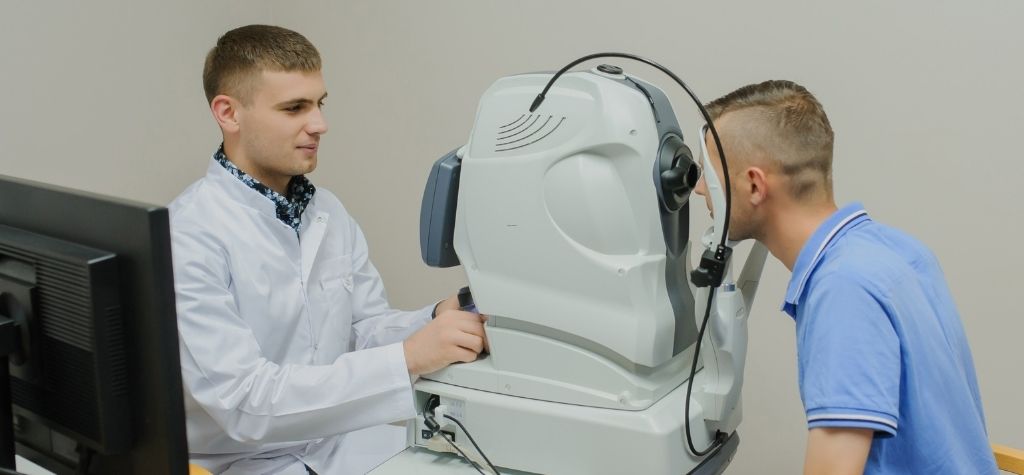
A comprehensive dilated eye exam is the only way to diagnose astigmatism. Eye care professionals use several tests:
- Visual acuity test: reading letters of various sizes.
- Refraction test: determines the lens power needed to correct vision.
- Keratometry or corneal topography: measures the curvature of the cornea.
- Slit lamp exam and retinoscopy: examine the eye’s structures.
Regular exams are essential because astigmatism can change over time. The Cleveland Clinic advises regular check-ups, especially if you notice blurriness, trouble seeing at night or headaches.
Treatment Options
Astigmatism is highly manageable. The goal is to redirect light onto a single point on the retina. Treatment options include:
Corrective Lenses
- Glasses: The simplest and safest method. Prescription lenses contain cylindrical power to correct astigmatism. Eyeglasses are often combined with lenses for nearsightedness or farsightedness.
- Contact lenses: Soft toric lenses can correct mild to moderate astigmatism. Rigid gas‑permeable lenses may be used for more complex cases. Proper fit is essential.
- Orthokeratology (Ortho‑K): Specialized rigid lenses worn overnight to temporarily reshape the cornea. It provides clear vision during the day without lenses.
Refractive Surgery
For adults with stable prescriptions, surgical options can permanently reshape the cornea:
- LASIK and PRK use lasers to reshape the cornea and correct astigmatism.
- Small‑incision lenticule extraction (SMILE) is another laser option for some people.
- Astigmatic keratotomy and toric intraocular lenses may be used during cataract surgery.
Surgery is not necessary for everyone. Discuss with an ophthalmologist to determine if you are a candidate.
Living with Astigmatism: Practical Tips
Astigmatism doesn’t have to limit your life. With proper care, most people lead normal, active lives. Try these tips:
- Schedule regular eye exams. Detecting changes early ensures your prescription stays accurate and prevents complications.
- Follow your prescription. Wear glasses or contacts as prescribed to reduce eye strain.
- Use good lighting when reading or working. Avoid glare and harsh lights.
- Take screen breaks. Follow the 20‑20‑20 rule: every 20 minutes, look 20 feet away for 20 seconds.
- Avoid eye rubbing. It can irritate the cornea and worsen irregularities.
- Protect your eyes. Wear sunglasses with UV protection and safety eyewear during sports or DIY projects.
- Monitor children. Kids might not complain about blurred vision. Watch for signs like squinting or avoiding reading, and arrange regular vision screenings.
- Maintain general health. Conditions like diabetes or high blood pressure can affect eye health. Manage chronic illnesses and adopt a balanced diet rich in omega‑3s, vitamins A and C.
Astigmatism in Children
Childhood astigmatism is common yet often overlooked. The meta‑analysis shows that 14.9% of children worldwide have astigmatism. Children rarely realize something is wrong, so parents and teachers must watch for:
- Squinting or tilting the head
- Difficulty reading or tracking lines
- Complaints of headaches or eye fatigue
- Poor performance in school
Early detection prevents amblyopia and ensures normal visual development. Pediatricians recommend a comprehensive eye exam by age 6 and regular screenings thereafter. Corrective lenses can improve school performance and comfort.
Common Myths and Misconceptions
Because astigmatism is so widespread, misinformation abounds. Let’s bust a few myths:
- Myth: Astigmatism means you have an eye disease.
- Fact: It’s a refractive error, not a disease. It describes how your eye bends light.
- Myth: You can prevent astigmatism.
- Fact: There is no known way to prevent it. However, you can protect your eyes from injury and reduce strain.
- Myth: Reading in dim light causes astigmatism.
- Fact: Poor lighting can cause temporary eye strain, but it doesn’t change the shape of your cornea or lens.
- Myth: Astigmatism only affects adults.
- Fact: It can occur at any age. Many children are born with it.
- Myth: Surgery is the only cure.
- Fact: Glasses and contact lenses correct vision effectively. Surgery is optional and depends on prescription stability, age and personal preference.
Conclusion: Don’t Overlook Astigmatism
Astigmatism is a very common vision condition — affecting up to two in five adults worldwide. Because mild astigmatism can have few or subtle symptoms, many people live with it unknowingly. However, undiagnosed astigmatism can lead to eye strain, headaches, and even amblyopia in children. The good news is that astigmatism is easily detected through a routine eye exam and can be corrected with glasses, contact lenses or surgery.
Make eye health a priority: schedule regular check‑ups, pay attention to visual changes, and educate yourself about conditions like astigmatism. By taking proactive steps, you can ensure clear vision and prevent avoidable complications.
