
Why Sunglasses Are Important in 2026 Even on Cloudy Days

A gray sky can make sunglasses feel unnecessary. The sunlight looks weak, the air feels cooler, and you may not need to squint.
Yet your eyes can still receive ultraviolet radiation through the clouds. You cannot see or feel these UV rays. That makes cloudy days easy to underestimate.
In 2026, eye health experts continue to recommend sunglasses whenever you spend time outdoors. This includes days when the sky is overcast.
Why are sunglasses important on cloudy days? They reduce UV exposure, protect the delicate skin around your eyes, and make outdoor vision more comfortable. The right pair can also reduce glare from wet roads, water, snow, and pale surfaces.
The U.S. Environmental Protection Agency reports that scattered clouds can transmit about 89% of UV radiation. Broken clouds transmit about 73%, while overcast skies transmit about 31%.
Clouds can lower UV levels, but they do not switch them off. This article explains the risk and shows how to choose useful protection.
This information is for general education. It does not replace personal advice from an optometrist, ophthalmologist, or other qualified healthcare professional.
Why Sunglasses Are Important on Cloudy Days
Clouds block some visible sunlight. That is why the day appears darker. However, visible light and ultraviolet radiation are not the same thing.
UV radiation has wavelengths that human eyes cannot see. A day can look dull while meaningful UV levels still reach the ground.
The EPA’s 2026 UV Index guidance explains that cloud type affects how much radiation passes through. Thick, dark clouds may reduce UV greatly. Thin, scattered, or broken clouds allow much more through.
Some broken cloud patterns can also scatter sunlight. Local UV exposure may change quickly as clouds move across the sky.
That is why brightness alone is a poor safety guide. The daily UV Index gives you more useful information.
A Cloudy Sky Does Not Mean a Low UV Index
The UV Index measures the expected intensity of ultraviolet radiation. It uses a scale that usually runs from 1 to 11 or higher.
Weather services calculate the index using several factors. These include cloud cover, ozone, elevation, location, season, and the sun’s angle.
The World Health Organization’s ultraviolet radiation guidance recommends sun protection when the UV Index reaches 3 or above.
Check the index before leaving home. Do not assume that gray clouds mean the reading is low.
What Are UVA and UVB Rays?
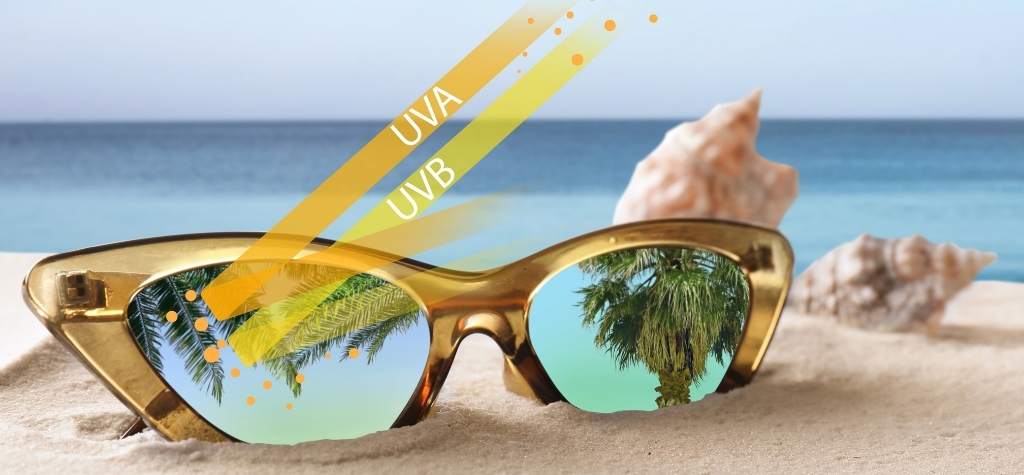
Sunlight includes two main types of UV radiation that reach Earth’s surface: UVA and UVB.
UVA Rays
UVA rays have longer wavelengths. They are linked with skin aging and may contribute to several eye problems over time.
UVA levels remain present throughout daylight hours. They can also pass through clouds more easily than many people expect.
UVB Rays
UVB rays have shorter wavelengths and more energy. They are a major cause of sunburn and can damage cells directly.
UVB levels often peak around midday. Season, elevation, latitude, cloud cover, and reflective surfaces all affect their strength.
Good sunglasses should protect against both UVA and UVB rays. A dark lens without verified UV protection is not enough.
How UV Exposure Can Affect Your Eyes
Your eyes contain several delicate tissues. These include the cornea at the front, the lens inside the eye, and the thin skin around the eyelids.
Too much UV exposure can cause short-term irritation. Repeated exposure may also contribute to problems that develop over many years.
The National Eye Institute’s guide to UV light and eye health links UV exposure with several eye conditions.
Photokeratitis
Photokeratitis is a painful injury to the cornea caused by intense UV exposure. It is sometimes described as sunburn of the eye.
Symptoms may include pain, redness, tearing, blurred vision, or strong sensitivity to light. Snow can reflect UV and raise the risk, which is why “snow blindness” can happen.
Anyone with eye pain or vision changes after intense light exposure should seek prompt medical care. A professional examination is important because other conditions can cause similar symptoms.
Cataracts
A cataract is a cloudy area in the eye’s natural lens. It can make vision hazy, dull, or less colorful.
Cataracts often develop with age. Long-term UV exposure is one factor associated with their development.
Sunglasses cannot prevent every cataract. However, reducing UV exposure is a practical step that may help protect the lens over time.
Pterygium and Pinguecula
A pterygium is a growth of tissue that can extend toward the cornea. It is sometimes called surfer’s eye.
A pinguecula is a small raised area on the white part of the eye. Both conditions have links with outdoor exposure, UV radiation, wind, and dust.
Wraparound sunglasses can help limit light and wind reaching the eye from the sides.
Eyelid and Skin Damage
Eyelid skin is thin and receives direct sunlight. UV exposure can damage this skin like other exposed areas of the body.
Larger lenses and close-fitting frames provide more coverage. A broad-brimmed hat can add useful shade around the eyes and face.
Possible Long-Term Retinal Effects
The retina is the light-sensitive tissue at the back of the eye. Research continues into how sunlight may affect retinal health.
Some studies suggest long-term unprotected exposure may be linked with age-related macular degeneration. The evidence is less direct than it is for cataracts.
It is best to avoid claims that sunglasses prevent every retinal disease. Their clearest role is reducing UV exposure to the eyes and surrounding skin.
Why Cloudy-Day Protection Matters in 2026
The basic science of UV radiation has not changed. What matters in 2026 is building protection into everyday habits.
People spend time outdoors in every season. Daily walks, school runs, sports, commuting, travel, and outdoor work all add to lifetime exposure.
UV damage is often cumulative. This means small amounts can add up over many years. You do not need to be at the beach for exposure to occur.
Updated National Eye Institute guidance for 2026 specifically recommends wearing UV-blocking sunglasses outside, even on cloudy days.
Making sunglasses part of your daily routine is simple. Keep them beside your keys, in your bag, or with your outdoor gear.
When UV Exposure Can Be Higher Than Expected

Cloud cover is only one part of the UV picture. Several other conditions can increase exposure.
Around Water, Sand, and Snow
Water, pale sand, and fresh snow can reflect sunlight. Reflected rays can reach your eyes from below and from the sides.
Clouds do not remove this reflected glare. Wraparound frames may offer better coverage during boating, skiing, fishing, and beach activities.
At Higher Elevations
UV intensity increases with elevation because there is less atmosphere above you. Mountain walks and high-altitude sports can bring stronger exposure.
Snow makes this combination more important. Choose secure sunglasses or goggles with verified UV protection.
Near the Equator
UV levels are often stronger closer to the equator. The sun sits higher in the sky for more of the year.
Residents and travelers in these regions should treat sunglasses as daily protective gear. This remains true during cloudy or rainy seasons.
Around Midday
UV radiation is often strongest when the sun is highest. This is commonly between late morning and mid-afternoon.
Clouds may make these hours feel comfortable, so people stay outside longer. Check the UV Index before planning extended outdoor activities.
During Driving
Cloudy roads can still produce glare, especially when surfaces are wet. Sunglasses may improve comfort and reduce distracting reflections.
Lens choice matters while driving. Very dark lenses may be unsuitable in dim conditions. Some colored tints can also affect how you see signals.
Our guide to the best sunglasses for driving in 2026 explains useful lens and fit features.
Never wear sunglasses when they make the road too dark to see safely. Follow local driving rules and choose lenses made for daytime use.
How to Choose Sunglasses for Cloudy Days
The best sunglasses are not always the darkest or most expensive. Their UV rating, fit, lens quality, and intended use matter more.
Look for UV400 or 99% to 100% UV Protection
Choose lenses labeled “UV400” or “99% to 100% UVA and UVB protection.” These labels indicate broad UV coverage.
UV400 lenses are designed to block ultraviolet wavelengths up to 400 nanometers. That range includes UVA and UVB radiation.
Read our explanation of UV400 lenses and why they matter before comparing labels.
Do not rely on lens color alone. Gray, brown, green, or even nearly clear lenses may offer good UV protection when properly made.
Choose Frames That Cover the Eye Area
Small lenses can leave large gaps around the eyes. UV rays may enter from above, below, and the sides.
Look for:
- A close, comfortable fit
- Lenses large enough to cover the eye area
- Frames that remain secure when you move
- Wraparound styles for high-exposure settings
- Smooth edges that do not press or pinch
A good fit improves protection and makes the glasses easier to wear regularly.
Understand Polarization
Polarized lenses reduce glare from flat surfaces. They can be helpful near water, snow, and wet roads.
However, polarization and UV protection are different features. A polarized lens should still have a clear UV400 or 100% UV label.
Our polarized vs. non-polarized sunglasses comparison explains when glare control may be useful.
Pick a Tint for the Conditions
Dark lenses may feel comfortable in bright sunlight. On a dim, cloudy day, a lighter tint may provide better visibility.
Common choices include:
- Gray: Keeps colors fairly natural and works in varied conditions.
- Brown or amber: Can increase contrast in some outdoor settings.
- Green: Balances color perception and glare reduction.
- Yellow: May improve contrast in low light but is not suitable for every task.
Tint is mostly about comfort and visual performance. It does not prove that a lens blocks UV.
Check Lens Quality
Poor optical quality can create distortion. This may lead to discomfort, especially while walking, cycling, or driving.
Hold the glasses at arm’s length and look through one lens at a straight line. Move the frame slowly. A line that bends or waves may suggest distortion.
An optician can check lens quality and UV protection. Some optical shops can test older sunglasses with a UV meter.
Add Prescription Protection if Needed
People who need vision correction can choose prescription sunglasses, clip-ons, or some photochromic lenses.
Photochromic lenses darken in response to UV light. However, their performance can vary with temperature, lens type, and the glass around you.
Ask an optometrist or optician which option fits your prescription and daily activities.
Do Expensive Sunglasses Protect Your Eyes Better?

Price does not guarantee stronger UV protection. Affordable sunglasses can protect well if they carry a reliable UV400 or 100% UV label.
Higher prices may reflect frame materials, coatings, brand names, or complex lens designs. These features can improve comfort, durability, or clarity.
The safety label still matters most. Avoid unlabeled novelty glasses, especially for children.
Very dark lenses without proper UV protection are a poor choice. Darkness can make the pupil widen while UV protection remains uncertain.
Do Children Need Sunglasses on Cloudy Days?
Children spend many hours outside and need UV protection too. A cloudy playground, sports field, or beach can still have meaningful UV levels.
Choose child-sized frames that fit securely. Look for impact-resistant lenses and a clear UV400 or 100% UV rating.
A broad-brimmed hat adds protection when a child will not keep sunglasses on. Shade is helpful but does not block every reflected ray.
See our practical guide to sunglasses and sun safety for children for age-friendly buying tips.
Speak with a pediatric eye care professional if a child has an eye condition, recent surgery, or strong light sensitivity.
Do UV-Blocking Contact Lenses Replace Sunglasses?
Some contact lenses include a UV filter. They can protect the part of the eye covered by the lens.
They do not cover the eyelids, surrounding skin, or the entire front of the eye. Sunglasses provide wider coverage.
Contact lens wearers should still choose UV-blocking sunglasses outdoors. A hat can provide another layer of shade.
A Simple Cloudy-Day Eye Protection Routine
You do not need a complicated plan. Use this quick routine whenever you expect to spend time outside:
- Check the daily UV Index, not just the weather icon.
- Wear sunglasses marked UV400 or 99% to 100% UV protection.
- Choose a close fit with enough coverage around the eyes.
- Add a broad-brimmed hat during long outdoor periods.
- Use polarized lenses when reflected glare is a concern.
- Carry a protective case so your lenses stay clear and unscratched.
- Ask an eye professional about prescription or medical needs.
For more year-round advice, read our guide on how to protect your eyes from UV rays.
When to Speak With an Eye Doctor
Routine sunglasses are suitable for most people. However, individual eye conditions and medicines can change light sensitivity.
Speak with an optometrist or ophthalmologist if you have:
- New or severe sensitivity to light
- Eye pain after intense sun or UV exposure
- Sudden redness, tearing, or blurred vision
- A recent eye operation or injury
- Questions about UV protection for an eye condition
- Trouble finding sunglasses that work with your prescription
Sudden vision loss, severe eye pain, or symptoms after welding or intense reflected light need urgent medical assessment.
Do not use sunglasses to delay care for new symptoms. They provide protection and comfort, but they do not treat eye disease.
The Practical Takeaway for 2026
Cloudy weather reduces brightness, but it does not remove ultraviolet radiation. Thin and broken clouds can allow much of the day’s UV to reach the ground.
The most useful habit is simple: check the UV Index and keep reliable sunglasses nearby. Choose UV400 lenses or 99% to 100% UVA and UVB protection.
Fit matters too. Larger, close-fitting frames protect more of the eye area. Polarization can reduce glare, but it must not replace a verified UV rating.
Wear your sunglasses during walks, driving, travel, sports, and routine outdoor tasks. Add a hat when exposure is strong or long-lasting.
If you have eye pain, vision changes, or unusual light sensitivity, contact an optometrist or ophthalmologist. Everyday protection works best alongside regular professional eye care.
Frequently Asked Questions
1. Should you wear sunglasses when it is cloudy?
Yes, when you are outdoors during daylight. Clouds can reduce UV levels without blocking them completely. Check the UV Index and choose sunglasses with UV400 or 99% to 100% UV protection.
2. Can UV rays pass through clouds?
Yes. The amount depends on the cloud type and thickness. Thin, scattered, and broken clouds can allow significant UV radiation to reach the ground.
3. Is UV400 the same as polarized?
No. UV400 describes ultraviolet protection. Polarization reduces reflected glare. A good polarized pair should also carry a UV400 or 100% UV-protection label.
4. Do darker sunglasses provide more UV protection?
Not automatically. Lens darkness affects visible light, while a UV filter blocks ultraviolet radiation. Always check the protection label instead of judging by color.
5. Can cheap sunglasses protect your eyes?
Yes, if they meet UV safety requirements and have good optical quality. Price alone does not prove protection. Look for a reliable UV400 or 100% UVA and UVB label.
6. Do children need sunglasses on overcast days?
Yes. Children can receive UV exposure during outdoor play even when the sky is cloudy. Choose secure, impact-resistant, child-sized sunglasses with verified UV protection.
7. What UV Index means I should wear sunglasses?
The World Health Organization recommends sun protection when the UV Index is 3 or higher. Eye experts also support making UV-blocking sunglasses a normal outdoor habit.
