A clear-eyed look at who really controls eyewear pricing, what you’re actually paying for, and how to get high-quality prescription glasses without the markup.
If you’ve shopped for prescription glasses lately, you already know the feeling: you walk in for a simple pair of frames and lenses and walk out having spent more than you would on a smartphone. A few pieces of plastic, metal, and glass — and somehow the bill lands at $300, $500, sometimes north of $900. So why are glasses still so expensive in 2026, even after decades of mass production, automation, and online competition?
The short answer is that price has very little to do with what your glasses cost to make. It has everything to do with who controls the market, how many hands the product passes through, and how much you’re willing to pay before you walk away. In this guide we’ll pull apart every layer of that markup — the manufacturing monopoly hiding behind your favorite designer logos, the insurance maze, the retail psychology, the materials story nobody tells you — and show you exactly where the value is real and where you’re simply funding someone else’s margin.
The Evolution of Eyewear Pricing

From Necessity to Luxury
Glasses were once a purely functional tool — an essential aid for clear sight. Today they’re both a vision-correction device and a personal fashion statement. As eyewear became entwined with identity and style, prices followed suit, transforming from necessity-level costs into luxury-tier spending. The frame stopped being a medical appliance and started being an accessory you’re expected to own in multiples, swap with the seasons, and pay a premium for the name printed on the temple.
Eyewear’s Journey Through the Decades
From wartime metal frames to 1980s designer labels and now sustainable materials, the price of glasses has kept pace with cultural evolution. Yet even with tech improvements and mass production, prices remain steep. Why? Because somewhere along the way the industry consolidated, and the companies that emerged learned that eyewear is a product people genuinely need, buy repeatedly, and rarely comparison-shop on a per-component basis. That combination — essential, recurring, and opaque — is a pricing dream for whoever sits at the top of the supply chain.
Just How Much Are We Talking?
For the roughly half of Americans who wear glasses, a single new pair can rival serious monthly expenses. Depending on where you shop, a complete pair can cost as much as a month’s groceries for two people, a chunk of rent, or a domestic round-trip flight. A rough national breakdown looks like this:
| Component | Typical U.S. cost | What it actually covers |
| Frames | $120–$250 | Design, brand licensing, and markup — rarely raw materials |
| Lenses | $110–$160 | Where genuine value lives: clarity, index, coatings |
| Eye exam | $95–$120 | Professional service; often the most justifiable line item |
| Add-ons | $75–$150+ | Anti-reflective, anti-scratch, UV, photochromic, progressives |
Insurance can shave something off the top, but as we’ll see, vision plans come with their own catch. The uncomfortable truth is that none of these numbers are dictated by what the materials cost. They’re dictated by what the market will tolerate.
The Role of Big Corporations in Price Control
Eyewear Industry Consolidation Explained
One of the key reasons glasses remain costly is the concentration of market power. A handful of corporations dominate the global eyewear industry, controlling everything from frame design and lens production to retail outlets and even the insurance networks that are supposed to save you money. When the same entity makes the product, sells the product, and administers the plan that ‘discounts’ the product, competitive pressure on price quietly disappears.
Meet the Giant Behind Your Glasses: EssilorLuxottica
If you want to understand eyewear pricing, you have to understand one company. EssilorLuxottica was formed in 2018 through the merger of the French lens pioneer Essilor and the Italian frame-and-retail powerhouse Luxottica. The combined group is, by most analyses, the closest thing the consumer-goods world has to a vertically integrated near-monopoly: it designs, manufactures, distributes, and retails eyewear at virtually every price point and in nearly every market on earth.
The scale is genuinely hard to overstate. The group operates on the order of 17,000–18,000 retail locations worldwide — far beyond any competitor, many of whom run a few hundred stores at most. Industry coverage frequently estimates that EssilorLuxottica accounts for a very large share of global eyewear, with especially heavy dominance in prescription lenses and in the U.S. market specifically. Whatever the exact figure in any given year, the directional reality is settled: when you buy glasses, the odds are high that this one company touched the lens, the frame, or both.
The designer-label illusion
Here’s the part that surprises most shoppers. Many of the ‘designer’ frames you covet are produced by EssilorLuxottica under licensing agreements. Independent consumer reporting has noted that frames marketed under names such as Armani, Burberry, Bulgari, Chanel, Coach, Dolce & Gabbana, Michael Kors, Prada, Ralph Lauren, Tiffany, and Versace — alongside owned brands like Ray-Ban, Oakley, and Persol — are commonly manufactured within the same corporate machine. The logo changes. The factory often doesn’t.
So when you pay a premium for a luxury frame, a large portion of that premium is the license and the marketing — not a fundamentally different product. As one consumer-advocacy analysis put it, much of the apparent variety on the wall is essentially an illusion of choice.
It Doesn’t Stop at the Frames
The same group is associated with major retail banners — LensCrafters, Pearle Vision, Sunglass Hut, and optical departments inside large retailers — meaning the store you ‘comparison shop’ at may be owned by the manufacturer whose product you’re comparing. It has also moved into vision insurance through EyeMed, a plan covering tens of millions of policyholders. Stack those pieces together and you get a single ecosystem that can make the glasses, set the retail price, run the store, and administer the plan that reimburses you.
How a Near-Monopoly Drives Up Costs
With fewer truly independent players, there’s little downward pressure on price. Even when production costs fall, retail prices stay inflated. The industry’s vertical integration — one company owning the chain from lens lab to storefront — means consumers face limited genuine alternatives and remarkably consistent markups. When a company controls enough of both supply and distribution, it effectively becomes a price maker: it can set prices close to the maximum an ordinary shopper will tolerate, because the shopper has nowhere obviously cheaper to turn.
This isn’t a conspiracy theory; it’s basic market structure, and it’s been documented by financial analysts and consumer organizations alike. The takeaway for you isn’t outrage — it’s leverage. Once you know the wall of brands is narrower than it looks, you stop paying the ‘logo tax’ and start paying for what actually affects your vision.
Brand Perception vs. Actual Value
Are Designer Frames Worth It?
Designer logos can easily double or triple the price of a pair of glasses. Yet, as we just saw, many designer frames roll off the same production lines as unbranded ones. What you’re often paying for is marketing, brand cachet, and packaging — not superior materials or engineering. There are exceptions: certain houses use distinctive materials or genuinely better hinges and finishing. But the default assumption that ‘expensive = better made’ simply doesn’t hold across the category.
The Psychology Behind Paying More
Luxury pricing taps into our desire for identity and status. Wearing a recognizable frame signals taste and means. But from a pure utility standpoint, many mid-tier and direct-to-consumer brands offer equal — sometimes better — functionality at a fraction of the cost. The price gap is a story we tell ourselves, reinforced by store lighting, sales scripts, and the simple fact that we wear these objects on our faces all day, which makes them feel worth more than they cost to produce.
What Goes Into the Cost of Glasses?
Frame Design and Materials
High-end frames may feature titanium, cellulose acetate, or other durable, hypoallergenic materials. But plenty of budget brands use the very same materials. Style tweaks, brand prestige, and licensing — not material cost — drive most of the price difference between a $60 frame and a $300 one.
Lens Technology and Coatings — Where Value Actually Lives
This is the part of your glasses where paying more can genuinely pay off. Premium lenses offer sharper clarity, better UV protection, anti-glare and anti-scratch coatings, and options like blue-light filtering. Specialty lenses — progressives, high-index for strong prescriptions, photochromic ‘transition’ lenses — legitimately cost more to produce and customize. If you’re going to spend, spend here, not on the logo.
Decoding the Lingo: What ‘CR-39,’ ‘Polycarbonate,’ and ‘High-Index’ Mean
Sales staff love to make lens jargon sound like luxury. In reality, these are standard categories worth knowing before you walk in:
- CR-39: a lightweight plastic that’s been an industry baseline for decades. Perfectly serviceable for mild prescriptions — not a premium upgrade, despite how it’s sometimes pitched.
- Polycarbonate: more impact-resistant and thinner; a sensible default for kids, sports, and stronger prescriptions.
- High-index: thinner and lighter lenses for strong prescriptions, so you avoid the ‘coke-bottle’ look. This is a real, value-adding upgrade if your prescription warrants it.
- Trivex: light and impact-resistant with crisp optics — a strong all-rounder.
Manufacturing and Quality Control
Frames go through cutting, shaping, coloring, and testing before they reach your face. Better brands invest in meticulous craftsmanship — but not every expensive pair reflects that care, and not every affordable pair skips it. Quality control correlates with the manufacturer’s standards, not with the retail sticker.
Retail Markups: The Silent Price Inflator

How Much Are You Really Paying For?
It’s not uncommon for glasses that cost roughly $20–$40 to produce to retail for $300 or more. That gap covers marketing, prime-location rent, staff salaries, and profit margin — none of which improve how well you see. You are, in effect, paying for the showroom and the sales pitch as much as the spectacles.
Why Middlemen Matter
Traditional eyewear sales pass through distributors, wholesalers, and retailers, each adding a markup before the product reaches you. Direct-to-consumer (DTC) brands — names like Warby Parker, Zenni, and Dresden Vision — cut out most of these middlemen, which is the single biggest structural reason a comparable pair can cost a fraction of the retail-chain price.
Anatomy of a Sales Pitch
If you’ve ever felt steamrolled at the optical counter, you’re not imagining it. A typical upsell follows a script: anchor you on an expensive ‘premium’ pair, frame the add-ons as essential, reassure you that your insurance makes it a ‘great deal,’ and then spread the total ‘over years’ so $900 sounds like pennies a day. The aftercare promise and a couple of cautionary customer stories seal it. None of this is illegal — it’s skilled selling — but recognizing the pattern is how you stop reacting to it. Slow down, separate the lens decision from the frame decision, and ask for the line-item price of each component.
The Optical Insurance Puzzle
Do Vision Plans Help or Hurt?
Vision insurance feels like a cost-saver, but it frequently locks you into a narrow set of providers and frames. Those limitations can actually raise your out-of-pocket cost — especially if you want anything beyond the ‘covered’ options. And when the insurer, the retailer, and the manufacturer all belong to the same corporate family, the ‘discount’ may simply be steering you back toward the same ecosystem’s products.
Hidden Costs in Insurance Coverage
Many plans carry low reimbursement caps, so you still foot most of the bill. Valuable add-ons like anti-reflective coatings or thinner high-index lenses may not be covered at all. Before assuming your plan is saving you money, do the math on a comparable direct-to-consumer pair with the same lens spec, out of pocket. Shoppers are routinely surprised to find the ‘uninsured’ route is cheaper.
Online Retail Disruption — and Its Limits
The Rise of Budget-Friendly Online Stores
Web-based retailers such as Zenni Optical and EyeBuyDirect disrupted the market with stylish, low-cost options. They win by skipping traditional retail markups, offering virtual try-ons, and operating at high volume. For a simple prescription and a known frame fit, they can be excellent value.
Why Online Eyewear Still Has Challenges
The flip side is real: poor frame fit, incorrect pupillary-distance (PD) measurements, and thin customer support can turn a bargain into a headache — sometimes literally. Returns can be awkward, discontinued frames may carry no warranty, and the cheapest ‘direct from overseas’ pairs sometimes arrive with no care instructions and questionable durability. The lesson isn’t ‘avoid online’ — it’s ‘choose an online brand that backs the product with real warranties, accurate measurements, and support.’
Hidden Costs You Might Not See
Returns, Restocking, and Shipping
Low upfront prices can disguise costly return fees or inflexible policies. Always read the fine print before buying — especially when ordering internationally, where shipping a return can cost more than the glasses did.
Lens Customizations and Add-Ons
A $49 pair can balloon past $150 once you add high-index lenses, coatings, and transitions. There’s nothing wrong with those upgrades when you need them — the problem is opaque pricing that reveals the real total only at checkout. Transparency in pricing is exactly the practice that the better direct-to-consumer brands have built their reputations on: the price you see should include the lens features you actually need, with no surprises at the final step.
The Materials Story Nobody Tells You: Acetate vs. Plastic
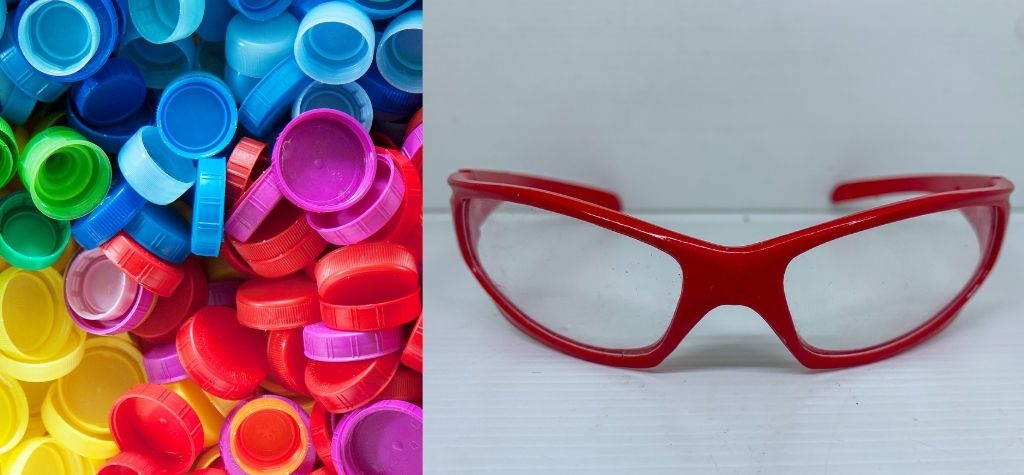
Most ‘plastic’ frames aren’t one thing. There’s a meaningful difference between petroleum-based plastics and cellulose acetate — a plant-based material made from wood pulp and cotton fibers. The chemistry was first discovered by French chemist Paul Schützenberger in 1865, but acetate wasn’t adopted as a mainstream eyewear material until around 1940, when it began replacing brittle early plastics with something lighter, stronger, and more comfortable to wear.
Acetate has real advantages: it’s hypoallergenic, takes rich color beautifully, holds its shape, and can be heat-adjusted for a custom fit. Crucially, because it’s derived from renewable plant sources rather than petroleum, it’s a more environmentally responsible choice than conventional petroleum plastics. (You may also see the term bio-acetate, which refers to newer acetate formulations made with plant-based plasticizers and marketed for improved biodegradability.)
So Where Did the Eco-Friendly Material Go?
Petroleum plastics largely won the 20th century for reasons that had nothing to do with quality and everything to do with economics: they were cheap, fast to mold, and rode the wave of a booming oil industry. Mass production favored whatever was cheapest per unit, and environmental considerations were an afterthought. That’s why so much modern eyewear is still made from petroleum-based plastic — it protects margins for large manufacturers, not the planet or, arguably, the wearer.
What About BPA in Glasses? A Straight Answer
You may have heard alarming claims that the plastic in your glasses is poisoning you. Here’s the honest, sourced version. Bisphenol A (BPA) is a chemical used to make polycarbonate — the same tough, clear plastic found in many eyeglass lenses and some frames. BPA is a known endocrine disruptor, and broader research has linked BPA exposure (largely from food and drink packaging) to various health concerns. That part is real, and it’s why BPA is worth understanding.
But the eyewear-specific picture is reassuring, not frightening. In 2020, California’s Office of Environmental Health Hazard Assessment (OEHHA) evaluated BPA exposure from polycarbonate eyewear and issued a Safe Use Determination: it concluded that the worst-case dermal exposure from wearing polycarbonate glasses (on the order of half a microgram per day) is so far below the safe-harbor threshold that these products don’t even require a Proposition 65 warning. In plain terms: the BPA in your lenses is present in trace amounts, you’re not eating your glasses, and the measured exposure is minuscule.
So the responsible reason to prefer plant-based acetate over petroleum plastic isn’t a personal-poisoning scare — it’s the environmental footprint and the comfort and quality of the material. Beware any seller who leans on dramatic health claims to push a product; the real case for sustainable eyewear stands on its own.
Are Expensive Glasses Really Better?

Durability and Longevity vs. Price
Some premium frames are genuinely more durable. But many mid-range frames last just as long when cared for properly. If you’re paying more, make sure it’s for features that directly affect your vision or comfort — not for a name.
When You Should Splurge
- Complex prescriptions (progressive, bifocal, very strong correction)
- Ultra-lightweight or hypoallergenic frames for sensitive skin or all-day wear
- High-index lenses that keep a strong prescription thin and comfortable
- Daily, all-day use where fit and comfort genuinely matter
Sustainable and Affordable Alternatives
The Rise of Ethical Eyewear
Today’s shoppers want more than style — they want values. Brands that prioritize people and the planet are gaining ground, proving that eyewear can be both affordable and ethical without the luxury-chain markup.
What to Look For in an Affordable, Ethical Brand
You don’t need a single ‘miracle’ brand to escape the markup — you need to know what separates a genuinely good-value, responsible eyewear company from one that just markets itself that way. The strongest options tend to share a few traits:
- Direct-to-consumer pricing — they sell to you without layers of distributors and licensing fees inflating the tag.
- Transparent, itemized pricing — the lens features you need are clearly priced, with no checkout surprises.
- Plant-based or recycled materials — cellulose/bio-acetate, recycled metals, or reclaimed plastics rather than virgin petroleum plastic.
- Real warranties and support — a meaningful guarantee signals the company stands behind its build quality.
- Accurate prescription crafting — proper PD handling and quality control, so the pair actually works when it arrives.
A Few Brands Worth Comparing
These are widely reviewed examples that score well on price, sustainability, or both — a starting point for your own comparison rather than an endorsement of any single seller:
- Warby Parker — a DTC pioneer known for transparent flat pricing, home try-on, and use of recycled acetate and titanium.
- Zenni Optical — among the most affordable prescription sources online, with a dedicated sustainability line and customizable lenses.
- Dresden Vision — affordable, sustainably made prescription glasses on a mission to keep quality eyewear accessible.
- Proof Eyewear — handcrafted frames in sustainable wood and cotton-based acetate, with prescription options and a give-back model.
Tip: whichever brand you choose, price a comparable pair — same frame style, same lens index, same coatings — across two or three of them before you buy. The spread is often dramatic, and that comparison is your best protection against overpaying.
How to Shop Smart and Save

Tips for Buying Glasses Without Overspending
- Use your current prescription if it’s still valid — you’re entitled to a copy.
- Know your pupillary distance (PD); it’s essential for accurate online orders.
- Compare prices across platforms, including direct-to-consumer brands.
- Choose a sensible frame and invest your money in the right lenses and coatings.
- Don’t pay for add-ons you don’t need — but don’t skip the ones you do (e.g. AR coating).
- Separate the frame decision from the lens decision so each is priced on its own merits.
Questions to Ask Your Optician
- Are there comparable, less expensive frame options than the ones you’re showing me?
- Which coatings do I genuinely need for my lifestyle, and which are optional?
- Can you itemize the price — frame, lenses, and each add-on separately?
- What exactly does the warranty cover, and for how long?
- Is this frame an in-house/licensed brand, and is there an equivalent for less?
The Future of Eyewear Pricing
Will Prices Drop With Technology?
Advances in 3D printing, AI-powered measurements, and sustainable materials may gradually lower production costs. But history shows that lower production costs don’t automatically reach the shopper — not without pressure. Without informed consumers demanding fair, transparent pricing, retail prices can stay stubbornly high even as it gets cheaper to make a pair of glasses.
Trends Shaping Tomorrow’s Eyewear Market
- Direct-to-consumer (DTC) growth — fewer middlemen, lower prices, more transparency.
- Sustainable materials — plant-based acetate and recycled inputs moving from niche to mainstream.
- Virtual try-on and remote measurement — closing the ‘fit’ gap that held online back.
- Smart eyewear — a fast-growing category that may reshape what people expect from a pair of glasses.
- Demand for transparent pricing — arguably the single biggest force that could finally lower costs.
FAQs About Eyewear Costs
Why are glasses at the eye doctor so expensive?
Optical-shop prices bake in prime-location rent, staff, and brand or licensing partnerships — costs you largely avoid with reputable online or direct-to-consumer brands. The exam itself is a fair charge; the frame-and-lens markup is where the real inflation sits.
Is it safe to buy cheap glasses online?
Yes — provided you know your current prescription and pupillary distance and you order from a trusted source that offers accurate lens crafting, warranties, and support. The horror stories usually come from the very cheapest, no-support, ship-from-overseas sellers, not from established DTC brands.
Why do lenses often cost more than frames?
Lens complexity, material (such as high-index), and coatings genuinely add cost. This is the part of your glasses where paying more can actually improve your vision and comfort, unlike a logo on the frame.
Are luxury designer glasses really made better?
Sometimes — but often you’re paying for branding, not better engineering. Many designer frames are produced under license by the same large manufacturer that makes mainstream eyewear, so the premium reflects the name more than the materials.
Is it true one company controls most of the eyewear market?
Largely, yes. EssilorLuxottica is a vertically integrated giant that makes lenses and frames, owns major retail chains, and even operates a vision-insurance arm. Many ‘competing’ designer brands are produced under its licenses, which is why the apparent variety on the wall can be misleading.
Should I worry about BPA or toxic chemicals in my glasses?
The exposure is minuscule. California regulators studied BPA in polycarbonate eyewear and determined the dermal exposure is so low it doesn’t even warrant a Proposition 65 warning. The stronger reason to prefer plant-based acetate is environmental, not a personal-health scare.
What’s a fair price for prescription glasses?
For good-quality glasses with lenses included, roughly $80–$150 is very reasonable. Strong or complex prescriptions with premium lenses can justifiably cost more — but you shouldn’t be paying hundreds for the frame alone.
How often should I replace my glasses?
Generally every one to two years, or whenever your prescription changes, your lenses get scratched, or your style preferences shift. Don’t replace them just because a sales cycle says you should.
Conclusion: Cutting Through the Cost Confusion
Eyewear doesn’t have to be outrageously expensive. The high prices you’ve grown used to are the product of industry consolidation, designer-label markups, opaque add-on pricing, and an insurance system that doesn’t always work in your favor. But none of those forces are laws of nature — they only hold as long as shoppers stay in the dark.
Now you’re not. You know that one giant sits behind much of the market, that the designer wall is narrower than it looks, that the real value is in your lenses rather than your logo, and that the scary chemical headlines don’t survive contact with the actual data. A growing wave of direct-to-consumer and sustainable brands is charting a different path — eco-conscious materials, honest pricing, and the transparency the rest of the industry has avoided.The key to smarter eyewear shopping? Stay informed, demand transparency, separate the frame from the lenses, and choose brands that align with both your budget and your values. Do that, and you’ll never overpay for a pair of glasses again.
