Over the past few years, convenience has become a driving force in health care. People work, shop and learn online, so it seems natural to check our vision online too. Several websites and smartphone apps promise to renew eyeglass prescriptions without ever stepping into a clinic. Telehealth visits exploded during the pandemic, and new digital tools continue to emerge. But is an online eye exam enough to protect your vision?
A traditional eye exam does far more than simply check how well you read letters on a screen. Eye doctors use specialized equipment to examine every part of your eye, measure pressure, test your side vision and look for hidden disease. Many eye conditions—like glaucoma, cataracts or macular degeneration—develop slowly and have no early symptoms. That means you can have serious eye disease and never know it without an exam.
This guide explains how online eye exams work in 2026, what they can and cannot detect, and when a virtual checkup might be appropriate. By the end you’ll understand the strengths and limitations of online testing, and why regular, comprehensive eye exams remain essential for long‑term eye health.
How Do Online Eye Exams Work?

Online eye tests typically fall into two categories: self‑administered vision tests and telehealth visits.
Home vision tests
Self‑administered tests use a smartphone or computer to measure how well you see. Many companies offer mobile apps or web‑based programs that display an eye chart. The American Academy of Ophthalmology (AAO) explains that these services ask users to stand about 10 feet (3 meters) away from their device in a well‑lit room and read letters aloud. Some apps pair a handheld device with your phone to generate a personalized prescription. An ophthalmologist or optometrist reviews the results and writes a prescription you can use to buy glasses.
Telehealth visits
Telehealth appointments connect you with a provider via video call. During the COVID‑19 pandemic, the Cleveland Clinic Cole Eye Institute used video chat to examine lids, lashes and the front (anterior) segment of the eye. Doctors could diagnose common red‑eye conditions—such as dry eye, blepharitis, allergic conjunctivitis, styes and subconjunctival hemorrhages—and offer management advice. Patients often printed an eye chart at home, stood 10 feet away and reported their visual acuity to the doctor.
Telehealth still has limits. Ophthalmologists note that they cannot measure intra‑ocular pressure or perform dilated exams through a video call. These tests are crucial for detecting glaucoma and other sight‑threatening disorders. Developers are working on home tonometers and fundus photography devices, but as of 2026 they are not yet widely available.
6 Things Online Eye Exams Can Catch

Although online tests have significant limitations, they aren’t completely useless. Under the right circumstances they can be a convenient interim tool. Here are six things they can help identify or monitor.
1. Visual acuity problems (nearsightedness or farsightedness)
Online exams measure your visual acuity, which is how clearly you see at a distance. UnitedHealthcare explains that both online and in‑person exams use an eye chart to test how sharp your vision is. If you struggle to read smaller letters, you may need a prescription for glasses or contact lenses.
2. Changes in existing prescriptions
For adults aged 18 to 39 with healthy eyes, renewing an eyeglass prescription online may be acceptable. The AAO notes that home tests can measure the power of your current eyeglass prescription. UnitedHealthcare cautions that these online tests are designed mainly to update prescriptions—especially when you already know your eyes are healthy.
3. Distance and near vision changes
Many self‑tests include both distance and near vision charts. MedlinePlus describes how to hang a chart 10 feet away for distance vision and hold a small card 14 inches away for near vision. Recording the smallest line you can read helps you track changes between professional exams.
4. Amsler grid distortions
The Amsler grid is a simple pattern of vertical and horizontal lines used to detect distortions in central vision that may suggest macular problems. MedlinePlus notes that this test can help detect macular degeneration. People at risk of age‑related macular degeneration (AMD) sometimes perform this test at home under their doctor’s direction. If lines appear wavy or broken, it’s time to see an eye doctor.
5. Mild red‑eye conditions via telehealth
Virtual visits are surprisingly effective for minor anterior eye issues. Cleveland Clinic physicians report that video calls can diagnose and manage acute red‑eye conditions, including dry eye, blepharitis, allergic conjunctivitis, styes and subconjunctival hemorrhages. Telehealth doctors can triage symptoms and advise whether an in‑person visit is necessary.
6. Monitoring vision changes between exams
Your vision can change gradually without you noticing. MedlinePlus encourages patients to use home vision tests under the direction of their provider to detect changes that may occur between exams. Keeping records of your results and sharing them with your eye doctor can help track progression of refractive errors or age‑related changes.
While these six uses can be helpful, they represent only a tiny fraction of what a comprehensive eye exam does. The next section explores crucial things that online tests cannot catch.
6 Things Online Eye Exams Can’t Catch

1. Glaucoma and elevated eye pressure
Glaucoma is a group of diseases that damage the optic nerve and cause irreversible vision loss. There are often no early symptoms, so people may not realize they have it. The National Eye Institute (NEI) warns that the only way to find out if you have glaucoma is with a comprehensive dilated eye exam.
A dilated exam allows a doctor to measure intra‑ocular pressure (tonometry) and inspect the optic nerve. UnitedHealthcare notes that an in‑person exam includes eye pressure measurement to diagnose glaucoma. Telehealth visits cannot perform tonometry, and current online vision tests lack the equipment to measure eye pressure.
2. Cataracts and lens opacity
Cataracts occur when the lens becomes cloudy, leading to blurred or hazy vision. A routine eye exam uses a slit‑lamp microscope to examine the front parts of the eye, including the lens. Doctors also dilate your pupils to view the lens and retina. Online tests cannot shine a bright light through your pupil or visualize the lens, so they cannot detect cataracts early. The standard eye exam page lists cataracts among the conditions that can be found during a routine eye test.
3. Diabetic and hypertensive eye disease
Diabetes and high blood pressure can damage the tiny blood vessels in your retina, leading to diabetic retinopathy or hypertensive retinopathy. A dilated exam allows your doctor to see the retina and its blood vessels. The NEI explains that dilation helps detect diabetic retinopathy, glaucoma and age‑related macular degeneration (AMD). Online tests cannot capture images of your retina, so they cannot spot these conditions.
4. Age‑related macular degeneration (AMD)
AMD is a common cause of vision loss in older adults. Although the Amsler grid can detect distortions, only an in‑person exam can confirm the diagnosis. Dilation and imaging are necessary to assess the macula. MedlinePlus cautions that relying solely on home Amsler testing may miss new retinal changes.
5. Peripheral vision loss and muscle problems
A comprehensive eye exam includes tests of side (peripheral) vision and eye muscle function. Loss of peripheral vision can signal glaucoma, stroke or neurological disorders. Eye movement tests detect muscle imbalances like strabismus or nerve palsies. Online vision tests and home charts do not assess side vision or eye movement accuracy.
6. Fitting contact lenses and specialized prescriptions
Even if an online test provides a prescription for glasses, it cannot fit contact lenses. The AAO warns that contacts should be fitted by an ophthalmologist or optometrist; improperly fitting lenses can cause complications, including corneal infection. UnitedHealthcare adds that contact lens wearers risk poor fit with online exams because an eye doctor must measure the curvature of your cornea. Online exams also cannot refine high‑power or irregular prescriptions.
Why In‑Person Exams Remain Essential
Comprehensive testing beyond vision
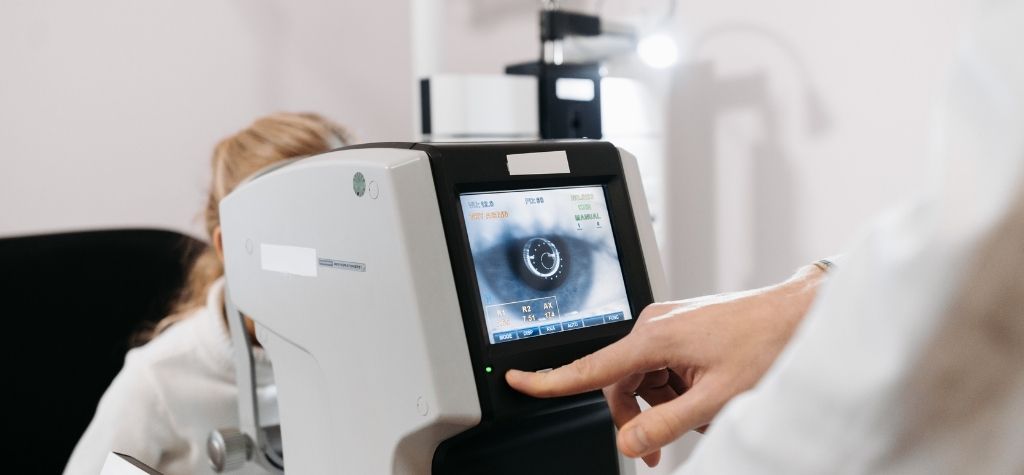
A standard eye exam does far more than test how clearly you see. MedlinePlus outlines numerous tests: doctors check 3‑D vision, peripheral vision, pupil responses, eye muscles and color vision. They use eye drops to dilate your pupils and look at the retina, blood vessels and optic nerve. A slit‑lamp exam lets them examine the eyelids, cornea, conjunctiva and iris and measure eye pressure to detect glaucoma.
Because many eye diseases have no symptoms until significant damage has occurred, comprehensive exams are the only way to catch them early. The NEI explains that there’s no way to prevent glaucoma, which is why regular eye exams are so important.
Detection of systemic health problems
Eye exams sometimes uncover systemic diseases. MedlinePlus notes that routine eye tests can reveal cataracts, diabetes, glaucoma, high blood pressure and age‑related macular degeneration. These findings can prompt timely referrals to primary‑care providers and improve overall health. Online tests cannot assess these factors because they lack specialized equipment and clinical evaluation.
Recommended exam frequency
The American Academy of Ophthalmology and MedlinePlus recommend regular eye exams at specific intervals. Adults without risk factors should have one exam in their twenties and two in their thirties. From ages 40 to 54, an eye exam is recommended every 2 to 4 years, and it becomes more frequent as you age: every 1 to 3 years for ages 55 to 64 and every 1 to 2 years for those 65 and older. People who wear contact lenses or have risk factors (family history, diabetes, high blood pressure or a history of eye disease) need exams more often.
Online exams do not change these recommendations; they are a supplement, not a replacement.
Who Might Benefit from an Online Eye Exam?
Digital eye exams aren’t for everyone. Experts recommend them only in limited situations:
- Healthy adults aged 18 to 39 who need a basic eyeglass prescription renewal.
- People who have already had a comprehensive eye exam and simply need to update their prescription.
- Adults without risk factors for eye disease and who haven’t noticed any vision changes.
- Individuals living in remote areas who need a temporary prescription until they can get to a clinic.
You should not rely on an online exam if you:
- Are younger than 18 or older than 39.
- Have a high‑power or irregular prescription.
- Wear contact lenses.
- Have an eye condition or risk factors such as diabetes, high blood pressure or family history of glaucoma.
- Are experiencing new symptoms such as double vision, flashes, floaters or pain; in these cases, schedule an in‑person exam immediately.
Telehealth Visits: A Useful Hybrid
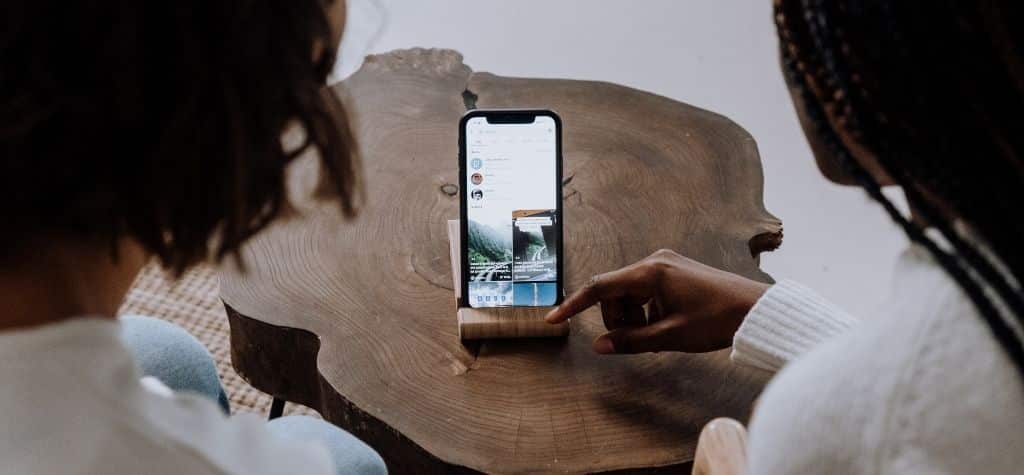
Virtual visits have become a valuable addition to eye care. Cleveland Clinic specialists report that telehealth allows them to see lids, lashes and the anterior segment, enabling diagnosis and treatment of minor red‑eye conditions. Telehealth also enables doctors to triage vision changes and advise whether an in‑office visit is necessary.
Hybrid models are emerging: patients come into the clinic briefly for essential tests like tonometry or imaging, then complete the consultation via video. Such models reduce exposure and travel while maintaining medical quality. However, telehealth remains adjunctive—it does not replace comprehensive eye exams and still cannot perform dilated eye exams or measure eye pressure.
How to Use Online Eye Tests Safely
If you decide to try a home vision test or online exam, follow these tips:
- Use a reputable platform. Look for services endorsed by professional organizations or major insurers and confirm the results are reviewed by a licensed optometrist or ophthalmologist.
- Set up your environment. Stand or sit the recommended distance from the screen (often 10 feet) in a well‑lit room. Wear your current glasses if advised and cover one eye at a time.
- Follow instructions exactly. Inaccurate results come from poor setup or misreading the chart. Some apps use smartphone attachments—use them properly and sanitize devices between users.
- Record your results. Keep a log of your visual acuity and share it with your doctor. This helps detect changes between exams.
- Don’t use online tests for contacts or high‑powered prescriptions. Contact lenses require fitting by a professional to avoid complications.
- Schedule regular professional exams. Online tests do not replace comprehensive eye care. Follow the exam schedule recommended for your age and risk factors.
Conclusion and Takeaways
Online vision tests and telehealth visits offer convenience, but they are not a substitute for comprehensive eye care. At best they can measure visual acuity, help renew prescriptions for healthy adults and provide triage for minor conditions. They cannot detect sight‑threatening diseases like glaucoma, cataracts, diabetic retinopathy or macular degeneration. Only a dilated exam performed by an eye doctor can uncover these conditions early.
If your goal is optimal eye health, use online tests as a supplement—not your sole source of care. Schedule regular comprehensive eye exams according to age and risk factor guidelines, and see your eye doctor promptly if you experience any symptoms. Your eyes are precious, and protecting them requires more than a quick click online.
