

Plastic waste has become one of the planet’s biggest headaches. According to the United Nations, more than 400 million tonnes of plastic are produced every year, yet less than 10 percent is recycled. Millions of tonnes of discarded plastic leak into our lakes, rivers and seas every year. Eyewear frames have traditionally been part of this problem — many are made of non‑biodegradable plastics and metals that end up as landfill. In North America alone, more than 4 million pairs of reading glasses are discarded each year, adding around 250 metric tons of plastic waste to landfills. With plastic waste piling up and consumers demanding greener options, the eyewear industry is in the midst of a sustainable revolution.
This article explores the eco‑eyewear landscape heading into 2026. We look at recycled and bio‑based materials that reduce waste, examine innovations like 3D‑printed frames and carbon‑neutral manufacturing, and highlight companies that pair social impact with sustainable design. Whether you’re an eco‑conscious shopper or simply curious about the latest trends, this guide will help you understand which materials and practices to watch in the coming year.
Why sustainable eyewear matters

Before diving into materials and brands, it helps to understand why sustainable frames are so important. Plastic pollution has severe environmental impacts:
- Air quality: Plastic waste is often burned to remove it from landfills, releasing toxic gases and contributing to air pollution.
- Soil quality: Plastics can contaminate soil through sewage sludge and waste disposal, reducing its ability to support healthy plant growth.
- Ocean health: Discarded plastic forms massive garbage patches in our oceans, damaging marine habitats and entering the food chain. The United Nations estimates that about 11 million tonnes of plastic waste enter lakes, rivers and seas every year.
- Wildlife: Animals ingest or become entangled in plastic debris, suffering injury or death.
The eyewear industry adds to this problem because frames are typically made of petroleum‑derived plastic or metals that are hard to recycle. According to All About Vision, 91 percent of plastic waste is not recycled. When billions of glasses and sunglasses are produced each year, even a small improvement in material choices can make a big difference.
A circular economy for eyewear
Sustainable eyewear is part of a larger push toward a circular economy, where materials are reused or returned to nature rather than thrown away. Circular practices include:
- Using recycled and bio‑based materials that reduce reliance on fossil fuels and keep waste out of landfills.
- Designing for longevity and modularity so frames can be repaired or updated rather than discarded.
- Offering donation and recycling programs that extend the life of eyewear and keep materials in use.
- Adopting manufacturing methods like 3D printing that minimize waste during production.
In the following sections we explore these strategies and highlight the materials and innovations set to shape eco‑eyewear in 2026.
Recycled materials: Giving waste a second life

Recycling turns old waste into new products. Several eyewear companies are now transforming discarded plastics and metals into stylish frames. These recycled materials often perform just as well as traditional plastics, but with a much lower environmental impact.
Ocean plastic and fishing nets
A growing number of brands are harvesting plastic waste from oceans to create frames:
- SEA2SEE and Eco Eyewear collect marine plastic and convert it into durable eyewear. By reclaiming fishing nets, bottles and other ocean debris, these companies prevent plastic from harming marine life while creating unique designs.
- Costa del Mar’s Untangled collection uses frames made from 97 % to 100 % recycled fishing nets. The company partners with community programs to collect derelict nets, which are then cleaned, shredded and pelletized to form new frames.
Recycled plastic bottles
Every year, billions of plastic bottles are thrown away. Some eyewear brands see this waste as an opportunity:
- Eyebuydirect’s 5 TO SEE line crafts each frame from five recycled plastic bottles. By turning post‑consumer PET into fashionable eyewear, the company keeps bottles out of landfills and oceans.
Recycled metals
Metals like stainless steel are highly recyclable and provide a lightweight yet durable option for frames:
- MYKITA uses recycled stainless steel in many of its collections. Recycled metals reduce the need for mining virgin ore and can be recycled repeatedly without loss of quality.
Why recycled materials matter
Recycling eyewear materials offers several benefits:
- Waste reduction: Recycled plastic keeps tonnes of waste out of landfills and oceans.
- Lower energy use: Recycling typically uses less energy than producing new materials from scratch.
- Reduced carbon footprint: By reusing existing materials, brands avoid the emissions associated with extracting and processing fossil fuels.
- Storytelling: Wearing frames made from ocean plastic or fishing nets lets consumers signal their commitment to sustainability.
Bio‑based materials: From plants to frames
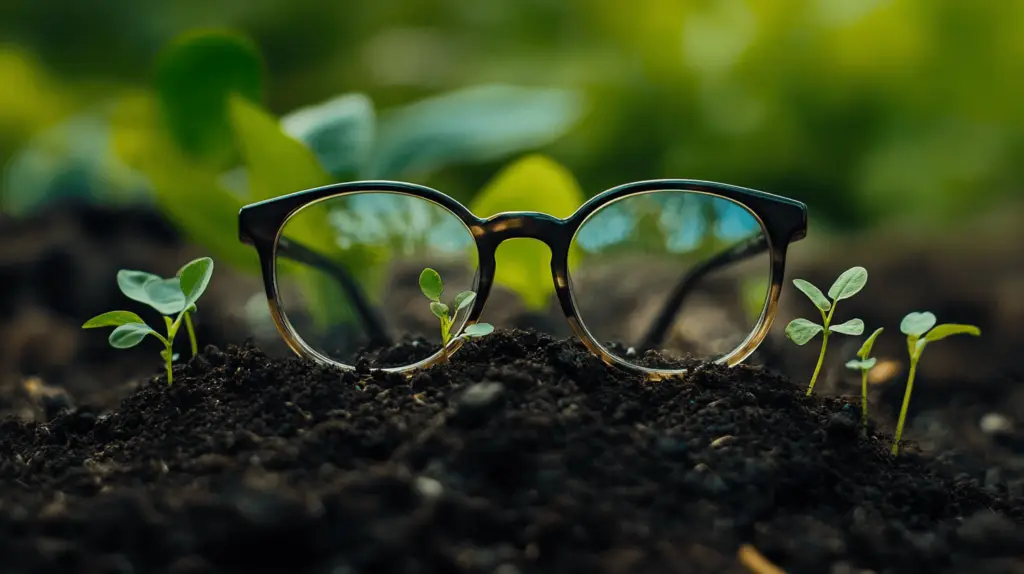
Bio‑based materials are derived from renewable resources like wood pulp, castor beans or corn. These materials can replace petroleum‑based plastics and often biodegrade more easily. As demand for natural products grows, bio‑based options are taking center stage in eco‑eyewear.
Bio‑acetate: Wood pulp meets cotton seeds
Bio‑acetate is a popular alternative to traditional cellulose acetate. Made from wood pulp and cotton seeds mixed with a plant‑based plasticizer, bio‑acetate reduces reliance on fossil fuels. It can also biodegrade under the right conditions, making it an appealing option for sustainable frames.
Several brands have adopted bio‑acetate:
- Ray‑Ban’s bio‑based frames contain 28 % to 54 % biological content. By incorporating plant‑based materials, these frames minimize petroleum content without sacrificing style.
- Botaniq by Inspecs combines bio‑acetate with FSC‑certified wood accents, and plants a tree for every frame sold. FSC certification ensures that wood comes from responsibly managed forests.
Eastman Acetate Renew
Chemical company Eastman has pioneered Acetate Renew, a material made from 60 % sustainably sourced wood pulp and 40 % certified recycled content. Instead of using virgin fossil resources, the recycled content is derived from hard‑to‑recycle plastics like carpets, textiles and eyewear industry waste. Acetate Renew offers the same performance as traditional acetate while enabling brands to reduce their carbon footprint. Austrian eyewear company Andy Wolf partnered with Eastman to switch most of its frames to Acetate Renew. By 2023 the brand achieved its goal of producing 75 percent of its acetate frames from this sustainable material.
Mazzucchelli M49 bioplastic
Italian manufacturer Mazzucchelli 1849 developed M49, a bioplastic designed for eyewear. M49 is made of cellulose acetate and a plasticizer derived from vegetables, so the formula is mostly composed of renewable materials. The company replaced conventional phthalate plasticizers with a plant‑based alternative, giving M49 a high bio‑based content. Independent testing shows that M49 is about 68 % natural origin, and it is biodegradable — more than 90 percent of the material breaks down after 115 days. M49 frames offer the look and durability of traditional acetate with a much smaller environmental footprint.
Plantix bio‑acetate
British brand Bird Eyewear introduced Plantix, a low‑carbon bio‑acetate made from renewable resources. Plantix combines acetic acid with plant‑based polymers and uses plant‑based dyes for color. Each frame has a carbon footprint of just 113 grams of CO₂ and can be recycled or composted at the end of its life. Bird also plans to introduce a zero‑waste case made from local waste in Devon, demonstrating a commitment to sustainability beyond the frame itself.
Bio‑based nylons and rubbers
Other plant‑derived materials are gaining popularity:
- Bio‑based nylon: Made from renewable castor beans, this material offers strength and flexibility. For example, Materialise’s Ultrasint® PA11, a 100 % bio‑based polymer derived from castor beans, is used for 3D‑printed frames. The castor beans are grown through sustainable farming initiatives that avoid deforestation.
- Bio‑based rubber: Some brands use corn‑based rubber to provide soft, flexible components like nose pads.
Bamboo and natural woods
Bamboo and wood offer a renewable, biodegradable alternative to plastic. In the construction industry, bamboo is recognized as a fast‑growing, renewable resource that can be harvested in 3–6 years. This makes it an attractive material for eyewear as well. Frames made of FSC‑certified wood ensure that the wood comes from forests managed for long‑term health. Brands like Feb31st craft frames from sustainable woods and reuse offcuts to heat their factory or create tabletops.
Why bio‑based materials matter
Bio‑based materials offer several advantages:
- Renewable feedstocks: Plants like cotton, castor beans and bamboo can be grown and harvested repeatedly, unlike finite fossil fuels.
- Lower carbon emissions: Plant‑based materials often have a smaller carbon footprint because they absorb CO₂ during growth.
- Biodegradability: Many bio‑based materials break down more easily than petroleum plastics, reducing long‑term pollution.
- Health benefits: Bio‑based plasticizers reduce exposure to potentially harmful phthalates and other chemicals.
Social impact and reforestation initiatives
Sustainability is not only about materials; it’s also about people and the planet. Many eco‑eyewear brands pair sustainable materials with social initiatives.
- Tree‑planting programs: Botaniq plants a tree for every frame sold, connecting each purchase to reforestation efforts. Tree planting helps offset carbon emissions and supports biodiversity.
- Inclusivity: Eyespace introduced the Range Rover Omni‑Fit collection using Mazzucchelli M49 bioplastic. These frames feature adjustable nose pads, elevated bridges and extended pad arms to fit a wider range of face shapes. Inclusivity ensures that sustainable eyewear is accessible to more people.
- Zero waste practices: Feb31st uses wooden frames and ensures that offcuts are either reused to heat the factory or turned into tabletops. This closed‑loop approach reduces waste and promotes creativity.
3D printing: Additive manufacturing for eyewear

Traditional eyewear manufacturing is subtractive: large sheets of acetate are cut into smaller pieces, wasting up to 75 % of the acetate. 3D printing flips this process by building frames layer by layer from powdered material. Key benefits include:
- Waste reduction: Additive manufacturing uses only the material needed to create each frame, virtually eliminating scrap.
- On‑demand production: Brands can print small batches as needed, reducing overproduction and unsold inventory.
- Customization: 3D printing allows frames to be tailored to an individual’s face shape and size, improving fit and comfort.
- Bio‑based polymers: Materialise’s Ultrasint® PA11 is a 100 % bio‑based polymer made from castor beans. When used in 3D printing, it produces durable frames while addressing the fashion industry’s overproduction problem. Collaborations with designers like Odette Lunettes show that 3D printing can combine performance with personalization and sustainability.
Donation and recycling programs
Choosing sustainable frames is only half the battle; properly disposing of old glasses is equally important. Organizations and eyewear brands have launched programs to keep used frames out of landfills:
- Donation programs: Groups like Respectacle and Lions Club International accept gently used glasses for redistribution to people who need them. The EyeMed Donate for Good program collects glasses for recycling and donates money to vision charities for each pair.
- Recycling programs: Some organizations disassemble old frames into their component parts for recycling. Bio‑based and bamboo frames can be composted under the right conditions.
How to dispose of old frames responsibly
- Donate: If your old glasses are still in good condition, donate them to a charity that provides eyewear to people in need.
- Recycle: Look for local programs that accept glasses for recycling. Make sure to remove any prescription lenses if required.
- Compost: Frames made from bio‑acetate or bamboo may be compostable. Check the manufacturer’s guidelines.
Looking ahead: Materials and trends to watch in 2026

As consumers demand more sustainable options, the eyewear industry is moving quickly. Here are some trends and materials poised to influence eco‑eyewear in 2026:
1. Greater adoption of recycled and circular materials
Expect more brands to embrace Acetate Renew and other circular materials that incorporate recycled plastics. With companies like Andy Wolf demonstrating that high‑fashion eyewear can be made sustainably, mainstream adoption is likely to grow.
2. Expansion of plant‑based polymers
Bio‑based polymers derived from castor beans, corn and sugar cane will continue to replace petroleum plastics. Innovations like Plantix with its low‑carbon footprint and Ultrasint® PA11 for 3D printing show that plant‑based materials can deliver high performance while reducing environmental impact.
3. Increased use of 3D printing
Additive manufacturing will play a bigger role as brands seek to reduce waste and offer personalized fit. The ability to print frames on demand eliminates overproduction and stock risk, making it attractive for both large companies and small design houses.
4. Innovative designs with natural materials
Wood and bamboo frames will evolve with better finishing techniques and more durable coatings. Expect to see more FSC‑certified wood and creative combinations of natural materials, such as wood inlays paired with bio‑acetate or recycled metal.
5. Closed‑loop systems and reforestation
Companies will continue to invest in programs that offset their carbon footprint. Tree‑planting initiatives and zero‑waste manufacturing will become standard features of eco‑eyewear brands.
Conclusion: Choose wisely and support sustainable innovation
The eyewear industry is undergoing a transformation. Plastic waste and environmental concerns have spurred innovation in materials and manufacturing, leading to a new generation of eco‑eyewear that is stylish, durable and kind to the planet. Whether it’s frames made from recycled fishing nets, bio‑acetate derived from wood pulp and cotton seeds, or 3D‑printed eyewear crafted from 100 % castor‑bean polymer, sustainable options abound.
Here are a few steps you can take to support the movement:
- Choose recycled or bio‑based frames: Opt for glasses made from recycled ocean plastic, Acetate Renew, M49 bioplastic or other renewable materials.
- Donate or recycle old glasses: Keep frames out of landfills by donating them or sending them to recycling programs.
- Ask about sourcing: Seek brands that use FSC‑certified wood or plant‑based plasticizers and are transparent about their supply chain.
- Support companies with social impact: Look for brands that plant trees, reduce waste, or invest in community programs.
- Stay curious: Follow developments in 3D printing and new bio‑polymers. The sustainable eyewear landscape is evolving quickly, and 2026 promises exciting innovations.
By making informed choices and supporting responsible brands, consumers play a vital role in shaping a more sustainable future. Eco‑eyewear proves that fashion and sustainability can coexist — and in 2026, there’s never been a better time to see the world through greener lenses.
