

Are Your Eyes Giving Away Your Age?
Look in the mirror and you might notice that your eyes tell a story. Fine lines, dark circles and a bit of puffiness appear here before almost anywhere else. The delicate skin around the eyes is just 0.2 mm thick in some people—about a quarter of the thickness of the skin on your cheeks. Because this area has fewer oil glands and less protective fat, it dries out faster, wrinkles sooner and shows the effects of late nights or sun exposure more quickly. No wonder eye creams promise miracles.
One ingredient getting a lot of buzz is peptides. Advertisers claim that these microscopic chains of amino acids can firm skin, erase crow’s‑feet and turn back the clock. But what does the science say? Are peptides truly the secret to younger eyes, or just one part of a larger skin‑care puzzle? This article explores how eye aging happens, what peptides do, the evidence behind them and how to use them wisely.
Why the Eye Area Ages Quickly
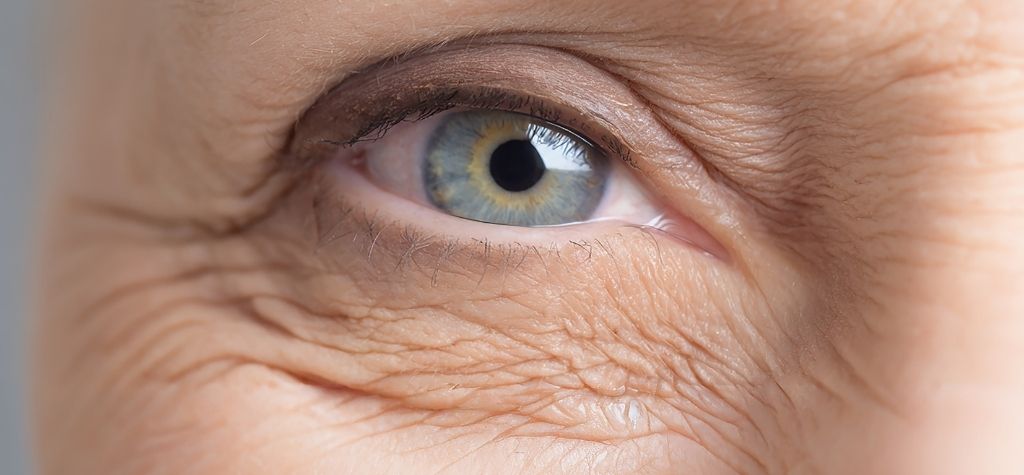
Before diving into peptides, it helps to understand why the skin around your eyes often looks older than the rest of your face. Several factors make this area particularly vulnerable:
- Thin, delicate skin: Eyelid skin is the thinnest on the body at about 0.2 mm. The thin barrier means fewer structural proteins and oil glands. Without much collagen and elastin, the skin has less support and develops fine lines quickly.
- Constant motion: We blink up to 20,000 times a day, squint at screens and smile. These repeated movements create dynamic wrinkles that become etched into resting lines known as crow’s‑feet.
- Collagen loss: Aging and sun exposure damage collagen. In aged skin, fibroblasts produce fewer collagen fibers while increasing collagen‑degrading enzymes. This “vicious cycle” of collagen loss leads to thinner, looser skin and makes dark circles and hollows more noticeable.
- Environmental stress: UV rays, pollution and smoking generate reactive oxygen species (ROS) that damage DNA, proteins and collagen. Free radicals also promote inflammation, another driver of skin aging.
- Lifestyle habits: Lack of sleep and dehydration can accentuate fine lines and shadows under the eyes. Healthline notes that sun exposure, tanning beds, and smoking accelerate thinning and wrinkling in this already fragile area.
- Genetics and skin tone: Some people are born with thinner skin or less melanin. Research cited by Healthline suggests that darker skin tones may retain thickness better.
Because of these factors, many people seek creams or serums to keep the eye area looking youthful. Peptides are among the most popular active ingredients in modern formulas.
Peptides Explained: Tiny Builders With Big Potential

What Are Peptides?
Peptides are strings of amino acids, the basic building blocks of proteins. The Cleveland Clinic compares them to Lego blocks: individual amino acids stack into peptides, which then combine into larger proteins like collagen and elastin. When applied in skin care products, peptides are thought to provide the body with raw materials and signals to produce more of these structural proteins.
Dermatologist Wilma Bergfeld, MD, notes that peptides can help dampen inflammation and stimulate collagen and elastin production. By creating the building blocks for these proteins, peptides may help skin remain stronger, more flexible and less prone to wrinkles. They may also combat discoloration, crepey texture and dryness.
How Peptides Work on Skin
Research suggests that peptides can work through several mechanisms:
- Signal peptides: Some peptides act like messengers that tell skin cells to make more collagen, elastin or other matrix components. The pentapeptide palmitoyl‑KTTKS (lysine–threonine–threonine–lysine–serine) is a fragment of procollagen I. In a 12‑week double‑blind study, a moisturizer containing just three parts per million of this peptide significantly reduced fine lines and wrinkles.
- Carrier peptides: Certain peptides deliver trace minerals (e.g., copper) required for enzyme function. The GHK‑Cu (glycyl‑l‑histidyl‑l‑lysine plus copper) peptide binds copper and helps transport it into cells. Laboratory studies show that GHK‑Cu stimulates collagen, elastin and glycosaminoglycan synthesis and supports dermal fibroblasts. It can tighten loose skin, repair barrier proteins, improve firmness and clarity, and reduce fine lines and wrinkles.
- Enzyme‑inhibitor peptides: Some peptides slow down enzymes like matrix metalloproteinases (MMPs) that break down collagen. For example, GHK‑Cu not only stimulates collagen synthesis but also modulates the activity of MMPs to prevent excessive collagen degradation.
- Neurotransmitter‑inhibitor peptides: Small peptides like acetyl hexapeptide‑8 mimic proteins involved in muscle contraction. By inhibiting neurotransmitter release, they may temporarily reduce expression lines (sometimes marketed as “Botox‑like” peptides), although robust clinical evidence is limited.
Are Peptides Natural?
Our bodies naturally produce peptides. However, as we age, levels decline. The concentration of GHK‑Cu in blood plasma falls from about 200 ng/mL at age 20 to 80 ng/mL at age 60. Topical application aims to replenish these signaling molecules on the skin’s surface and stimulate repair processes.
Evidence That Peptides Improve the Eye Area
Scientific Reviews and Laboratory Data
A 2024 review of eye‑cream ingredients in the International Journal of Women’s Dermatology summarizes why peptides are promising. It notes that peptides are short sequences of amino acids that reverse dermal and epidermal signs of aging by supporting fibroblast function and stimulating the production of collagen, elastin and glycosaminoglycans. Because collagen decreases with age, boosting its production is expected to improve wrinkles and sagging.
The review highlights two clinical examples:
- Palmitoyl‑KTTKS (Matrixyl): A double‑blind, split‑face study found that using a moisturizer with 3 ppm of palmitoyl‑KTTKS for 12 weeks significantly reduced fine lines and wrinkles compared with placebo.
- Peptide mixtures: A formulation containing three peptide derivatives increased dermal collagen and epidermal proteins, leading to significant improvement in crow’s‑feet and other wrinkles.
Clinical Trial: Multi‑Peptide Eye Serum
Real‑world evidence is more compelling when it involves human participants. A 2023 clinical trial published in Journal of Cosmetic Dermatology evaluated a daily eye serum containing multiple peptides. Thirty‑two women (average age 28.5 years) used the serum for 28 days. Researchers measured hydration, elasticity and wrinkles using specialized instruments and self‑assessment questionnaires. Results showed:
- A significant decrease in the number, depth and volume of wrinkles by day 28.
- Continuous increases in skin hydration, elasticity and firmness throughout the study.
- About 75 % of participants were satisfied with their skin’s appearance and reported visible improvements in elasticity and smoothness.
- No adverse reactions were observed.
While the study had limitations (small sample size and short duration), it provides early evidence that a well‑formulated peptide serum can improve crow’s‑feet and hydration.
Copper Peptides and Skin Regeneration
In the realm of specialty peptides, copper‑containing GHK‑Cu stands out. A 2018 review in the International Journal of Molecular Sciences reports that GHK‑Cu stimulates blood vessel and nerve growth, increases collagen, elastin and glycosaminoglycan synthesis, and supports dermal fibroblasts. It also exerts antioxidant and anti‑inflammatory effects and helps regulate genes involved in tissue repair. Notably, GHK‑Cu can:
- Tighten loose skin and reverse thinning.
- Repair barrier proteins and improve firmness and clarity.
- Reduce fine lines and the depth of wrinkles.
- Smooth rough skin, reduce photodamage and mottled hyperpigmentation, and stimulate wound healing.
These laboratory and clinical findings support the idea that peptides can contribute to healthier, more youthful skin. However, peptides are not the only effective ingredients for the eye area.
Beyond Peptides: Other Proven Eye‑Care Ingredients
Dermatologists often recommend a combination of actives to achieve noticeable results. Here are some evidence‑based ingredients that complement or, in some cases, outperform peptides:
Hyaluronic Acid
Hyaluronic acid (HA) is a naturally occurring glycosaminoglycan capable of holding up to 1000 times its weight in water. In a study of 76 women aged 30–60 with periocular wrinkles, a low‑molecular‑weight HA cream applied twice daily for 60 days significantly improved skin hydration and elasticity compared with placebo. Another three‑month trial on 20 women using HA‑based creams found 13–30 % increases in elasticity, 10–20 % reductions in wrinkle depth, and improved hydration. These results highlight HA’s ability to plump and smooth the eye area.
Ceramides
Ceramides are lipids that help maintain the skin’s barrier and retain moisture. They connect corneocytes in the stratum corneum to form a waterproof barrier. A ceramide‑containing cream significantly increased the water content of eyelid skin without causing irritation. Ceramides relieve dryness and are safe for adults and children.
Caffeine
Caffeine acts as an antioxidant and phosphodiesterase inhibitor. It raises cyclic adenosine monophosphate (cAMP) and suppresses inflammatory pathways. A study of 11 women using a 3 % caffeine pad for one month found significant reduction in periorbital hyperpigmentation and improved blood circulation. Other studies note that caffeine reduces puffiness by stimulating lipolysis and improves skin elasticity and barrier function.
Vitamin C and Vitamin E
These antioxidants protect skin from oxidative stress and support collagen synthesis. Vitamin C neutralizes free radicals, boosts collagen production and inhibits collagen‑degrading enzymes. In a three‑month randomized trial, topical vitamin C significantly improved fine wrinkles, roughness and skin tone, with 84 % of subjects preferring the treated side. Vitamin E protects the cell membrane and lipid bilayer and, in a four‑month study, improved periorbital wrinkling and reduced UV‑induced inflammation. Combining vitamins C and E provides synergistic photoprotection.
Niacinamide (Vitamin B3)
Niacinamide enhances the skin barrier, reduces inflammation and lightens hyperpigmentation. Studies show it penetrates the stratum corneum easily, increases NAD levels and reduces fine lines and wrinkles. It is well‑tolerated and chemically stable, making it ideal for formulations.
Retinoids
Retinoids (vitamin A derivatives) remain the gold standard for photodamaged skin. They boost collagen production and speed cell turnover. However, retinoids can irritate the thin periorbital skin. The “Tricky Tear Trough” review notes that skin irritation is often the limiting factor when using retinoids near the eyes. Conjunctival irritation and corneal toxicity have been reported with high doses of all‑trans‑retinoic acid. Among over‑the‑counter options, retinaldehyde appears to offer the best balance of efficacy and minimal irritation. Always start slowly and use a lower concentration when applying retinoids around the eyes.
Potential Risks and Limitations of Peptide Products
While peptides have promising properties, they are not miracle workers. Consider these factors before investing in a peptide eye cream:
- Quality matters: Dermatologist Dr. Bergfeld cautions that peptides are only one part of a product’s effectiveness. Many formulas contain moisturizers, humectants, vitamins and other actives. Lower‑cost brands may have simpler chemistry and lower concentrations of peptides. More expensive products sometimes offer better stability and delivery, but price alone doesn’t guarantee results.
- Formulation challenges: Peptides can be fragile. They may degrade before reaching the target cells unless encapsulated or stabilized. The International Journal review notes that product claims often blur the line between “active” and “inactive” ingredients; penetration through the stratum corneum is a key concern.
- Individual variability: Genetics, age and lifestyle affect how skin responds. A peptide that works for one person may not produce the same results for another.
- Limited long‑term data: Many studies are small or short-term. More large, double‑blind, placebo‑controlled trials are needed to establish long‑term safety and efficacy.
How to Use Peptide Eye Creams Effectively
If you decide to try peptides, follow these guidelines:
- Check the ingredient list: Look for specific peptides (e.g., palmitoyl pentapeptide, palmitoyl tripeptide‑5, acetyl hexapeptide‑8, GHK‑Cu) near the middle or top of the list. Formulas with multiple peptides may provide complementary effects.
- Patch test: Apply a small amount on your inner forearm or behind the ear for several days. Watch for redness, swelling or itching. While peptides are generally well‑tolerated, other ingredients (preservatives, fragrances) can cause reactions.
- Start slowly: Introduce one new product at a time. Use a pea‑sized amount twice daily (morning and night) unless directed otherwise. Apply gently with your ring finger to avoid tugging on thin skin.
- Combine with proven basics: A peptide product works best alongside sunscreen, a gentle cleanser, moisturizer and possibly other actives like hyaluronic acid or antioxidants. The American Academy of Dermatology recommends using broad‑spectrum sun protection daily to reduce skin cancer risk and premature aging such as wrinkles.
- Be patient: Improvements in fine lines and elasticity may take 4–12 weeks. Consistent use is key.
- Consult a dermatologist: A professional can recommend a customized regimen and help avoid interactions, especially if you use prescription treatments.
Lifestyle Habits for Youthful Eyes

No cream can fully counteract unhealthy habits. For the best results, pair topical treatments with lifestyle measures:
- Protect from the sun: Wear UV‑blocking sunglasses and a wide‑brim hat, and apply SPF 30+ sunscreen around the eyes. Sun protection not only reduces skin cancer risk but also prevents premature skin aging like sagging and wrinkles.
- Get enough sleep: Aim for 7–9 hours per night. Sleep deprivation accentuates dark circles and fine lines.
- Stay hydrated and eat a balanced diet: Dehydration and nutrient deficiencies can dry the eye area. Include antioxidant‑rich fruits and vegetables, lean proteins and healthy fats.
- Avoid smoking: Smoking damages collagen and accelerates skin aging.
- Be gentle: Avoid rubbing or pulling at the skin when removing makeup or applying products. Use your ring finger to dab creams lightly.
- Manage allergies: Allergies can cause rubbing and swelling. Use appropriate treatments to minimize irritation.
So, Are Peptides the Secret?
Peptides offer real benefits. They act as messengers and carriers that prompt your skin to produce collagen, elastin and other structural proteins. Clinical studies show that specific peptides like palmitoyl‑KTTKS can reduce fine lines and that multi‑peptide formulas improve crow’s‑feet and skin hydration within four weeks. Copper‑binding peptides such as GHK‑Cu not only stimulate collagen but also provide anti‑inflammatory and antioxidant effects.
However, peptides are not a silver bullet. Their effectiveness depends on formulation, concentration and your skin’s unique characteristics. They work best when combined with other evidence‑based ingredients like hyaluronic acid, ceramides, antioxidants and retinoids. Peptides cannot replace healthy habits such as sun protection, adequate sleep and a balanced diet.
Actionable Takeaway
If you’re curious about peptides for younger‑looking eyes:
- Choose quality: Select a reputable product with well‑studied peptides.
- Adopt a comprehensive routine: Combine peptides with sunscreen, moisturizers and other proven actives.
- Be realistic: Expect gradual improvements rather than dramatic overnight changes.
- Consult an expert: A dermatologist can tailor a plan to your needs and help you avoid irritation.
With patience and a holistic approach, peptides can be a valuable tool in your eye‑care arsenal—but they’re only one part of the picture.
