

Augmented reality glasses sound futuristic, but the idea is easy to understand.
They let you see the real world while adding digital content on top of it. That content might be arrows, text, images, 3D objects, or step-by-step instructions. Instead of pulling you out of your environment, AR glasses try to enhance it.
That is why so many people are curious about them. They sit at the point where eyewear, computers, and real life meet. They can help with work, training, navigation, and entertainment. They also show where eyewear technology may be heading next. Your original draft already covered the basics, including common use cases like healthcare, education, manufacturing, and retail.
Augmented reality glasses are wearable displays that add digital information to your real-world view instead of replacing it entirely.
If you have ever wondered how AR glasses actually work, the short answer is this: they use displays, sensors, cameras, software, and fast processing to understand where you are looking and place digital objects in the right spot.
What augmented reality glasses actually are
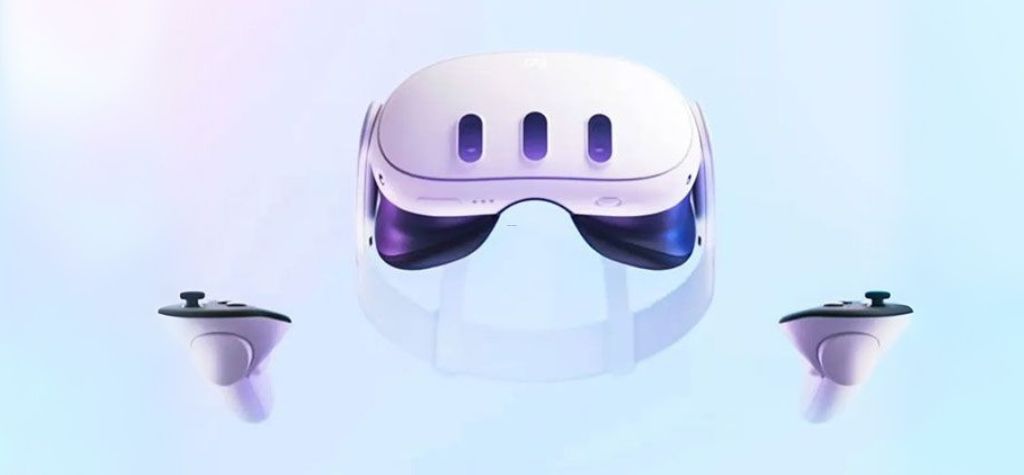
AR glasses are wearable devices that place digital visuals into your field of view. Some are closer to everyday glasses. Others are still bulkier and look more like headsets. The goal, though, is the same: keep the real world visible while adding useful digital layers on top.
This is what makes AR glasses different from virtual reality headsets. VR blocks your view and places you inside a fully digital space. AR does not fully remove the real world. It adds to it. A medical worker might see patient data while still seeing the room. A technician might see arrows and repair steps while looking at a real machine.
It also helps to separate smart glasses from AR glasses. Some smart glasses mainly focus on audio, calls, cameras, or notifications. AR glasses go further by placing digital visuals into your actual line of sight and keeping those visuals aligned with the world around you. That is the big jump.
The basic idea behind how AR glasses work
AR glasses do four big jobs at once.
First, they look at the world around you through sensors and cameras. Second, they track your head, eye, or hand movement. Third, they process that information very quickly. Fourth, they place digital content where it should appear, then keep it stable as you move.
That sounds simple, but it takes a lot of coordination. If the device gets your movement wrong by even a little, the digital object can drift, shake, or feel disconnected from the real scene. Good AR depends on fast tracking and smart software.
Google’s ARCore explains this well. Its system relies on motion tracking, environmental understanding, depth understanding, light estimation, hit testing, and anchors. In plain English, that means the device tries to figure out where it is, what surfaces are around it, how far away things are, how the room is lit, and where a virtual object should stay over time.
The display is where the magic starts
The first part most people think about is the display.
This is the part that shows digital content to your eyes. In AR glasses, that content might appear as floating text, a small panel, a navigation line, or a 3D object placed on a table or machine.
There are two main ways AR systems do this.
Optical see-through displays
Optical see-through systems let you look through the lens or visor while digital visuals are added on top. You still see the real world directly. That is why many people think of this as “true AR.” A review of AR in medicine describes optical see-through as letting the user see the real world through see-through lenses while information is added to that view.
This method feels natural because the world is not fully replaced by a camera feed. It is one reason optical see-through designs are attractive for tasks where real-world awareness matters, like surgery, repair, and guided work.
Video see-through displays
Video see-through systems work differently. Cameras capture the outside world, then the device blends that live video with digital graphics and shows the combined result to your eyes. The same NIH review notes that in video see-through systems, the real world is captured and mixed digitally before being shown back to the user. Stanford’s report also explains that some bulkier systems use exterior cameras, blend the live image with computed imagery, and then project that result to the user.
This can allow rich effects, but it also adds more hardware and more chances for delay or discomfort if the system is not tuned well. That is why the display design matters so much.
Sensors help the glasses understand where you are
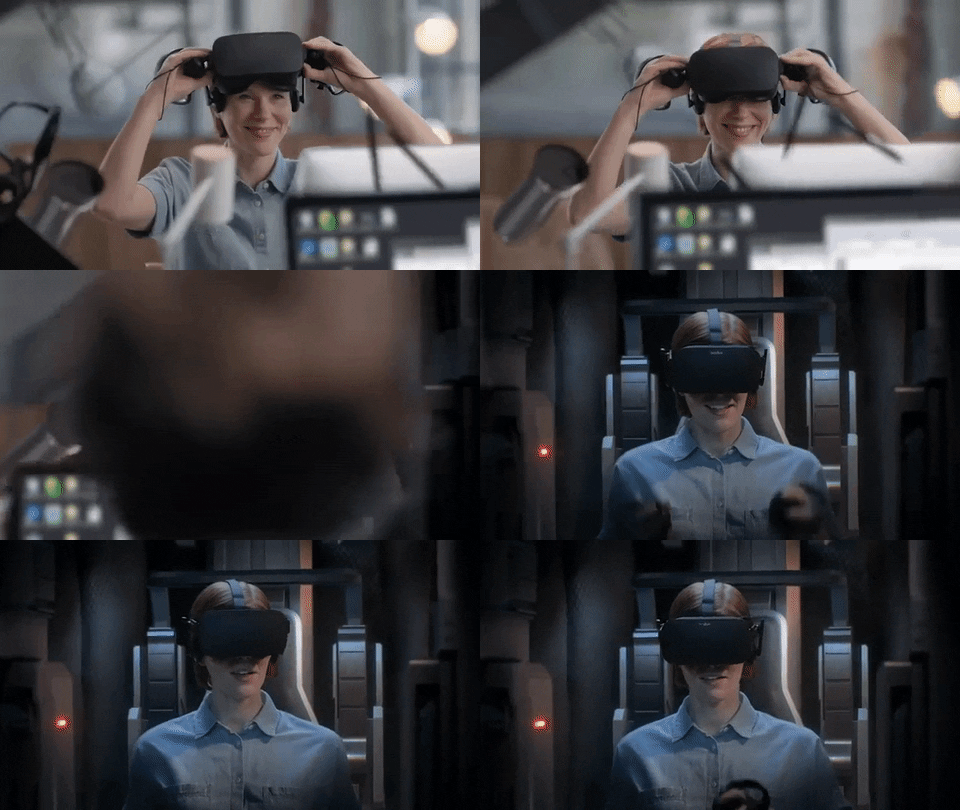
Displays show the visuals, but sensors make them believable.
Without sensors, AR glasses would not know where you are looking or how you are moving. They use things like cameras, accelerometers, gyroscopes, depth sensing, and sometimes eye tracking to understand motion and surroundings. Microsoft’s HoloLens hardware page says the visor contains the device’s sensors and displays, while ARCore explains that AR systems depend on motion tracking, depth, and environmental understanding.
Here is what those systems usually do:
- Motion tracking follows how your head or body moves.
- Environmental understanding identifies surfaces and shapes around you.
- Depth understanding estimates distance.
- Light estimation helps digital objects match the room.
- Eye tracking can help with control, focus, and comfort on supported devices.
This is why a good AR system can place a digital button on a wall or a label on a machine and keep it there as you move. The device is not just showing content. It is constantly updating its understanding of the space around you.
Anchors are what keep digital objects in place
One of the most important AR ideas is the anchor.
ARCore explains that as the system improves its understanding of the world, positions can change. Anchors help keep a virtual object stable over time. That means if you place a digital arrow on a real table, the system keeps trying to hold that arrow in the right place even as you walk around it.
This matters more than people think. Without stable anchors, AR content would float around and feel fake. With good anchors, a virtual instruction panel can stay locked beside a machine, or a training object can stay placed on a desk. That is what makes AR useful instead of gimmicky.
Processing power does the hard work behind the scenes
AR glasses need a lot of computing power.
They are doing several things at once: reading sensors, building a map of the environment, rendering graphics, and updating the display in real time. That all has to happen fast enough to feel smooth. If the device lags, the illusion breaks.
Some AR devices do most of that work on the glasses themselves. Others lean on a connected phone, PC, or cloud system. Enterprise systems may also connect to outside platforms for remote support, shared views, or stored guides. Microsoft’s Guides platform, for example, lets operators use holographic instructions tied to the workspace and collaborate with remote experts through Teams.
That blend of local hardware and connected services is one reason AR can work in both simple consumer tools and advanced industrial systems.
How users control AR glasses
AR glasses are not always controlled like a phone.
Depending on the device, users may interact through touchpads, voice commands, hand gestures, gaze, or eye tracking. Microsoft says HoloLens-based Guides can be controlled with gaze, while NASA describes AR systems that can be operated by speaking or gesturing.
That hands-free control is one of the biggest reasons AR matters in work settings. A mechanic, nurse, or technician does not always have a free hand to tap a screen. But they may still need instructions, remote help, or visual guidance right in front of them.
Where AR glasses are used today

AR glasses are no longer just a science fiction idea. They already have real use cases, especially in training, healthcare, engineering, and guided work. Your draft highlighted many of these areas, and current sources support that broader picture.
Healthcare
AR is being explored in healthcare for surgical planning, live guidance, medical training, and other clinical workflows. Recent reviews describe AR and related immersive tools as active areas for improving patient care and medical education.
A simple reason is easy to see: hands-free visual guidance can be useful when professionals need information without turning away from the patient or task.
Education and training
AR can make learning more visual and more interactive. A recent review of AR teaching tools found that AR-based learning can improve spatial understanding, mental rotation, attention, and academic performance in some settings.
That makes sense for subjects where seeing a 3D model helps more than reading a flat page. AR can place diagrams, body parts, machine parts, or guided steps right in front of the learner.
Manufacturing, repair, and field work
This is one of the strongest use cases today.
Microsoft says Dynamics 365 Guides provides heads-up, hands-free instructions, with holograms that point to tools and show exactly where work should happen. NASA also says AR guidance can reduce training time for complex maintenance and repair tasks by acting like a smart assistant that interprets what the worker sees and suggests the next step.
That is a big deal in places where mistakes cost time, money, or safety. AR does not replace skill, but it can reduce guesswork and make step-by-step tasks easier to follow.
The biggest challenges AR glasses still face
AR glasses are exciting, but they are not perfect.
The main challenges are still comfort, size, battery life, visual quality, and long-wear usability. Stanford’s 2024 report says earlier systems often ended up bulky or delivered less satisfying 3D experiences, and some designs could cause visual fatigue or discomfort. The same report highlights new work aimed at making AR feel more compact and wearable like regular glasses.
There are also human comfort concerns. A 2024 study on smart glasses users reported common eye-strain complaints including eye fatigue, rubbing, and burning. Another occupational study found reduced blink rate with one head-mounted AR device, which may raise dry-eye or eye-strain concerns during longer use.
So while AR glasses are improving, comfort still matters just as much as raw tech.
What the future of AR glasses may look like
The future looks smaller, lighter, and more natural.
Stanford researchers reported a prototype system that can display full-color, moving 3D images over a direct view of the real world using advances in holography, AI, and waveguide display technology. The goal is clear: bring AR closer to the size and feel of ordinary glasses instead of bulky headsets.
That does not mean everyone will wear AR glasses tomorrow. But it does show where the industry wants to go. Better optics, better power use, better comfort, and better real-world usefulness will likely decide how fast AR eyewear grows.
Should regular glasses wearers care about AR?
Yes, even if you do not plan to buy a pair soon.
AR glasses are pushing eyewear into a new category. They are changing how people think about lenses, displays, coatings, comfort, fit, and wearable tech. Even if the average person still buys regular prescription glasses, the design lessons from AR are likely to influence future eyewear products.
That is why this topic matters to an eyewear audience. AR glasses are not just about gadgets. They are part of the bigger story of where vision tech is going.
Conclusion
So, how do augmented reality glasses work?
They combine displays, sensors, cameras, tracking, software, and fast processing to place digital information into your real-world view. Good AR glasses do more than show graphics. They understand movement, map the environment, and keep virtual content stable as you move through space.
That is what makes them so powerful.
In one moment, they can guide a technician through a repair. In another, they can help train a student, support a surgeon, or point a worker to the right part. They still face real limits, especially around comfort and all-day wear. But the direction is clear: AR glasses are moving from bulky experiments toward more practical eyewear.
For readers trying to understand the future of eyewear, AR glasses are worth watching closely.
