

The Rise of Wearable Vision Tech

Imagine putting on a pair of glasses that not only corrects your vision but also translates foreign text, records video clips, streams directions and overlays digital data onto the world around you. This is no longer science fiction. In 2026, smart glasses have become the talk of the tech world. At the same time, regular eyeglasses remain essential for millions who need clear vision. With so much buzz around augmented reality (AR), artificial intelligence (AI) and wearable gadgets, many people wonder whether it’s worth trading a traditional pair for something smarter. This article compares smart glasses and regular glasses to help buyers make an informed choice.
What Are Smart Glasses?
Smart glasses are wearable devices that resemble conventional eyewear but include digital features, sensors, cameras and sometimes speakers. They run on small processors and connect to smartphones or the internet via Bluetooth or Wi‑Fi. Unlike virtual reality headsets, smart glasses typically allow users to see the real world while overlaying digital information.
Key features of AI‑powered smart glasses
According to a 2026 article from Purdue Global Law School, modern smart glasses are evolving quickly. Early devices like Google Glass (released in 2013) were essentially hands‑free cameras and audio recorders with limited voice commands, and the product flopped because it was expensive and bulky. Today’s AI‑powered models include a range of capabilities:
- Video streaming and camera recording: Many smart glasses can livestream what the wearer sees or capture photos and video. The cameras are usually small and embedded in the frame.
- Facial and object recognition: Built‑in AI can recognize faces or objects, enabling hands‑free identification.
- Hands‑free communication: Wearers can make calls or send messages using voice commands.
- Real‑time translation: Some glasses offer instant translation of text or speech, helpful for travel or multilingual environments.
- Augmented reality overlays: Spatial computing allows digital data, graphics or 3‑D models to be superimposed on the physical world.
- Health and industrial use cases: Surgeons can view patient vitals during procedures, technicians can receive remote assistance, and retail employees can access product info instantly.
Smart glasses are essentially mini computers on your face. They require batteries, processors and network connections, which adds complexity and raises concerns about comfort, price and privacy.
A brief history and market growth
Smart glasses gained public attention with Google Glass in 2013. The product was a “beta” experiment with a $1 500 price tag, a 3‑hour battery life and a low‑resolution display. A lack of compelling software, poor aesthetics and significant privacy concerns (like the ability to secretly record) caused the device to fail. Google discontinued it in 2015.
Interest has rebounded due to improvements in display technology, AI and miniaturized components. A 2023–2024 smart‑glasses market report from the University of California, Berkeley notes that meta and other tech giants dominate VR headsets, but AR smart glasses shipments remain small—only about 448,800 units in the U.S. and 721,000 globally in 2022. Analysts expect AR smart‑glasses shipments to jump to 97.7 million units by 2030, resulting in a market worth more than $40 billion.
Early Chinese models such as Nreal, Thunderbird Innovation and Rokid have quickly captured market share; Nreal leads with 34.5 % share. U.S. tech giants like Apple and Google are rumored to release advanced AR eyewear, suggesting strong competition ahead.
How Do Smart Glasses Work?
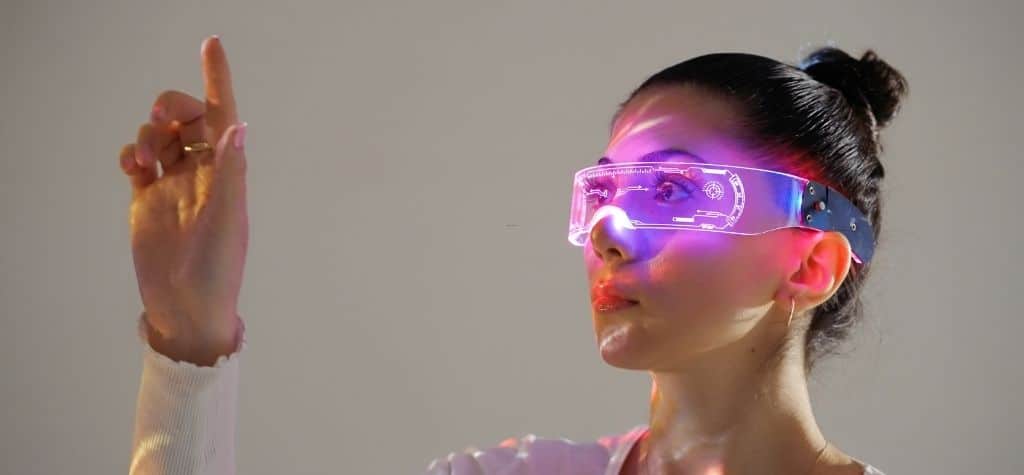
Smart glasses integrate multiple components: cameras, speakers, microphones, small displays (often in the lenses or a tiny screen near the eye), processors, sensors (accelerometers, gyroscopes, GPS) and connectivity modules. Here’s how they function:
- Display and AR overlay: The lenses or a small projector reflect digital images into the wearer’s field of view. AR overlays rely on sensors to detect head movements and align graphics with the real world.
- Cameras and sensors: Cameras capture photos or video and may run computer‑vision algorithms to identify objects or faces. Microphones process voice commands and ambient sound.
- Processing and connectivity: A tiny computer chip runs an operating system, and wireless connectivity links the glasses to a smartphone or cloud server. The device may offload heavy AI tasks to the cloud to save battery.
- Battery: Current AR glasses often provide 6‑8 hours of battery life for basic functions, but camera recording and continuous AR can drain batteries faster. The Berkeley report notes that early Google Glass provided only three hours of battery life, one of the reasons for its demise. Today, most manufacturers claim to achieve 8 hours or more, though heavy use still shortens runtime.
Regular Glasses: The Tried‑and‑True Solution for Clear Vision
What are regular glasses?
Regular eyeglasses—also called spectacle lenses—have been around for centuries. They correct refractive errors, which occur when the eye cannot focus light properly. The National Eye Institute (NEI) estimates that over 150 million Americans have refractive errors, making them one of the most common eye problems.
Types of refractive errors include:
- Nearsightedness (myopia): Difficulty seeing distant objects.
- Farsightedness (hyperopia): Difficulty seeing close objects.
- Age‑related farsightedness (presbyopia): A loss of focusing ability with age, leading to the need for reading glasses.
- Astigmatism: A football‑shaped cornea causing blurring at any distance.
Why glasses are important
Eyeglasses remain the simplest and safest way to correct refractive errors, according to the NEI. They work by bending light rays so that they focus correctly on the retina, restoring clear vision. The Cleveland Clinic’s health library notes that eyeglasses, contact lenses and vision correction surgery are the main treatments for refractive errors, but doctors usually prescribe glasses or contacts before considering surgery.
Advantages of regular glasses:
- Noninvasive: They rest on the nose and ears; there’s no need for surgery.
- Safe and easy: Glasses do not touch the eyes, reducing the risk of infection compared with contact lenses.
- Affordable: A basic pair is far cheaper than high‑tech smart glasses.
- Style: Frames come in countless styles and materials, allowing users to express personality.
- Low maintenance: No batteries or software updates are required. You simply clean them and get periodic prescriptions.
Drawbacks of regular glasses include fogging, reflections and limited field of view if frames are small. They also lack any digital features.
Comparing Smart Glasses and Regular Glasses
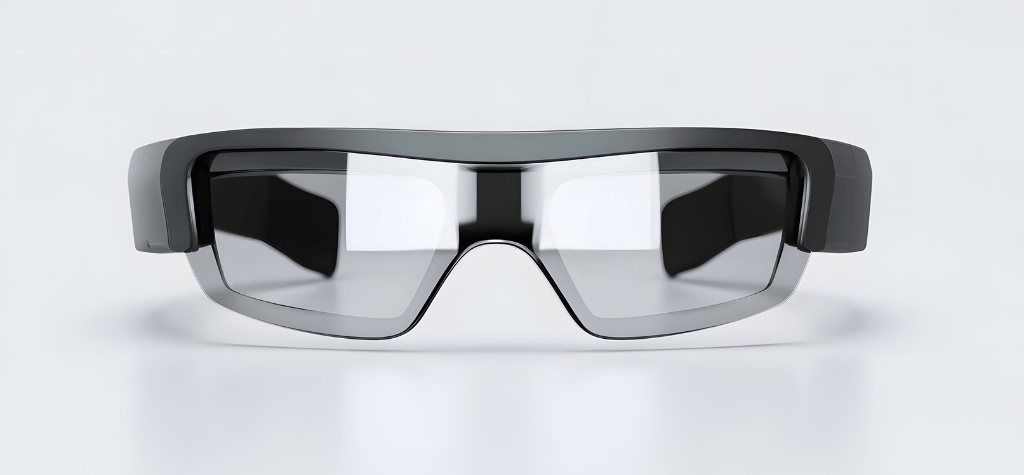
Functionality and purpose
| Feature | Regular Glasses | Smart Glasses |
|---|---|---|
| Primary purpose | Correct refractive errors and improve vision | Provide digital functions (camera, AR, translation) and sometimes vision correction |
| Display | No digital display | Miniature display projects images or overlays AR data |
| Connectivity | None | Bluetooth/Wi‑Fi for pairing with smartphones or cloud services |
| Power | Passive; no battery | Requires battery and charging (usually 6–8 hours of typical use) |
| Cost | Starting from low cost | Often above $300, with high‑end models exceeding $1,000 |
| Maintenance | Occasional cleaning and prescription updates | Requires charging, software updates and sometimes subscription services |
| Privacy risk | No digital recording | Includes cameras and microphones, raising privacy concerns |
| Legal considerations | None beyond standard eyewear regulations | Must comply with biometric privacy laws and wiretapping rules |
Comfort and design
Smart glasses are heavier because of batteries, cameras and electronics. Some early models looked like futuristic headsets, discouraging adoption. The Berkeley report noted that poor aesthetics contributed to Google Glass’s failure. Manufacturers now try to create fashionable frames that look like regular glasses. However, the added weight may still cause discomfort over long periods.
Regular glasses are lightweight, come in various shapes and materials (plastic, metal, titanium) and are widely accepted socially. There’s no learning curve or worry about charging.
Battery life and power management
Battery life is a major differentiator. As mentioned, early smart glasses offered around three hours of battery life. Most current AR glasses advertise eight hours for audio functions, but continuous camera or AR use drains them faster. Users must carry chargers or portable batteries.
Regular glasses require no power.
Software and updates
Smart glasses rely on operating systems and apps. Poor software support contributed to Google Glass’s downfall; the Berkeley report lists a limited set of functions (time, weather, calendar, navigation and translation) and a lack of a robust app store. Modern devices offer more features but still depend on developer ecosystems. Users must install firmware updates for security and new functions.
Regular glasses need only periodic lens changes as prescriptions change. There are no software dependencies.
Privacy and legal concerns
Smart glasses’ ability to record video, audio and even collect biometric data introduces serious privacy issues. Purdue Global Law School warns that AI‑powered smart glasses can collect facial recognition and voiceprint data, which may be governed by biometric privacy laws like Illinois’ Biometric Information Privacy Act (BIPA). BIPA requires organizations to obtain written consent before collecting biometric data and outlines penalties for violations. Similar laws exist in Texas and Washington. Recording conversations may also violate wiretapping laws in states where all parties must consent to audio recording. Most jurisdictions prohibit hidden cameras in places with a reasonable expectation of privacy.
Regular glasses have no built‑in recording features, so they pose no additional privacy risks beyond general video‑surveillance laws.
Health and safety
Smart glasses are still new enough that long‑term health effects are unknown. People may worry about radiation, distraction and eye strain. The Berkeley report lists safety and privacy concerns and distractibility while operating motor vehicles as major reasons for early smart‑glasses failures. Modern devices attempt to mitigate distraction with voice commands and minimalistic displays, but the risk remains. NIST researchers note that new user interfaces for first responders, when embedded in smart glasses, should provide data in an intuitive and nonintrusive manner. Their work uses virtual reality test beds to ensure new interfaces do not endanger first responders.
Regular glasses have a long safety track record. They may cause minor discomfort if frames are poorly fitted but generally pose no health risk.
Cost and availability
Smart glasses are expensive. Entry‑level models may cost $300–$500, and high‑end AR glasses with advanced displays can exceed $1 000. The Berkeley report notes that Google Glass’s high price of $1 500 contributed to its failure. Prices may drop as competition increases, but smart glasses remain a luxury for early adopters.
Regular glasses are widely available in many price ranges. Basic prescription frames and lenses can be inexpensive, while designer frames and specialized lenses cost more. Insurance often covers part of the cost. Regular glasses are essential for those with refractive errors, not luxury items.
Use Cases: When Do Smart Glasses Make Sense?

Smart glasses excel in situations where hands‑free information or recording is valuable. Here are some practical examples:
- Healthcare: Surgeons and nurses can view vital signs and medical images while operating, eliminating the need to look away from patients. Some devices integrate with electronic health records for real‑time data.
- First responders: NIST’s research on virtual reality test beds shows that user interfaces can be embedded in firefighters’ masks or smart glasses to display temperature readings or oxygen warnings. The goal is to deliver critical information without distracting or endangering the wearer.
- Field service and repair: Technicians can stream what they see to remote experts who guide them through complex repairs. AR overlays can highlight parts and display step‑by‑step instructions.
- Language translation: Travelers can read foreign text or get real‑time speech translation, making navigation easier.
- Sports and fitness: Some sports eyewear integrate fitness tracking and heads‑up displays for athletes. The Berkeley report notes that the sportswear sector generated $161 billion in 2022 and may drive early adoption of AR glasses.
These use cases show that smart glasses can be transformative for specific professional tasks. For general consumers, however, the benefits may not outweigh the cost and privacy trade‑offs.
Choosing Between Smart Glasses and Regular Glasses: Buyer Considerations in 2026
Before deciding on smart glasses, consider the following factors:
- Vision needs: If you primarily need vision correction, regular glasses or contact lenses are often sufficient. Smart glasses rarely offer custom prescription lenses, and when they do, the price increases.
- Purpose: Ask yourself why you want smart glasses. Are you a surgeon needing hands‑free data, a field technician requiring remote assistance, or a tech enthusiast wanting the latest gadget? If your daily life does not involve tasks that benefit from AR features, regular glasses remain the practical choice.
- Budget: Smart glasses are significantly more expensive. Evaluate whether the added features justify the cost.
- Privacy awareness: Consider the legal environment in your country or state. If you plan to record video or audio, ensure you comply with local privacy and wiretapping laws. Organizations deploying smart glasses should establish policies and obtain consent..
- Battery management: Are you willing to charge another device every day? Frequent travelers or professionals who need long battery life might prefer regular glasses or other wearables that have longer battery life.
- Comfort and style: Regular glasses offer limitless frame styles and lightweight materials. Although smart glasses are becoming more stylish, they are still bulkier and may draw attention.
Pros and Cons at a Glance
Advantages of smart glasses
- Hands‑free access to information: Display navigation, text messages and notifications without looking at your phone.
- Enhanced productivity: Useful for professionals who need to multitask or access data quickly (surgeons, technicians, warehouse workers).
- Real‑time translation and communication: Break language barriers during travel or international meetings.
- Potential for immersive experiences: AR gaming and educational applications overlay digital information onto real objects.
- Early adopter appeal: For tech enthusiasts, smart glasses offer a taste of the future.
Disadvantages of smart glasses
- High cost: Early adopters pay premium prices. Economies of scale may reduce costs in the future, but 2026 models remain expensive.
- Privacy concerns: Built‑in cameras and microphones can capture sensitive data. Laws like BIPA require consent for biometric data collection.
- Battery dependency: Requires regular charging; heavy camera use drains batteries quickly.
- Limited prescription options: Many smart glasses do not accommodate customized lenses for high prescriptions.
- Potential distraction: Notifications or AR overlays can distract from real‑world tasks, especially while driving or walking.
Advantages of regular glasses
- Proven vision correction: They effectively correct nearsightedness, farsightedness, astigmatism and presbyopia.
- Affordable and accessible: Available in many price ranges; insurance often covers part of the cost.
- Low maintenance: No batteries or software updates.
- Wide style choices: Frames range from classic to trendy.
- No privacy issues: They don’t record or transmit any data.
Disadvantages of regular glasses
- No digital features: They cannot translate text or overlay navigation instructions.
- Fogging and reflections: They may fog up in humid conditions or under masks.
- Physical wear and tear: Frames can break; lenses can scratch.
Smart Glasses and the Future: What to Expect

Analysts predict that the smart‑glasses market will grow rapidly, with shipments rising from 721,000 units in 2022 to 97.7 million units by 2030. Growth will be driven by improved displays, longer battery life and integration with AI assistants. Major tech companies are expected to release consumer‑grade AR glasses with sleek designs and prescription options.
At the same time, privacy regulation is catching up. Laws like BIPA and similar statutes in Texas and Washington require consent for biometric data collection. Companies are implementing visible LED indicators to show when cameras or microphones are active, but legal experts caution that lights alone may not satisfy consent requirements. Expect future models to incorporate privacy‑by‑design features, such as hardware switches that physically disconnect cameras and microphones.
Regulatory bodies like NIST are also working on safety standards. NIST’s virtual reality test bed aims to evaluate user interfaces in smart glasses so they deliver information in a nonintrusive way. Such research may lead to guidelines for how AR information is displayed to avoid distraction.
Conclusion: Which Should You Buy?
If you need vision correction, regular glasses remain a reliable, affordable and safe choice. They effectively correct common refractive errors and are recommended by eye care specialists before considering surgery or high‑tech solutions. They also avoid privacy and battery concerns.
Smart glasses, meanwhile, are exciting tools for specific tasks. They shine in hands‑free workflows—surgery, field service, translation and navigation. But they come with high costs, shorter battery life and significant privacy and legal considerations. If you are an early adopter or your work requires AR capabilities, smart glasses may be worth the investment. For most people, however, sticking with regular glasses (perhaps complemented by a smartphone or smartwatch) makes more sense in 2026.
Actionable takeaway
- Get regular eye exams: Vision changes can happen gradually. See an eye care specialist when you notice changes in your vision.
- Evaluate your needs: Consider whether hands‑free digital features justify the price and privacy trade‑offs of smart glasses.
- Stay informed about privacy laws: Before recording or using facial recognition, ensure you understand and comply with local laws.
- Try before you buy: If possible, test smart glasses in person. Comfort, display quality and battery life vary between models.
