

Are Glasses on the Way Out?

Millions of people reach for a pair of eyeglasses each morning. These simple lenses have corrected blurred vision for centuries. Yet every few years, headlines hint at a future where eye drops or pills could make glasses obsolete. One of the most exciting fields behind those headlines involves peptides—tiny chains of amino acids that act as messengers in the body. Some researchers are testing peptide eye drops to protect the retina or heal corneas. Others are experimenting with injections to regrow damaged optic nerves.
It’s tempting to wonder: Will peptides replace the need for eyeglasses? To answer this question, we first need to understand what eyeglasses correct and what peptides actually do. This article explains the science in clear language, explores emerging peptide therapies, and separates realistic hopes from hype. You’ll learn how peptides may help treat certain eye diseases—but also why glasses remain the easiest and most reliable way to correct common vision problems like nearsightedness and presbyopia.
How Vision Works and Why We Need Glasses

Refractive errors: focusing problems in the eye
Our eyes focus light to form clear images on the retina. Two structures handle most of this focusing: the cornea (the clear front layer) and the lens (a flexible structure behind the pupil). If these parts don’t bend light correctly, images blur—a problem known as a refractive error. According to the U.S. National Eye Institute (NEI), refractive errors are the most common vision problem; more than 150 million Americans have one.
The four main types of refractive errors are:
- Nearsightedness (myopia): the eyeball grows too long or the cornea bends light too much, so distant objects look blurry.
- Farsightedness (hyperopia): the eyeball is too short or the cornea too flat, making near objects blurry.
- Astigmatism: the cornea or lens is irregularly shaped, causing distorted or fuzzy vision at all distances.
- Presbyopia: the lens becomes less flexible with age, making it hard to focus on close objects (common after 40).
These problems occur because of physical shape or aging changes in the eye. Treatments aim to refocus light onto the retina. Eye doctors can prescribe eyeglasses, contact lenses or refractive surgery to correct these errors. Eyeglasses are the simplest and safest option. They add or subtract focusing power without changing the eye itself.
Why glasses remain the go-to fix
Eyeglasses work by adding a lens in front of your eye that bends light just enough to compensate for your refractive error. They instantly sharpen vision and can be updated as your prescription changes. Contacts work similarly but sit directly on the cornea. Laser surgery reshapes the cornea to provide permanent correction for many people.
Because refractive errors stem from the size and shape of the eye or the stiffness of the lens, no pill or drop can change them overnight. The eye’s structure is like the camera body; if it’s too long or short, images will blur regardless of how healthy the retina or optic nerve may be. Any therapy that claims to replace glasses must address eye geometry—a tall order for molecules intended mainly to send protective or healing signals.
What Are Peptides and How Could They Help the Eye?

Peptides are short chains of amino acids. Think of them as “mini‑proteins” with big jobs. In the body, they act as hormones, growth factors, neurotransmitters and immune messengers. Because they are small, peptides can often slip into tissues more easily than large proteins. They can also be engineered to bind specific cell receptors and trigger targeted responses.
Researchers are interested in peptides for eye health because they can:
- Protect cells from degeneration. Some peptides imitate natural protective factors that keep photoreceptors or nerve cells alive under stress.
- Repair tissue structure. Collagen‑mimetic peptides (CMPs) attach to damaged collagen fibers and help restore tissue stiffness and integrity.
- Modulate inflammation. Certain peptides reduce harmful inflammation and oxidative stress, which contribute to diseases like dry eye and age‑related macular degeneration (AMD).
- Promote healing. Peptides like BPC‑157 stimulate wound closure and maintain corneal transparency.
- Encourage nerve regrowth. Experimental peptides derived from fibronectin or other proteins coax injured optic nerve fibers to regrow.
These abilities are exciting. However, it’s important to remember that peptides don’t magically reshape the eyeball or soften the lens. Most act on the retina, cornea, sclera or optic nerve. They may complement existing treatments and preserve vision but cannot, as yet, provide the straightforward refractive correction that glasses offer.
Peptide Therapies for Retinal and Macular Diseases
Several peptide therapies are being developed to treat diseases of the retina and macula—the light‑sensing tissues at the back of the eye. These diseases often involve cell death, inflammation or abnormal blood vessel growth. Peptides can target these processes directly.
PEDF‑derived peptides: protecting photoreceptors
Pigment epithelium‑derived factor (PEDF) is a protein naturally produced in the eye that protects photoreceptor cells. Scientists at the U.S. National Eye Institute developed small peptide fragments of PEDF. These fragments are tiny enough to cross the cornea and reach the retina. In mouse models of retinitis pigmentosa (an inherited disease that kills photoreceptors), eye drops containing these peptides reached the retina within an hour. When applied daily, they slowed the loss of photoreceptor cells and preserved vision in several mouse models. The peptides also protected human retinal organoids (lab‑grown mini‑retinas) exposed to cigarette smoke extract, keeping more photoreceptors alive.
These findings are important: they demonstrate a non‑invasive therapy that could delay degenerative diseases until more definitive treatments, such as gene therapy, become available. However, researchers emphasise that PEDF peptides slow progression but do not cure retinitis pigmentosa or AMD.
Integrin‑targeting peptides for diabetic macular edema and AMD
Another area of peptide research focuses on abnormal blood vessel growth in conditions like diabetic macular edema (DME) and wet AMD. Current treatments often involve injections of anti‑VEGF antibodies to stop new vessels and reduce fluid leakage. Peptide alternatives seek to reduce treatment burden and improve durability.
One candidate is ALG‑1001, also called luminate. This small oligopeptide binds multiple integrin receptors on endothelial cells, blocking pathways that drive angiogenesis. In early clinical trials, intravitreal injections of ALG‑1001 improved best corrected visual acuity (BCVA) by three to five lines and reduced central macular thickness in patients with DME. These improvements persisted for several months after treatment ended. In laboratory models, ALG‑1001 caused regression of choroidal neovascularization by over 40 % and worked synergistically with anti‑VEGF antibodies. Because the peptide is about 1/1000th the size of an antibody, it may penetrate tissues more easily and be less expensive to manufacture.
Researchers at Johns Hopkins University developed AXT107, a peptide derived from collagen. AXT107 binds integrins and influences the Tie2 receptor to stabilise blood vessels. In mouse models of macular degeneration and diabetic macular edema, injecting AXT107 not only prevented new vessel growth but reduced fluid leakage by about half compared with controls. The effect persisted longer than typical anti‑VEGF injections. Clinical trials are underway to see whether this peptide can reduce injection frequency for patients.
Anti‑angiogenic eye drops: VIAN‑c4551 and beyond
One major drawback of current treatments for retinal vascular diseases is the need for frequent intravitreal injections. Scientists have therefore searched for peptide eye drops that could reach the retina and combat leaky vessels. A 2025 study reported that a cyclic heptapeptide called VIAN‑c4551 powerfully blocks VEGF‑induced endothelial permeability. In rodents with diabetic macular edema, one daily drop of VIAN‑c4551 prevented and even reversed retinal vascular leakage . The peptide reached high concentrations in the retina and vitreous and kept working for at least 24 hours after application. This suggests a future where non‑invasive peptide drops could maintain a dry retina, reducing the need for injections.
Toll‑like receptor peptides for dry AMD
Age‑related macular degeneration has two forms: “wet” AMD (marked by leaky vessels) and “dry” AMD (characterised by chronic inflammation and cell death). There are currently no approved drugs for dry AMD. Researchers at the Korea Institute of Science and Technology (KIST) screened over 190,000 peptides and identified candidates that block Toll‑like receptor signalling, a key inflammatory pathway. In mouse models of dry AMD, these peptide‑based eye drops protected retinal cells and reduced degeneration. The study noted that a non‑invasive eye drop therapy could avoid complications associated with intravitreal injections.
While promising, these therapies are still in pre‑clinical or early clinical stages. They target specific disease pathways rather than common refractive errors. They could one day preserve the retina in patients who already rely on glasses, but they cannot replace the optical correction provided by eyeglasses.
Peptide Approaches for Age‑Related Visual Decline

Not all visual loss comes from retinal disease. Age‑related decline in neural processing can also reduce visual acuity. A unique peptide therapy targets this problem.
Elamipretide: a mitochondrial protector
Elamipretide (also called MTP‑131) is a mitochondrion‑penetrating peptide designed to stabilise cardiolipin, a phospholipid in the inner mitochondrial membrane. Mitochondria power our cells, including neurons in the retina and visual cortex. With age, mitochondrial function declines, leading to neural dysfunction. Researchers asked whether improving mitochondrial health could reverse age‑related visual decline.
In a 2022 study, scientists measured visual acuity in mice across their lifespan. Photopic (light‑adapted) acuity declined about 40 % by 34 months (roughly equivalent to an 80‑year‑old human). Daily application of elamipretide beginning at 24 months, when acuity had fallen by 16 %, reversed the decline and normalised visual function within two months. The improvements persisted for at least three months after treatment stoppe. When treatment began at 32 months—later in life—it still produced substantial improvement within two months. The study found similar effects on contrast sensitivity and noted that eye‑drop and systemic administration worked comparably.
These findings suggest that mitochondrial peptides like elamipretide could treat neural aspects of visual aging. However, the therapy does not change the shape or stiffness of the eye; rather, it enhances processing of visual signals. For someone whose blurry vision stems from myopia or presbyopia, elamipretide would not eliminate the need for glasses.
Peptides for Corneal Healing and Dry‑Eye Relief
The cornea is the clear dome at the front of the eye. It must stay smooth and transparent for good vision. Injuries, surgery or chronic dry eye can disrupt the cornea and cause pain and blurred vision. Several peptides aim to promote corneal healing and restore comfort.
BPC‑157: speeding up corneal repair
BPC‑157 is a 15‑amino‑acid peptide originally isolated from human gastric juice. It has a broad reputation for accelerating wound healing. In eye research, scientists tested BPC‑157 eye drops on rats with perforating corneal injuries. The therapy regimen involved two drops immediately after injury and then every eight hours. According to a comprehensive review of BPC‑157 therapy, this regimen closed perforating corneal incisions and recovered corneal transparency in rats over 120 hours. After complete debridement of the corneal epithelium, BPC‑157 accelerated recovery and maintained transparency. It also counteracted dry‑eye damage after lacrimal gland removal.
Importantly, the therapy not only sped up healing but also prevented unwanted blood vessel growth. New vessels normally invade the cornea after injury, clouding vision. BPC‑157‑treated rats had little or no neovascularization; any new vessels remained at the limbus and did not reach the injured area. By preserving the cornea’s “angiogenic privilege,” BPC‑157 maintained transparency and visual function.
Although BPC‑157 shows remarkable benefits in rodents, it is not approved for human ophthalmic use. Its long‑term safety and optimal dosing require careful study before human trials.
Fish peptide DFCPPGFNTK for dry eye
Dry‑eye disease causes gritty, painful eyes and blurred vision. Standard artificial tears offer only temporary relief. In search of better solutions, researchers discovered a 10‑amino‑acid peptide named DFCPPGFNTK (DFC) from tilapia skin hydrolysate. In cell experiments, DFC improved viability and mitochondrial function in human corneal epithelial cells exposed to high salt levels. In mice with chemically induced dry eye, eye drops containing DFC:
- Increased tear production and improved tear-film patterns.
- Prevented thinning of the corneal epithelium and preserved goblet cells in the conjunctiva.
- Reduced apoptosis (cell death) in corneal epithelial cells.
- Lowered oxidative stress markers and increased antioxidant enzyme activity.
- Suppressed inflammatory cytokines like IL‑6 and TNF‑α.
The authors concluded that DFC alleviates dry eye by reducing oxidative stress, inflammation, apoptosis and autophagy. While promising, this work remains pre‑clinical, and the peptide has not been tested in human patients.
Collagen mimetic peptides: restoring scleral and corneal integrity
The sclera (the eye’s white outer layer) and the cornea rely on collagen for strength. Conditions like myopia, glaucoma and keratoconus involve altered collagen architecture and loss of tissue stiffness. Researchers created collagen mimetic peptides (CMPs) to bind damaged collagen and restore its structure.
In a 2025 animal study, investigators increased intra‑ocular pressure in rats to mimic ocular stress. The pressure caused a decrease in scleral stiffness and fragmented collagen. When topical CMPs were applied during the same period, they restored tissue stiffness and collagen structure, suggesting they repaired damaged fibers. The study noted that stress‑induced reduction in tissue stiffness facilitates disease progression in conditions involving the peripapillary sclera, including myopia. By promoting collagen repair, CMPs could help the eye maintain its structural integrity and resist disease.
Another experiment treated sections of the optic nerve head with the enzyme MMP‑1, which degrades collagen. MMP‑1 greatly reduced tissue stiffness. Applying a CMP to the damaged tissue partially restored stiffness and reduced collagen fragmentation. The findings indicate that CMPs may one day support scleral and optic nerve health in glaucoma and myopia.
Although CMPs strengthen the eye’s structural tissues, they do not change the overall shape or length of the eyeball. Myopia occurs when the eye grows too long during childhood; once this growth has happened, a peptide cannot shrink the eyeball back to normal size. CMPs may slow further elongation by reinforcing the sclera, but they won’t eliminate the need for glasses in those who already have significant myopia. Human trials are needed to test this hypothesis.
Neuroprotective and Regenerative Peptide Therapies

Peptides also hold promise for protecting and repairing the optic nerve—the bundle of nerve fibers that carries visual signals to the brain. Damage to the optic nerve can cause permanent vision loss, as in glaucoma or traumatic injury.
Semax: supporting the optic nerve
Semax is a synthetic heptapeptide derived from adrenocorticotropic hormone. It has been studied in Russia as a neuroprotective agent. In a small clinical trial involving patients with various optic nerve diseases (vascular, inflammatory or toxic), doctors added intranasal Semax drops or endonasal electrophoresis to standard therapy. The study reported that Semax accelerated recovery and improved visual functions. Patients receiving Semax exhibited better visual acuity, wider visual fields, improved electrical sensitivity and conductivity of the optic nerve, and improved colour vision compared with controls.
While intriguing, these findings come from a small, early-stage trial. Semax is not widely approved for treating optic nerve disease, and its availability is limited outside certain countries. Larger, placebo-controlled studies are needed to confirm benefits and establish dosing and safety.
Fibronectin peptides: regrowing damaged optic nerves
Adult mammals generally cannot regrow optic nerve fibers after injury. In 2024, however, researchers reported that fibronectin‑derived peptides stimulate significant regeneration. Mice received a crush injury to the optic nerve and then injections of the peptide. Within six weeks, the treated nerves showed dense regrowth of fibres through the injury site, extending to the optic chiasm. Even without gene therapy, the peptide improved survival of nerve cells and promoted regrowth. Because these peptides are small fragments of a natural protein, they are relatively simple to manufacture and deliver.
The work is exciting from a basic science standpoint. If peptides can one day regenerate human optic nerves, they might help people with traumatic injuries or advanced glaucoma. Yet this therapy does not address refractive errors. It aims to restore lost nerve connections rather than correct focusing problems.
The Reality Check: Why Peptides Won’t Replace Glasses—Yet
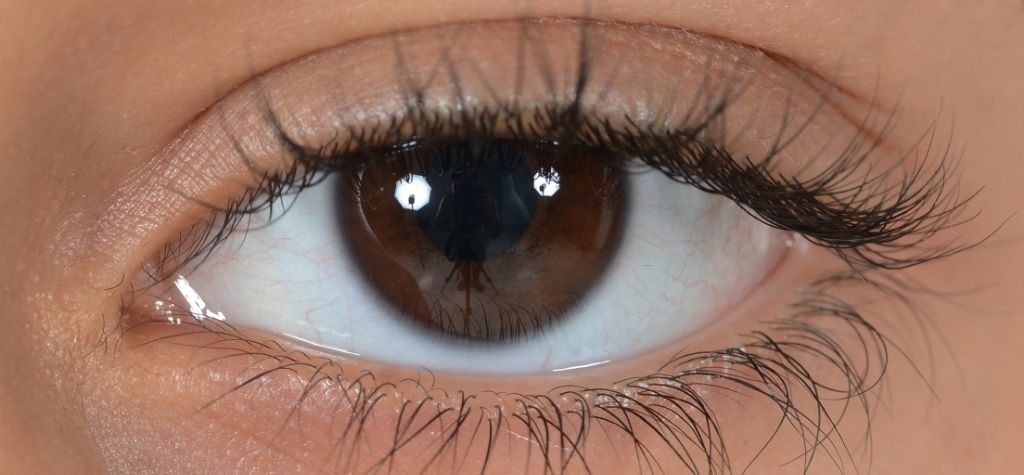
Peptide research is transforming ophthalmology. From protecting photoreceptors to sealing leaky blood vessels, accelerating corneal healing and even regrowing nerves, peptides offer targeted ways to treat or prevent vision loss. However, none of these therapies alter the eye’s basic optical geometry. Myopia, hyperopia and presbyopia arise because of the eye’s shape and lens flexibility. To replace eyeglasses, a treatment would need to:
- Shorten or lengthen the eyeball in a controlled manner.
- Reshape the cornea to correct irregular curvature.
- Restore the lens’s flexibility to allow focusing at different distances.
Peptides tested so far do none of these. They mostly modulate biochemical pathways (e.g., antioxidant activity, inflammation, angiogenesis) or repair existing structures (e.g., collagen fibers). They can preserve or improve visual function, but they cannot adjust the optical power of the eye.
Lens stiffness and presbyopia: a non‑peptide solution
The one area where chemistry could reduce dependence on reading glasses is presbyopia, the age‑related loss of lens flexibility. Scientists have developed small molecules—not peptides—that break protein cross-links and soften the lens. For instance, aggrelyte‑2A, a derivative of aggrelyte‑2, is a small compound that reduces lens stiffness. In aged mouse lenses, aggrelyte‑2A treatment reduced stiffness by 11 %–14 % and increased free thiols, signalling reduced protein cross‑linking. Topical application of aggrelyte‑2A twice daily for four weeks significantly reduced lens stiffness in mice without harming the cornea or retina. These results suggest a potential pharmacologic treatment for presbyopia. Still, aggrelyte‑2A is a small molecule, not a peptide, and human trials are needed to determine whether it can restore near vision enough to avoid reading glasses.
Structural changes are hard to reverse
Even if peptides could repair collagen or regenerate nerves, reversing the length of the eyeball is far more complex. Myopia typically develops during childhood when the eye grows too long. Once elongation has occurred, the sclera and surrounding tissues adapt to the new size. Reinforcing collagen might slow further elongation, but it cannot shrink an already lengthened eye. Similarly, hyperopia arises from a short eyeball; lengthening it is not feasible with current pharmaceuticals.
Laser surgery remains the main way to permanently reshape the cornea and correct refractive errors. Orthokeratology (overnight reshaping with special contact lenses) and implantable lenses also provide non-surgical alternatives. Peptides may complement these procedures by improving healing or reducing inflammation but won’t replace them.
Research still in early stages
Most peptide therapies described here are in animal studies or early clinical trials. It may take years to prove their safety and effectiveness in humans. Regulatory approval processes are rigorous for new drugs, and large trials are needed to monitor adverse effects. Even if a peptide therapy works for a specific disease, it may not be suitable for self-administration like eye drops for presbyopia or myopia.
What the Future Might Look Like
Peptides will likely play an increasing role in eye care, especially for conditions where current treatments fall short. Here are some potential future scenarios:
- Adjunctive therapies: Peptide eye drops could be prescribed alongside glasses or surgery to slow disease progression or improve healing.
- Non-invasive maintenance: For patients with retinal diseases like diabetic macular edema, peptide drops might reduce the frequency of injections, improving quality of life.
- Preventive care: Peptides that strengthen the sclera or reduce inflammation might be used in children at risk of high myopia to slow axial elongation. This would complement, not replace, glasses during development.
- Regenerative medicine: Combined with gene therapy or cell transplantation, peptides could support the survival and integration of transplanted cells or encourage optic nerve regeneration.
In each of these scenarios, eyeglasses remain relevant. Even if peptides preserve or restore some aspects of vision, many people will still need optical correction, at least for certain tasks. Advanced therapies might delay the onset of severe vision loss or reduce treatment burdens, but they won’t make glasses obsolete in the foreseeable future.
Conclusion: Hope Without Hype
Peptides are powerful biological tools. In the eye, they can protect photoreceptors, seal leaky blood vessels, reduce inflammation, accelerate corneal healing, strengthen collagen and even promote nerve regeneration. Studies on PEDF fragments, integrin‑targeting peptides like ALG‑1001 and AXT107, anti‑angiogenic drops like VIAN‑c4551, mitochondrial protectors like elamipretide, healing peptides like BPC‑157, anti‑inflammatory peptides like DFC, collagen mimetic peptides and neuroprotective agents like Semax all demonstrate the remarkable potential of these tiny molecules.
However, peptides do not change the length of your eyeball or restore the flexibility of your lens—the root causes of nearsightedness, farsightedness and presbyopia. Eyeglasses remain the most reliable, accessible and safest way to correct refractive errors. For the foreseeable future, peptides will complement rather than replace glasses. They may delay or treat certain eye diseases, improve surgical outcomes or support nerve regeneration, but the simplicity and effectiveness of a pair of spectacles will continue to make them indispensable.
