
Millions of people rely on eyeglasses to see the world clearly. In the United States alone, The Vision Council estimates that more than 197 million adults use some form of vision correction and about 166.5 million adults (63.7 %) wear prescription eyeglasses. If you’re one of them, you probably have a handful of habits you follow every day without thinking twice. These “silent rules” are part etiquette and part practical care, and following them can keep your glasses in good condition and your eyes feeling comfortable. In this article we’ll explore six of these unspoken rules, explain why they matter and offer tips backed by optometrists and eye‑care organizations. The goal is a gentle, conversational guide that can be read and understood by anyone (including a seventh‑grader), while still providing credible sources and useful takeaways.
Why an Unspoken Code Exists
When something becomes part of your daily routine, you start doing it automatically. People who wear glasses quickly learn that certain habits make life easier. Over time these habits become unspoken rules. Most of the rules below are grounded in good eyewear etiquette and proper lens care. Others stem from common sense about hygiene and avoiding discomfort. Understanding the reasons behind these rules can help you take better care of your glasses and preserve your eyesight.
1. Use Both Hands When Putting On or Taking Off Your Glasses

Why Two Hands Matter
If you slip your glasses on or off with one hand, you might unknowingly twist or bend the frames. Optometrists repeatedly advise using two hands to remove glasses. A vision‑care article from Punzal Vision explains that removing your glasses with both hands “ensures that they don’t suffer any damage” and prevents the frame from curving or bending. When you pull one side forward, the other temple has to flex, which gradually loosens screws and misaligns the frame. Using two hands keeps the frame balanced, so both temples move evenly.
Small Habits That Protect Your Frames
- Slide them gently: Hold both temples near the hinges and slide them forward. Avoid twisting the frame or tugging on one side.
- Put them on the same way: When you pick up your glasses, open both temples and place them evenly over your ears. Keep fingers off the lenses to avoid smudges.
- Check screws and hinges: Regularly tighten loose screws with a small screwdriver or visit an optician. Loose hardware is a common cause of sliding and misalignment.
Making this two‑handed move part of your routine will keep your glasses fitting comfortably. It also saves you from repeated trips to the optician for adjustments.
2. Clean Lenses the Right Way — With Soap, Water and a Microfiber Cloth
The Right Cleaning Method
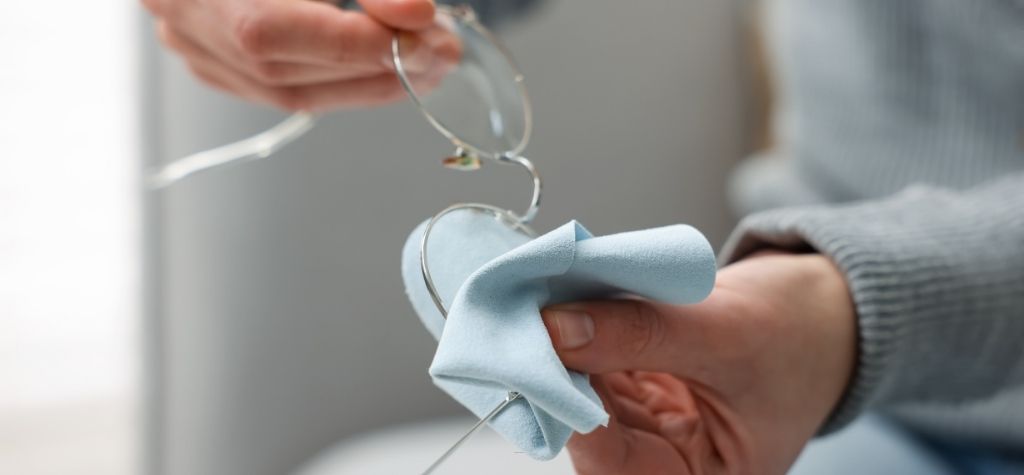
Dirty lenses aren’t just annoying; they can strain your eyes and shorten the life of your glasses. The American Optometric Association (AOA) recommends cleaning lenses with warm water and a tiny drop of dish soap. An eye‑care guide from Mary Washington Eye Care Center notes that you should remove your glasses, apply a drop of dish soap, create a lather on each lens and rinse. After cleaning, use a dry, clean, soft cotton or microfiber cloth to wipe them dry. A similar guide from Lakeview Vision Source suggests washing lenses under warm water with a dab of dishwashing detergent and then drying them gently with a clean, 100 % cotton cloth.
Avoid What Damages Lenses
Some everyday items seem convenient but actually harm your lenses:
- Don’t use paper towels or tissues. Paper products contain tiny wood fibers that can leave scratches. The Mary Washington guide warns that Kleenex, your sleeve, paper towels and napkins are not recommended.
- Skip household glass cleaners. Cleaners like Windex contain ammonia, bleach or vinegar that can strip away protective coatings. The Lakeview Vision Source article adds that regular glass cleaner and ammonia‑based products can cause more damage than good.
- Don’t wipe lenses when dry. The Lakeview article lists “don’t wipe your glasses when dry” as a rule because dry wiping drags dust across the surface.
- Avoid saliva or shirt‑tails. Using saliva isn’t effective and it’s unhygienic. Clothing can carry dust and oils that scratch lenses.
Why Microfiber Cloths Matter
Microfiber cloths are made of synthetic fibers that lift dirt and oil without scratching plastic. Mary Washington Eye Care Center recommends investing in a soft microfiber cloth and keeping it in your purse or desk drawer for quick cleaning. The cloth should be washed regularly to avoid rubbing grit into your lenses.
Following these cleaning steps keeps lenses clear and prolongs their life. Clean glasses also reduce eye strain and help you see without distractions.
3. Store Glasses Properly and Never Put Them Lens‑Down (or on Your Head)

Use a Protective Case
Leaving your glasses loose on the counter is a recipe for scratches. Optometrists recommend storing glasses in a hard‑shell protective case. The Punzal Vision article explains that a case protects your glasses from dust and airborne debris. The Mary Washington Eye Care Center adds that a hard case, sometimes called a clamshell, shields eyewear from dog slobber, spaghetti sauce, hairspray and beverages when not in use. Hard cases also prevent your glasses from being crushed or bent in a bag.
Keep the Lenses Facing Up
If you don’t have a case at hand, place glasses with the lenses facing upward on a clean surface. Punzal Vision notes that setting glasses with the lenses up helps prevent scratching. Placing them lens‑down invites grit to grind into the surface.
Avoid Odd Storage Spots
It might seem convenient to rest your glasses on the dashboard, mantle or bathroom counter, but those places expose them to heat, humidity and grime. The Mary Washington guide humorously notes that storing eyewear on the driveway, fireplace mantle, stovetop, toilet tank, floor or car dashboard exposes them to accidents like being run over, burned or flung out of the window. When you’re not wearing your glasses, take an extra second to tuck them into their case.
Don’t Use Them as a Headband
Many people use glasses as a makeshift headband when walking inside or outdoors. Eye‑care professionals caution against this habit because it can stretch the temples and misalign the frame. A Trend Optic article explains that placing glasses on top of your head can cause the temples to stretch to fit a wider area, leading to a loose fit and causing them to slide down when you wear them properly. Hair products and oils on your head may also come into contact with the lenses, damaging delicate coatings. Instead of pushing your glasses up like a headband, store them in a case or hang them on a neck strap.
Never Sleep in Your Glasses
It can be tempting to doze off with your glasses on when watching TV in bed. However, All About Vision warns that sleeping in glasses can put pressure on the frames, causing them to loosen or bend. Always remove them before lying down and place them safely in a case.
4. Maintain a Proper Fit to Stop Glasses from Slipping

Why Glasses Slide Down
Constantly pushing glasses back up your nose is a shared experience for many wearers. According to All About Vision,glasses slip because screws can be loose, frames might be too big or crooked, or the nose pads may be worn out. Oily skin, sweat or humidity can also cause frames to slide. When glasses are a poor fit, they distract you and can lead to headaches or eye strain.
How to Prevent Slippage
All About Vision outlines several tips for securing glasses:
- Choose the right size. When selecting frames, ensure they are the right width and your eyes align with the center of each lens.
- Tighten screws and adjust nose pads. Use a small screwdriver to keep hinges tight and ask your optician to adjust or replace nose pads.
- Use grips or a head band. Temple grips, eyeglass bands or wax can help hold frames in place.
- Keep frames clean. Oils from skin and hair can make frames slippery, so regular cleaning helps.
- Never sleep in your glasses. Lying on them can bend the temples and misalign the frame.
- Store them correctly. Keeping glasses in a case when not in use prevents accidental bending.
Adopting these habits reduces the need to constantly push your glasses up and keeps them comfortable throughout the day.
5. Don’t Wipe Lenses with Clothing or Tissues
Why Shirts and Paper Towels Are Bad
It’s easy to breathe on your lenses and wipe them with your shirt. Many of us do it when we’re in a hurry. Yet optometrists warn that fabrics like cotton shirts, denim or paper napkins contain microscopic particles that scratch and damage lenses. The Punzal Vision article states that your clothes contain dust and dirt particles that can scratch lenses, so it’s best not to use them. Similarly, Mary Washington Eye Care Center points out that Kleenex, sleeves, paper towels and napkins leave debris or lint on the lens and may scratch it.
The Microfiber Alternative
Carrying a microfiber cloth is one of the easiest ways to protect your glasses. These cloths are designed to trap dust without scratching. Mary Washington Eye Care Center recommends investing in a soft microfiber cloth and keeping it handy. Wash the cloth regularly with mild soap and water to remove trapped dirt.
Don’t Use Saliva or Household Spray
Some people resort to licking the lens or using saliva to “clean” them. This method is unsanitary and ineffective; Mary Washington Eye Care Center notes that using saliva isn’t recommended because it’s gross and ineffective. Using household cleaners like Windex is also discouraged because the ammonia or vinegar can strip protective coatings.
6. Avoid Sharing or Wearing Someone Else’s Prescription Glasses

Why It’s Tempting—and Why You Shouldn’t
Friends might ask to try your glasses to see how blurry your vision is, or you might slip on a friend’s frames for fun. Although it seems harmless, wearing the wrong prescription can lead to discomfort. A 2024 article by Dr. Caitlin McCauley explains that wearing the wrong prescription won’t permanently damage your eyes, but it can cause blurred vision, eyestrain, dizziness and headaches. The same article notes that using incorrect lenses forces your eyes to work harder to focus, causing temporary discomfort and headaches.
Don’t Encourage “Try On” Games
Children and teenagers often swap glasses for fun, not realizing the consequences. Dr. McCauley’s article explains that these effects are usually short‑lived but can be quite uncomfortable. Parents should teach kids not to share glasses and to respect that everyone’s prescription is personal and tailored to their eyes.
Keep Your Prescription Current
Wearing outdated prescriptions can cause similar problems. The same article warns that poor fit or incorrect prescriptions can lead to headaches and eyestrain. If you notice frequent headaches, blurred vision or dizziness, schedule an eye exam to ensure your prescription is up to date. Regular eye exams also help detect conditions like presbyopia, astigmatism or myopia, which become more common with age. Good vision isn’t just about clear sight—it’s also about comfort and eye health.
Additional Tips for Happy Glasses Wearing
- Check for scratches: Scratches can cause glare and distort your view. If your lenses are scratched, talk to your optician about replacements.
- Keep glasses away from extreme heat: Leaving glasses in a hot car can warp plastic frames or damage lens coatings. Store them in a case when you’re out in the sun.
- Consider a backup pair: According to The Vision Council, more than 39.8 % of American eyeglass users (66.3 million adults) regularly use two or more pairs of eyeglasses. Having an extra pair helps when your main glasses need repairs or cleaning.
- Schedule regular eye exams: Vision can change over time. Regular check‑ups ensure that you have the right prescription and that your glasses fit properly.
Conclusion: Small Habits Make a Big Difference
Wearing glasses is part of daily life for millions of people, yet many of the habits that protect our eyewear happen without conscious thought. These six silent rules—using both hands to remove your glasses, cleaning them correctly, storing them properly, maintaining a good fit, avoiding harmful cleaning shortcuts and not sharing prescriptions—are rooted in basic care and respect for your eyes. By following these simple guidelines, you’ll extend the life of your glasses, reduce headaches and eyestrain, and ensure that your vision stays crisp. Next time you slip on your frames, remember these unspoken rules and wear your glasses with pride.
