

Why that tiny number matters
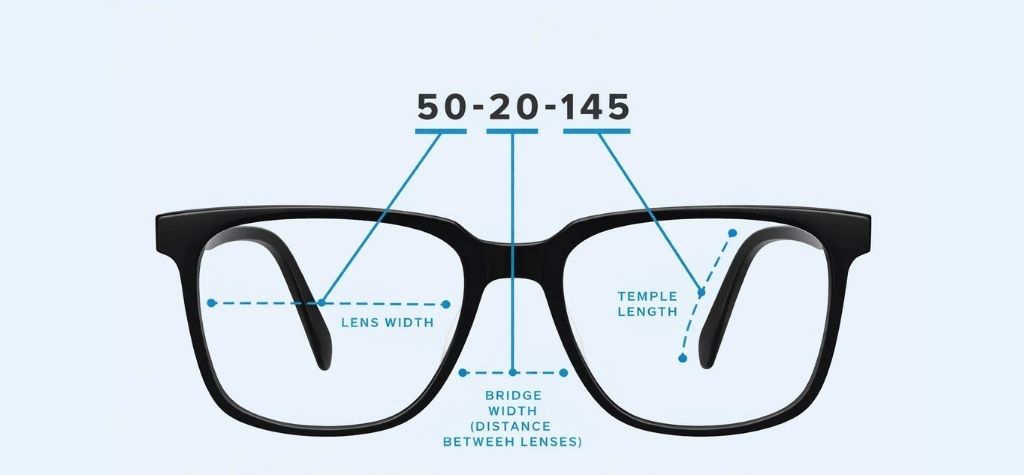
When you pick up a new pair of glasses, there is always a small series of numbers printed on the inside of one arm. Many people know the first and last numbers show the lens width and the temple length, but the middle number—often between 12 and 24 millimeters—is less familiar. That middle measurement is the bridge width, and it can make or break your comfort. A bridge that is too narrow pinches your nose and leaves red marks; one that is too wide allows the frame to slide down or rest unevenly on your cheeks. Incorrect bridge fit can even throw off your lenses’ optical alignment and cause headaches or eye strain. Understanding what the bridge width on your glasses really means helps you choose frames that not only look good but also fit properly and protect your vision.
In this guide, we will decode that mysterious number. We’ll explain how opticians measure bridge width, why it matters for comfort and lens alignment, and how to choose the right style for your nose shape. You’ll also learn how to measure your own glasses and what to look for when shopping online or in-store. By the end you’ll know how to read the numbers on a frame and find a pair that sits securely without leaving painful pressure points.
What is bridge width?
The second number in eyeglass sizing
Eyeglass frames are usually labeled with three numbers separated by dashes or squares. According to the U.S. Department of Veterans Affairs’ guide to selecting frames, these measurements represent the lens width, bridge width and temple length. The bridge width is the distance in millimeters between the two lenses at the point where the frame rests on your nose. The Texas Science Safety Standards—a resource for protective eyewear in schools—also defines bridge size as “the distance between lenses on the nose side of each eye, expressed in millimeters”. This middle number typically ranges between 14 mm and 24 mm for standard eyeglasses.
Because the bridge width indicates how wide the nose area of the frame is, it is crucial for a comfortable fit. A smaller number means the bridge opening is narrower; a larger number indicates a wider opening. When shopping online you might see frames described as low-bridge fit or Asian fit; these often have bridge widths starting around 8 mm to accommodate lower or wider noses.
How bridge width differs from other measurements
It’s easy to confuse bridge width with lens size or frame width. The bridge measurement is distinct:
- Lens (eye) size – the horizontal width of each lens at its widest point.
- Bridge width – the space between the lenses where the frame crosses the nose; many opticians call this the “middle number” or simply “b” in the sequence.
- Temple length – the length of the arms that run from the hinges to behind your ears.
- B measurement – the vertical lens height; important mainly for progressive or multifocal lenses.
Knowing these dimensions helps you compare new frames with a pair you already own. For example, a frame labeled 50 – 20 – 145 has lenses that are 50 mm wide, a bridge width of 20 mm, and temples that are 145 mm long. If your current glasses feel comfortable, look for a similar bridge width when shopping for your next pair. The VA guide suggests that the total width of the frame, including the end pieces, should roughly match the width of your head.
Why does bridge width matter?

Comfort and pressure distribution
When your glasses sit properly, they rest evenly across the bridge of your nose. Plastic frames should touch your nose without gaps or single pressure points. A bridge that is too narrow pinches the nose and can cause pain or indentation marks. The American Academy of Ophthalmology notes that ill-fitting glasses may lead to redness and puffiness on the nose; adjusting the frame or changing the nose pads can alleviate these symptoms. Conversely, a bridge that is too wide allows the frame to slide down, forcing you to push your glasses up constantly. Sliding frames may also rest on your cheeks and smudge the lenses.
Optical alignment and vision quality
Bridge width is more than comfort. It also influences lens alignment. Opticians measure pupillary distance (PD) — the distance between your pupils — to ensure that the optical centers of the lenses align with your eyes. The Vision Council notes that opticians take precise measurements such as pupillary distance, bridge width and temple length when selecting frames to provide optimal lens alignment and comfort. If the bridge is too narrow or too wide, the lenses may sit off-center, causing prismatic effects or blurred vision. A narrative review of African facial anthropometry and eyewear design highlights that the height and width of the nasal root directly affect how frames sit on the face; a lower nose bridge may cause frames to slide down, while width variations influence pressure distribution and stability.
Preventing skin irritation and long-term issues
Continuous pressure from ill-fitting nose pads can do more than leave temporary marks. A scientific paper on eye spectacle nose pads notes that chronic pressure may reduce lymphatic flow and potentially predispose the skin to malignant changes. While such cases are rare, they underline the importance of a well-balanced bridge fit. Proper bridge width also helps avoid headaches, nose pain and visual strain; glasses that are too tight can cause headaches or nose pain, while those that are too loose can slip and affect your vision.
Key measurements in eyeglass sizing
The four basic measurements
According to the VA guide, eyeglass frames have four basic measurements: eye size, bridge width, temple length and the B measurement.
- Eye (lens) size – measured horizontally from the inside of one side of the frame to the inside of the other at the widest points. Common lens widths range from 31 mm to 60 mm.
- Bridge width – the distance between the two lenses at their closest points. Typical bridge widths fall between 14 mm and 24 mm, while low-bridge or Asian fit frames may start around 8 mm.
- Temple length – measured from the hinge to the end of the arm including the bend. Standard temple lengths range from 115 mm to 155 mm.
- B measurement – the vertical height of the lens; more important for bifocals and progressive lenses.
Many glasses also list the frame width or total width, which is the sum of both lens widths and the bridge width. Vision Express advises that to find a frame that matches your face width, measure your temple-to-temple distance and choose a frame whose total width (2× lens width + bridge width) is within about 3 mm of that measurement.
Typical bridge width ranges and what they mean
The average bridge width for standard-fit glasses is between 14 and 24 mm. Larger bridge widths (20 mm and above) are suitable for people with wider or higher nose bridges, while smaller widths are for narrower noses. Asian fit or low-bridge designs often start around 8 mm to suit flatter and wider noses. Plastic frames with built-in bridges usually require a more precise match, while metal frames with adjustable nose pads offer some flexibility.
How to measure your bridge width
Use your current glasses as a benchmark
The easiest way to find your bridge width is to look at a pair of glasses you already own. On the inside of one arm you will see three numbers; the middle number is the bridge width. For instance, 51 – 19 – 145 means a 19 mm bridge. If the numbers are worn off, the VA guide recommends measuring the frame with a millimeter ruler. Lay the glasses flat and measure the distance between the closest points of the lenses at the bridge area. Record this value in millimeters.
Measuring with a ruler
If you don’t have a pair to reference or want to double-check the fit:
- Take off your glasses and place them on a flat surface.
- Use a ruler marked in millimeters. Hold the ruler perpendicular to the frame and measure the distance between the two lenses at the narrowest part of the bridge. Measure from the inner edge of one lens to the inner edge of the other.
- Record the measurement. A typical comfortable range is 14 – 24 mm, but your nose shape may require slightly more or less.
Measuring your face for new frames
If you don’t have an old pair to reference, measure your face:
- Stand in front of a mirror and hold a millimeter ruler just under your eyes, like you’re peering over a fence.
- Look straight ahead and measure the distance between the inner edges of your eye sockets (roughly where the glasses bridge will rest). This measurement should approximate the bridge width you need.
- It helps to have someone assist you to ensure accuracy. Many opticians use specialized tools or digital scans for precise measurement. The Vision Council advises that opticians use pupillary distance, bridge width and temple length measurements when selecting frames.
Understanding nose bridge shapes
Variations in nasal anatomy
Nose shapes vary widely. The nasal root (where the nose meets the forehead) can be low or high, narrow or wide. A narrative review on facial anthropometry notes that variations in nasal root height and width directly impact how frames sit on the face; a low nasal bridge may cause frames to slide down, while width variations affect pressure distribution and stability. Research also shows that different populations have distinct nasal bridge dimensions; for example, many individuals of African descent have wider and flatter nasal bridges compared to typical European reference standards. These differences explain why some people find standard frames uncomfortable and why specialized fits like Asian fit or low-bridge fit exist.
Common bridge styles and when they work best
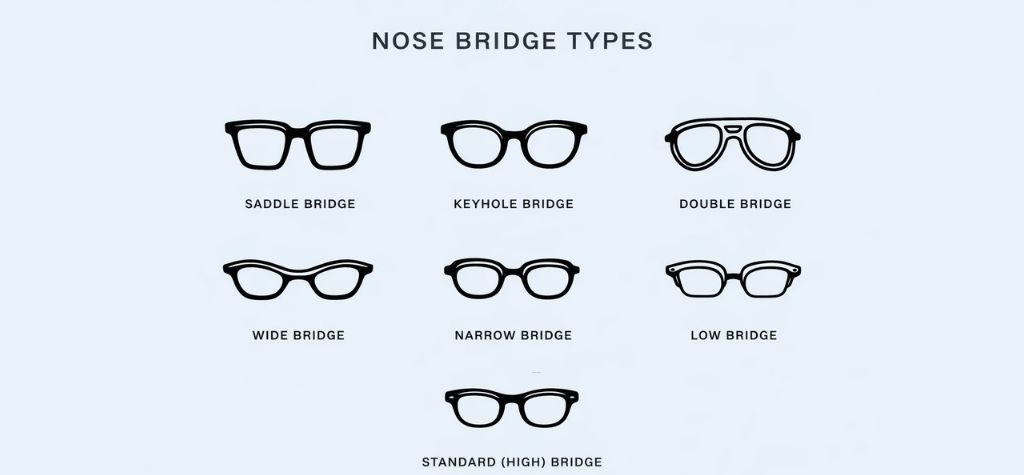
| Bridge style | Description | Best for |
|---|---|---|
| Keyhole bridge | Shaped like an old-fashioned keyhole; rests on the sides of the nose rather than directly on top. | Narrow or low nose bridges; distributes weight evenly and prevents slipping. |
| Saddle bridge | Curved like a saddle; sits across the entire nose for broad support. | Wider or higher nose bridges; plastic or acetate frames where nose pads are not adjustable. |
| Adjustable nose pads | Metal pads attached to pad arms; can be moved in or out for custom fit. | Versatile; suits most nose shapes; common in metal frames and some mixed-material frames. |
| Low-bridge fit (Asian fit) | Modified bridge with lower and wider profile, larger nose pads and slightly tilted lenses. | Flatter or wider noses; prevents slipping and keeps lenses from touching cheeks. |
The style of bridge can significantly influence comfort. People with narrow, high nose bridges often prefer keyhole bridges because they provide support without pinching. Those with wider or flatter noses may need a lower, wider bridge design or adjustable pads to prevent sliding.
Signs your bridge width is wrong
If you experience any of the following, your bridge width may not be appropriate:
- Pinching or red marks on the sides of your nose. Glasses that are too narrow place excessive pressure on the nasal tissues, causing redness and pain. The American Academy of Ophthalmology suggests that adjusting the frame or switching to a different material or nose pad style can alleviate irritation.
- Glasses sit too high or too low. Healthline explains that if nose pads are too tight or close together, the glasses rest too high; if they are too loose or far apart, the glasses slide down.
- Frames slide down your nose. A wide bridge or a frame with inadequate nose pads can lead to constant slipping. Opticians call this “low-bridge fit”; low bridge frames have reduced nose heights to address the issue.
- Headaches or vision issues. Poorly aligned lenses due to an improper bridge width can cause eye strain, headaches or blurred vision. This is especially important for strong prescriptions where lens alignment is critical.
If you notice these signs, visit an optical shop for adjustments. Opticians can bend metal pad arms to tighten or loosen the fit, replace nose pads with larger or softer versions, or recommend a different frame style.
Adjusting or customizing the bridge
Minor adjustments at home
Metal frames with nose pads offer some ability to adjust the bridge width yourself. Healthline advises that when adjusting nose pads, you should gently grip one pad between your thumb and forefinger and bend the pad arm inward to tighten or outward to loosen; never pinch both pads together at the same time. Small changes can lower or raise the frame to align with your eyes and prevent slipping. Avoid making large adjustments or bending plastic frames without heat because they can break.
Professional fitting and modifications
For more complex adjustments, visit an optician. Professional equipment can heat plastic frames to soften them and reshape the bridge area without cracking. Opticians can also add stick-on silicone nose pads to plastic frames or file down sharp edges. The Vision Council notes that opticians measure bridge width and other dimensions to select frames that fit properly and may adjust the bridge or nose pads to improve comfort. If your frames are causing persistent discomfort or skin irritation, consider switching to a different style or material. Some people find relief by choosing lighter materials like titanium or acetate, while others benefit from flexible spring hinges that reduce pressure on the nose and temples.
Choosing the right bridge width when shopping
Try on frames and pay attention to fit
Whenever possible, try on several frames before buying. Pay attention to how the bridge sits on your nose: there should be no gaps or single points of contact. The frame should not slide down when you move your head, and the lenses should be centered in front of your eyes. If you wear makeup, check whether the frame touches your cheeks; this might indicate the bridge is too low. Remember that the numbers are a guide, but comfort is the ultimate test.
Reading product descriptions online
When shopping online, look for the lens width and bridge width measurements. Vision Express explains that the second number in the three-number sequence is the bridge width and calls it an important measurement for a well-fitting pair of glasses. Many retailers allow you to filter by bridge width or choose low-bridge fit options. Compare these numbers with your current glasses to find a similar fit. If you have a low or wide nose bridge, look for frames labeled low bridge fit or Asian fit; these typically start at 8 mm for the bridge width.
Consider materials and styles
- Metal frames often have adjustable nose pads, making it easier to fine-tune bridge width. They are ideal if you need minor adjustments or have an uneven nose.
- Plastic or acetate frames have fixed bridges. Choose a bridge width that matches your measurement closely; there is little room for adjustment without heating the frame.
- Keyhole bridges can be comfortable for narrow or low nose bridges because they rest on the sides rather than directly on top.
- Saddle bridges distribute weight across a larger area and suit wider or higher noses.
If you have a strong prescription, a proper bridge fit becomes even more important because thick lenses may shift the frame’s center of gravity. Look for frames with nose pads that can support the weight and keep the lenses aligned.
Caring for the bridge of your glasses
Proper care helps maintain the bridge’s shape and prevents irritation:
- Keep the nose area clean. Oil and sweat can collect under the bridge and cause slippage or skin irritation. Wipe the nose pads and frame bridge regularly with a microfiber cloth.
- Replace worn nose pads. Over time the silicone pads can harden or discolor. Replace them when they lose softness or transparency. Most optical shops will do this for free or a small fee.
- Store your glasses properly. Avoid placing them upside down on the nose bridge; instead, lay them folded on the temples or keep them in a case.
- Avoid exposing frames to extreme heat. High temperatures can warp plastic bridges and loosen metal pads.
Why bridge width varies by population and design
Anthropometric differences
Studies show that craniofacial measurements vary widely across populations. The narrative review on African facial anthropometry notes that many African populations have wider and flatter nasal bridges, larger interpupillary distances and broader face widths. Standard eyewear frames based on European features may not fit comfortably on these faces, causing frames to slide, pinch or misalign. Similarly, many East Asian populations have flatter nasal bridges and higher cheekbones, which led to the development of Asian fit frames. Recognizing these differences helps manufacturers design inclusive eyewear and helps consumers select frames suited to their unique features.
Innovations in customized eyewear
Researchers are developing custom-fit eyewear using 3D scanning and parametric design. A recent study proposes a method to create custom-fit frames based on individual head-and-face measurements. The authors note that poorly fitting eyewear can cause discomfort, dizziness and blurred vision, and customizing frames to the user’s facial landmarks—including the nose bridge—can improve fit and comfort. While custom frames may still be expensive, digital scanning technologies are becoming more accessible, suggesting that personalized eyewear could become more widely available in the future.
When to consult a professional
If you have difficulty finding frames that fit your bridge comfortably, schedule an appointment with an optician or optometrist. Professionals can:
- Measure your pupillary distance, bridge width and temple length precisely.
- Suggest frame styles and materials based on your facial anatomy.
- Adjust existing frames or replace nose pads.
- Identify underlying skin conditions if you experience persistent irritation.
Remember that high-street optical shops often provide free adjustments even if you purchased your frames elsewhere. Properly fitted glasses not only feel better but also improve your visual experience and may reduce headaches or eye strain.
Conclusion and takeaway
Bridge width is more than just a number printed inside your frames. It represents the distance between lenses where your glasses rest on your nose. Choosing the right bridge width ensures your glasses stay put, avoid pressure marks and keep the lenses centered for clear vision. When your bridge is too narrow you may experience pinching and headaches; when it’s too wide your frames slide and distort your prescription. By measuring your current glasses or using a ruler to gauge the distance between your eye sockets, you can select a bridge width that fits your facial anatomy. Remember to consider nose shape, facial width and whether you need a low-bridge fit or adjustable nose pads. If in doubt, consult an optician who can measure you accurately and adjust or customize your frames. With the right bridge width, your glasses will feel like a natural extension of your face, providing comfort and clear vision throughout your day.
