
Machines in the Exam Room?
Imagine sitting in your primary care office and having a picture of the back of your eye taken. Within seconds, a computer tells you whether you might have an eye disease. You might wonder whether the machine just replaced your optometrist or ophthalmologist.
While AI eye exams sound futuristic, they’re already in use to screen for certain conditions like diabetic retinopathy. But a screening is not the same as a comprehensive eye exam. In this article we explore how AI works in eye care, what it can and cannot do, and why human eye doctors aren’t going anywhere.
Key takeaway: AI can speed up eye disease screening and improve access to care, but it cannot replace a full eye exam or the expertise of a trained eye doctor.
What Is an AI Eye Exam?
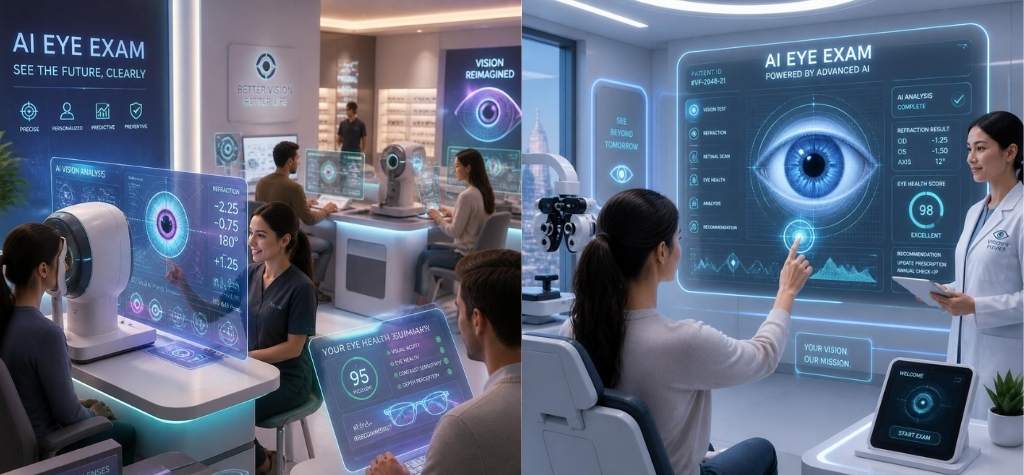
An AI eye exam uses software to analyze eye images and data. These systems are trained on large databases of retinal photographs and other eye measurements. When they receive new images, they compare them against patterns they’ve learned to look for signs of disease.
How It Works
- Image capture: A camera—often a fundus camera for retinal images—takes photos of the back of your eye.
- Software analysis: AI algorithms evaluate the images for signs of specific diseases, such as diabetic retinopathy.
- Immediate result: The system quickly generates a report, often categorizing the result as “no disease,” “more than mild disease,” or “inconclusive.”
These AI tools can be used in primary care clinics or pharmacies, allowing patients to be screened during routine visits. For example, the U.S. Food and Drug Administration (FDA) cleared the IDx‑DR device, which lets non‑specialists screen adults with diabetes. The camera captures retinal images; the AI then returns either “more than mild diabetic retinopathy detected—refer to an eye care professional” or “negative for more than mild diabetic retinopathy; rescreen in 12 months.” The system’s multi‑center trial showed sensitivity and specificity of 87.3 % and 89.5 %, respectively.
Not Just the Retina
AI is also being explored for other parts of the eye. Algorithms can analyze corneal scans, optical coherence tomography (OCT) images and even eye‑movement data. However, most FDA‑cleared systems in routine care focus on diabetic retinopathy screening.
Current Uses of AI in Eye Care
Diabetic Retinopathy Screening
Diabetic retinopathy (DR) is the leading cause of vision loss among working‑age adults. Regular screening is essential, yet many people with diabetes miss their annual dilated eye exam. AI tools aim to close this gap.
- IDx‑DR and LumineticsCore: The first AI devices cleared by the FDA for autonomous DR screening allow primary care providers to identify patients who need referral. They analyze retina photos without requiring an eye specialist.
- Eye‑powered fundus cameras: Cleveland Clinic installed AI‑powered fundus cameras in primary care and endocrinology clinics. These cameras can screen patients and provide results in under 30 seconds. Technicians operate the device; the AI categorizes results as no DR, more than mild DR or insufficient quality. If the result is inconclusive or shows disease, patients are referred for a comprehensive exam.
- Improving access: A National Eye Institute (NEI)–supported study of autonomous AI eye exams in youth with diabetes found that 100 % of patients who used the AI exam completed the screening, compared with lower completion rates in traditional programs. Researchers noted that AI‑driven technology could help close care gaps among racial and ethnic minority youth.
- Mayo Clinic perspective: Mayo Clinic notes that several AI devices capture retinal photos to detect early signs of diabetic retinopathy. If the AI screening detects disease, patients are referred to retinal specialists for further evaluation.
Beyond Diabetic Retinopathy
AI research is expanding into other eye diseases:
- Age‑related macular degeneration (AMD): Studies are training algorithms to spot early AMD changes on retinal images.
- Glaucoma: AI can measure optic nerve head parameters and predict risk, but comprehensive glaucoma evaluation still requires measuring eye pressure, examining the drainage angle and testing visual fields.
- Corneal diseases: AI may help detect keratoconus from corneal topography scans.
Most of these applications are still in research or limited clinical use, and none replace the need for an ophthalmologist’s examination.
AI Eye Exams vs. Comprehensive Eye Exams
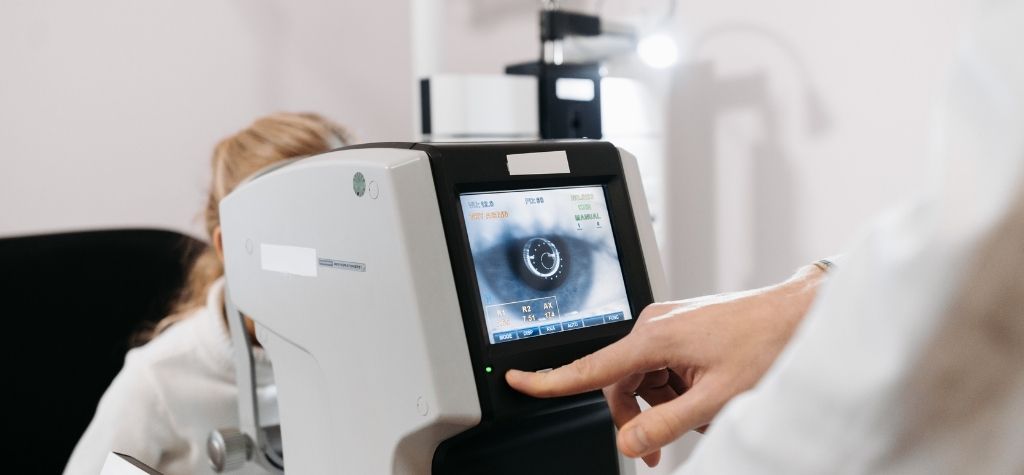
A comprehensive eye exam is far more than reading letters on a chart or taking a picture of the retina. It includes:
- Checking vision and determining your prescription (refraction)
- Evaluating how well your eyes work together
- Testing eye pressure and the drainage angle for glaucoma
- Examining the front and back of the eye with specialized instruments
- Dilating the pupils to view the retina and optic nerve
- Assessing eye movements, depth perception, color vision and peripheral vision
The American Academy of Ophthalmology reminds healthy adults to have a baseline eye exam at age 40. This is when early signs of eye disease may first appear—even in people with seemingly perfect vision. Based on this exam, the eye doctor will recommend how often you need follow‑up visits. Regular exams become even more important as we age because diseases like glaucoma and diabetic retinopathy often have no symptoms until advanced stages.
What AI Can Do
- Detect specific diseases: AI systems can flag signs of conditions such as diabetic retinopathy by analyzing images.
- Increase screening rates: Portable AI devices make screening more convenient, resulting in higher completion rates among underserved populations.
- Provide rapid results: AI fundus cameras can deliver diagnostic results in seconds, allowing same‑day screening during a primary care visit.
What AI Cannot Do
- Assess overall eye health: AI tools focus on a specific disease. They cannot detect cataracts, glaucoma, retinal tears or systemic diseases that show up in the eye.
- Perform refraction or prescribe glasses: Only a trained eye care professional can measure your prescription accurately and ensure lenses fit well.
- Interpret nuanced symptoms: AI algorithms analyze data but lack the clinical judgment to consider your medical history, symptoms and lifestyle. Optometrists and ophthalmologists draw on experience to interpret subtle cues.
- Conduct hands‑on procedures: Tasks like manual refraction, slit‑lamp examination and fitting contact lenses require human expertise.
Important: AI may assist in detecting eye diseases early, but it doesn’t replace a comprehensive eye examination performed by an optometrist or ophthalmologist. Regular, dilated eye exams remain essential for maintaining vision and overall health.
The Benefits of AI in Eye Care
While AI can’t replace your eye doctor, it offers notable benefits when used correctly.
Easier Access to Screening
In many regions, especially rural or underserved communities, there are shortages of eye care providers. AI screening devices placed in primary care offices, pharmacies or community clinics can increase access.
- Cleveland Clinic reports that AI‑powered fundus cameras screen patients during routine visits and provide results within 30 seconds. These rapid tests free specialists to focus on patients who need treatment.
- NEI research shows that AI‑driven eye exams drastically improved screening completion in youth with diabetes and may close care gaps for populations with less access to care.
Early Disease Detection
AI’s ability to analyze subtle patterns may identify disease earlier than traditional screening. Early detection of diabetic retinopathy allows for timely treatment and may reduce the risk of vision loss.
- In the IDx‑DR clinical trial, the device achieved a sensitivity of 87.3 % and specificity of 89.5 %, meaning it correctly identified most patients with more than mild retinopathy.
- AI algorithms continue to improve as they are trained on more diverse datasets, potentially leading to even better accuracy.
Efficient Use of Specialists
By triaging patients, AI ensures that ophthalmologists spend their time on patients who need specialist care.
- Cleveland Clinic notes that AI‑powered screening saves ophthalmology visits for patients with active diabetic retinopathy, reserving specialist appointments for those requiring treatment.
- Mayo Clinic explains that AI devices capture retinal photos and, when disease is detected, refer patients to specialists for evaluation and management. This reduces unnecessary referrals and clinic congestion.
The Limitations and Risks of AI
No technology is perfect. AI eye exams have limitations that are important to understand.
Limited Scope
AI tools are disease‑specific. A negative AI screening does not guarantee that your eyes are healthy. You could still have glaucoma, cataracts or other conditions that the AI isn’t trained to detect. Only a comprehensive exam can rule out these problems.
Inconclusive or False Results
AI may label some images as “exam quality insufficient,” requiring repeat screening or dilation. Factors such as cataracts or corneal scarring can degrade image quality, limiting the AI’s ability to analyze them. AI can also generate false positives, causing unnecessary worry and referrals, or false negatives, leading to missed diagnoses.
Lack of Clinical Judgment
AI analyzes patterns but cannot incorporate the nuances of your health history, medications and symptoms. Optometrists and ophthalmologists consider these factors when diagnosing and developing treatment plans. Vision Science Academy highlights that AI lacks the understanding of each patient’s unique visual health and that the “black box” nature of deep learning can make clinicians skeptical of AI findings.
Absence of Human Interaction
Eye care is not only technical but also relational. Communication, empathy and patient education are integral parts of an eye exam. AI doesn’t answer your questions, reassure your concerns or explain why certain tests are being done. It doesn’t provide the emotional support that many patients value.
Hands‑On Skills
Performing manual refraction, fitting contact lenses and using instruments like the slit‑lamp require physical skill and real-time adjustment. AI cannot physically conduct these procedures.
Why You Still Need Regular Eye Exams
Baseline Exam at 40 and Regular Follow‑Up
The American Academy of Ophthalmology recommends that otherwise healthy adults have a baseline comprehensive eye exam at age 40. This exam can detect early signs of eye disease even when you have no symptoms. Based on the findings, your doctor will advise how often to return.
Monitoring for Silent Diseases
Diseases like glaucoma and diabetic retinopathy can progress without noticeable symptoms until vision loss occurs. Regular eye exams allow for early detection and treatment, which can save your sight. AI screenings may catch diabetic retinopathy but cannot replace monitoring for other conditions.
Evaluating Overall Health
A comprehensive eye exam can reveal systemic health issues. High blood pressure, diabetes, autoimmune diseases and even certain cancers can be detected through changes in the eye’s blood vessels and tissues. Skipping exams because you’ve had an AI screening could mean missing signs of broader health problems.
Personalized Care and Guidance
Your eye doctor tailors recommendations based on your lifestyle, occupation and health. They can answer questions, discuss treatment options and provide advice on eye protection and nutrition—something an AI device cannot do.
AI and Online Eye Tests: Proceed with Caution
During the COVID‑19 pandemic, online vision tests and smartphone apps gained popularity. Some services claim to renew prescriptions or evaluate your eyes remotely. While these tools may be convenient, they have limitations:
- They typically only measure visual acuity (how well you see) and do not check eye health.
- They may not be accurate if the device’s camera or lighting conditions are poor.
- They cannot detect serious eye diseases, measure eye pressure or evaluate your eye’s anatomy.
If you use online tools, treat them as a preliminary screening—never as a replacement for an in‑person exam. Always follow up with an optometrist or ophthalmologist for a comprehensive evaluation.
What the Future Holds
AI will undoubtedly play a larger role in eye care. Researchers are exploring algorithms that can detect multiple diseases from a single image and integrate other data, such as genetics and lifestyle. Tele‑optometry services, where an optometrist conducts parts of the exam remotely and uses AI for analysis, may become more common. However, these innovations are likely to augment rather than replace eye doctors.
As Vision Science Academy notes, optometrists and ophthalmologists possess a unique blend of clinical knowledge, hands‑on skills and empathy that AI cannot replicate. The future of eye care will combine AI’s speed and pattern recognition with human expertise and compassion.
FAQs About AI and Eye Exams
- What is an AI eye exam?
An AI eye exam uses software to analyze images of your eye, usually focusing on a specific disease like diabetic retinopathy. It quickly categorizes the result but does not provide a full assessment of your eye health. - Can an AI eye exam replace a comprehensive eye exam?
No. AI exams are limited to screening for specific conditions. They cannot measure your prescription, check eye pressure, examine your eye’s structures, or detect many other diseases. Regular, in‑person exams are still essential. - What conditions can AI detect?
Currently, most FDA‑cleared AI systems screen for diabetic retinopathy. Research is ongoing for age‑related macular degeneration, glaucoma and other conditions, but none replace a full exam. - Are AI eye exams safe?
AI screening devices are approved only after they demonstrate safety and accuracy. The IDx‑DR system showed high sensitivity and specificity in clinical trials. However, AI results should always be interpreted within the context of a comprehensive eye care plan. - How often should I get a regular eye exam?
The American Academy of Ophthalmology recommends a baseline comprehensive eye exam at age 40 and regular follow‑up exams based on your doctor’s advice. People with diabetes, high blood pressure or a family history of eye disease may need exams more frequently. - Are online vision tests accurate?
Online tests may measure visual acuity but cannot evaluate eye health. Use them only as a preliminary check and always follow up with a qualified eye doctor. - Will AI reduce my need to see an eye doctor?
AI can make screening more accessible and efficient, but it doesn’t eliminate the need for regular eye exams. Think of it as a tool that helps your doctor, not a replacement.
Conclusion: AI is transforming eye care by making screening quicker and more accessible, especially for patients who might otherwise miss exams. But it’s important to remember that these tools complement—not replace—regular, comprehensive eye exams. Human eye doctors offer the expertise, judgment and hands‑on care that machines can’t replicate. Embrace AI as a helpful assistant, and continue to prioritize routine visits with your optometrist or ophthalmologist to protect your vision and overall health.
