

Seeing used to be a purely biological function. Glasses, contacts and cataract surgery sharpened our view, but the eye still acted as a passive window. In recent years, researchers and tech companies have been working toward something more radical: augmented vision—devices that overlay information onto our visual field or even bypass the damaged eye entirely. The idea of “digital eyes” may sound like science fiction, yet real-world prototypes already help people read, navigate and monitor health. This article explores how close we are to that vision in 2026 and what it means for our eyes and society.
The Emergence of Augmented Vision
Smart glasses entering the mainstream
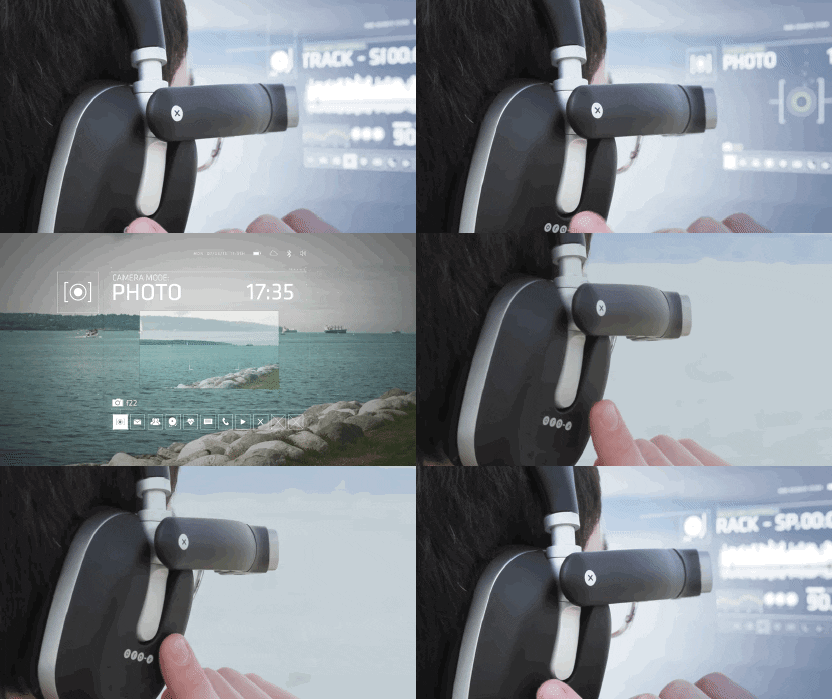
Augmented‑reality (AR) glasses have been around for several years. Early devices, like Google Glass, were bulky and limited. Today’s models include immersive displays, cameras, voice control and even artificial intelligence. According to a press release summarising the Global Smart Augmented Reality Glasses – Global Strategic Business Report, the market for AR glasses was about 678,600 units in 2023 and is projected to reach 13 million units by 2030, with an annual growth rate of 53 percent. The same report attributes the surge to advances in display quality, battery life and growing applications in fields such as healthcare, manufacturing and retail. Put simply, AR glasses are moving from novelty gadgets to practical tools.
Key reasons behind their growth include:
- Rapid tech improvements: Better micro‑displays and low‑power processors make the glasses lighter and easier to wear.
- Expanding industry use: Remote assistance, surgical visualisation, logistics and training benefit from hands‑free visual overlays.
- Consumer interest: Immersive entertainment, navigation and translation features entice gamers and travellers.
Despite rapid adoption, AR glasses remain external devices; they sit on the nose like traditional eyewear. For many vision‑geeks, the holy grail is a contact lens or implant that puts digital information inside the eye.
Smart contact lenses: prototypes and promises
Smart contact lenses aim to integrate micro‑electronics, sensors and tiny displays into a soft lens. They promise to project digital content directly onto the wearer’s natural vision without obstructing peripheral view or social interaction. While the concept feels futuristic, prototypes exist.
Do augmented‑reality contact lenses exist?
The Mojo Lens (developed by the now‑defunct Californian startup Mojo Vision) was the first prototype. It packed a 14 000 pixels‑per‑inch micro‑LED display, eye‑tracking sensors and a micro‑battery into a lens less than half a millimetre wide. The demonstration in 2022 proved the feasibility of on‑eye displays, but the project stalled in 2023 due to funding issues. Other companies have filled the gap:
- Innovega’s eMacula system: pairs disposable smart lenses with high‑tech glasses. The glasses display images that the lens captures and projects onto the retina. Innovega is entering Phase III clinical trials for this system. The dual approach could aid people with moderate or severe visual impairments.
- InWith Corporation’s soft smart lenses: incorporate electronic circuits directly into the hydrogel. The goal is to cast smartphone information directly into a user’s line of vision and even fine‑tune prescription strength.
- XPANCEO’s smart lens series: a Dubai‑based company working on five different lenses. One prototype enhances colour perception for people with colour blindness by adjusting lighting and contrast, while another allows users to perform secure digital tasks (payments, transfers, access control) using gaze commands.
These projects show what is possible, but none are available commercially. Built‑in’s overview of AR contact lenses notes that prototypes exist, but miniaturising electronics and meeting battery‑life requirements remain big hurdles. Developers must also pass rigorous clinical trials and obtain regulatory clearance to ensure the lenses are biocompatible and safe for long‑term wear. As of late 2025, no AR contact lens has received full regulatory approval for consumer use.
Continuous monitoring lenses already on the market
While AR contact lenses remain experimental, smart lenses for health monitoring are approved. The Sensimed Triggerfish® is a soft silicone contact lens with a built‑in telemetric sensor that records tiny fluctuations in corneal curvature over 24 hours. These readings provide insights into intraocular pressure patterns, helping eye doctors identify glaucoma risk. The device received FDA clearance in 2016 (Class II) and offers remote monitoring without invasive procedures.
Digital implants: beyond glasses and lenses
A solar‑powered retinal implant that restores reading vision
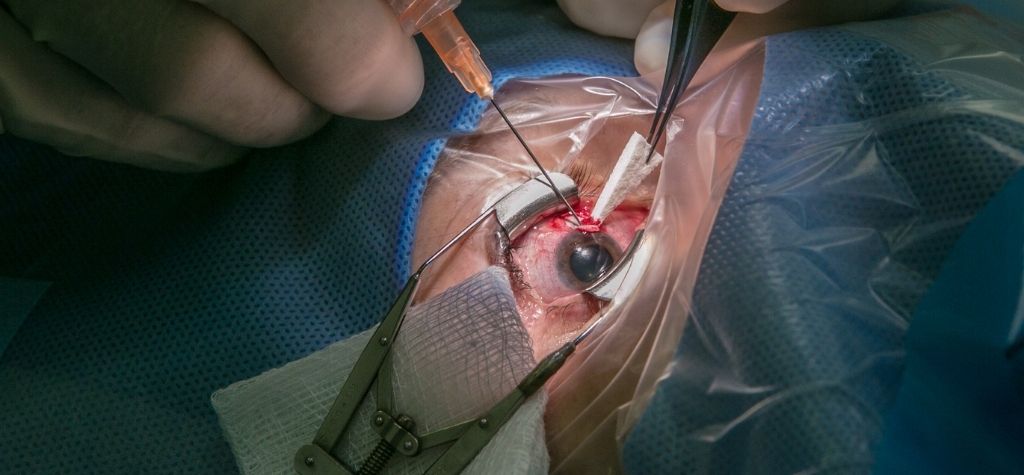
The most dramatic advances in augmented vision come from devices that bypass the damaged eye altogether. In October 2025, a European clinical trial involving 38 patients tested the PRIMA retinal implant paired with augmented‑reality glasses. The implant is a 2 × 2 mm wireless microchip placed under the retina. An external camera in AR glasses captures visual information and beams it as near‑infrared light onto the chip; the chip converts the light into electrical signals that stimulate remaining retinal cells, restoring the flow of visual information to the brain.
Results were astonishing: 84 percent of participants could read letters, numbers and words using prosthetic vision. On average, patients were able to read five lines on a standard eye chart—some could not see the chart at all before surgery. No significant decline in peripheral vision was observed, and the majority of participants used their restored vision at home for reading. In a related trial at the University of Pittsburgh Medical Center (UPMC), 81 percent of participants improved by at least ten letters (about two lines) and 84 percent used the device at home for reading. One participant improved by 59 letters (twelve lines).
This technology represents a new era in artificial vision. Mahi Muqit, associate professor at the UCL Institute of Ophthalmology, called it a “major improvement in quality of life” that lifts mood and restores confidence and independence. The study’s authors emphasised that the implant surgery can be completed in under two hours and is safe for trained surgeons to perform .
How the PRIMA system works
The PRIMA system works like a miniature solar panel. Each implant contains 378 electrodes and is powered by near‑infrared light. When the light is converted into an electrical signal, it stimulates bipolar cells in the retina that survive after photoreceptor cells die off. A small projector built into the AR glasses sends patterns of infrared light to the implant, and the electrical signals travel through the optic nerve to the brain, where they are interpreted as visual images. Patients learn to focus and scan across objects using the glasses’ zoom feature and undergo months of rehabilitation to interpret the new signals.
Advantages over earlier devices include more electrodes (producing higher resolution images) and controls that let users adjust brightness and zoom. The wireless, solar‑powered design also avoids implanted batteries. As of mid‑2025, Science Corporation (developer of the PRIMA system) applied for approval to market the device in Europe and the United States.
Other retinal and brain implants on the horizon
The PRIMA system is not the only approach. BrightFocus Foundation’s review of artificial vision technologies highlights several others:
- Brain‑computer implants like the Orion Visual Cortical Prosthesis bypass the eye entirely. A tiny camera on glasses captures images, which a pocket processor translates into electrical pulses sent directly to a 60‑electrode chip on the brain’s visual cortex. Early feasibility studies funded by the U.S. National Institutes of Health found that participants were better able to navigate sidewalks, find doorways and locate objects. The company Cortigent is refining the system and plans a larger clinical trial around 2027.
- Neuralink’s Blindsight project: uses 36 flexible threads with 32 electrodes each. A camera on glasses sends images to a smartphone that translates them into signals wirelessly transmitted to the brain. Neuralink has received preliminary approval for early human studies in the U.S., Canada, the U.K. and the EU, with implants scheduled as soon as 2026.
- Intracortical Visual Prosthesis (ICVP): contains 400 electrodes implanted into the visual cortex and uses a headband to activate them. In 2024 researchers reported two years of successful use in a patient who lost vision due to a detached retina. The system allows users to perceive patterns of light; testing on volunteers is supported by the U.S. National Institutes of Health.
These devices are still in early trials, but they illustrate how digital eyes may eventually restore vision for those who are completely blind.
Are we really close to “digital eyes” by 2026?
Progress and potential
The year 2026 will likely see more people benefiting from augmented vision. The PRIMA retinal implant and AR glasses may receive regulatory approval, giving hundreds of thousands of patients with advanced age‑related macular degeneration a chance to read again. Smart glasses will become more commonplace, with millions of units sold. Smart contact lenses will continue to move through trials; Innovega’s eMacula system is in Phase III, while XPANCEO and InWith race to produce functional prototypes. If they succeed, contact lenses could augment our field of view with maps, translations or health metrics.
Hurdles to overcome
Despite promising developments, several challenges remain:
- Miniaturisation and power: Packing displays, sensors, communications and batteries into a soft lens or implant without causing discomfort or heat remains hard. Researchers are exploring solar‑powered designs, electrochromic materials and energy‑efficient microchips.
- Biocompatibility and safety: Devices in the eye must not cause inflammation, infection or long‑term tissue damage. Regulatory agencies like the U.S. Food and Drug Administration require rigorous preclinical and clinical studies before approval.
- Training and rehabilitation: Artificial vision does not immediately look like normal sight. Patients with implants must learn to interpret patterns of light and integrate them with any residual vision.
- Cost and accessibility: Early devices are expensive. Widespread adoption will depend on insurance coverage, manufacturing scale and training of surgeons.
- Ethics and privacy: Augmented vision raises questions about digital overlays. Will constant access to information overload our brains? Could AR lenses or implants be hacked? Clear regulations on data collection and use will be necessary.
The role of smart glasses in the near term
Given the hurdles facing contact lenses and implants, AR glasses will probably dominate augmented vision through 2026. They are easier to produce and update, and they avoid invasive surgery. Additionally, they can be used by people with normal vision to overlay instructions, real‑time translations and entertainment. For those with low vision, AR glasses with built‑in cameras already offer magnification, contrast enhancement and text‑to‑speech functions—features that improve independence and reduce social isolation. As battery life and display quality improve, these glasses will become lighter and more stylish, narrowing the gap between fashion and function.
Emotional and social impact of digital eyes

Seeing clearly for the first time or regaining sight after blindness is profound. Patients in the PRIMA trials described the experience of reading again as “exciting” and said it significantly boosted mood and independence. They practiced reading letters on prescriptions and even crosswords to retrain their brains. Restoring central vision helps people return to hobbies, socialise and reduce depression.
The wider roll‑out of augmented vision could also reshape social interactions. Smart glasses already blur the line between the physical and digital worlds. If contact lenses eventually arrive, individuals might discreetly access information during conversations or navigate without looking at a phone. That convenience will be empowering for many but may raise questions about authenticity and attention.
Conclusion: a balanced outlook for 2026
Augmented vision is no longer confined to science fiction. By 2026, smart glasses will be common, delivering hands‑free access to digital content and providing new tools for work, health and play. Retinal implants like the PRIMA system may become the first digital eyes to receive regulatory approval, restoring reading vision to people who lost central sight due to age‑related macular degeneration. Smart contact lenses are advancing fast, but technical and regulatory hurdles mean they will likely remain in trials for a few more years. Brain‑computer visual prostheses hold promise for those with no functional eyes, yet they are still experimental and years from mainstream use.
For now, the pursuit of digital eyes challenges engineers, physicians and ethicists alike. As we move closer to 2026, the key will be to balance innovation with patient safety and to consider not just how well we can augment vision, but how such capabilities will change our lives.
