

The 2026 Vision Crisis: A Growing Concern
Imagine looking across a classroom and noticing half the children wearing glasses. That scenario may not be far off. Eye experts forecast that by 2050 nearly half of the world’s population will be nearsighted. This upward trend has been unfolding for decades, but everything points to 2026 being an especially sharp turning point. Global studies show that myopia rates in kids and teens jumped from around 24 % in 1990 to nearly 36 % in 2023, and they are expected to exceed 39 % by 2050. At the same time, modern lifestyles have shifted; children spend less time outdoors and more time glued to screens.
This article explores why kids’ vision is projected to decline faster in 2026 than in previous years. We’ll look at the data, examine the causes, and offer practical steps parents, schools and communities can take to protect young eyes.
Growing Myopia Epidemic: Stats and Projections

Myopia (nearsightedness) is more than just an inconvenience; high myopia greatly increases the risk of sight‑threatening conditions such as retinal detachment, myopic maculopathy, glaucoma and cataracts. The global prevalence of myopia jumped from 22.9 % in 2000 to an estimated 34 % in 2020. Researchers estimate that nearly five billion people will be nearsighted by mid‑century. Among children and adolescents specifically, rates rose from about 24.3 % in 1990 to 35.8 % in 2023 and are expected to top 39 % by 2050.
Why is this happening? The increase is far too rapid to be explained by genetics alone. Myopia genes do play a role—children with one or two nearsighted parents face higher risk—but environmental factors are now considered the primary drivers. Urban children, who typically spend more time indoors and on schoolwork or screens, are more likely to develop myopia than their rural peers. The surge in digital learning during the COVID‑19 pandemic accelerated these risks; one Chinese study reported a mean myopic shift of −0.30 diopters in just a few months of confinement. As technology becomes even more integrated into education and entertainment, 2026 will see many of these trends converge.
Why 2026 Stands Out
Several factors suggest that children’s vision will decline more rapidly in 2026 than in past years:
- Increased Screen Integration in Schools: Following the pandemic, many schools adopted hybrid or fully digital curricula. Governments and private companies continue to roll out tablets and laptops to students worldwide. By 2026, this integration is expected to deepen, with artificial intelligence, virtual reality and augmented reality being introduced for classroom learning.
- Younger Age at First Exposure: Surveys show that children now start using screens as early as six months. Many infants are exposed to televisions, tablets or smartphones before they can walk, and this age of first exposure keeps dropping.
- Longer Daily Screen Time: Studies have found that children aged 12–13 in the United States spend around 6 hours per day on screens, while teenagers in South Korea can be deemed smartphone‑addicted. Each additional hour of daily screen time increases the risk of myopia, as shown in a recent meta‑analysis (discussed below).
- Reduced Outdoor Play: Urbanization and safety concerns often limit outdoor play. Even before the pandemic, children spent less time outside; the switch to remote schooling further reduced outdoor exposure. The American Academy of Ophthalmology (AAO) notes that “too much time spent indoors increases a child’s risk for nearsightedness,” while more time outdoors in natural light reduces risk.
- Sedentary Lifestyle & Sleep Disruption: The World Health Organization (WHO) warns that children under five should minimize sedentary screen time and prioritize physical activity and sleep. Yet many children exceed these recommendations, leading to poor sleep and inactivity, which may influence eye growth.
Taken together, these trends mean that 2026 will be a perfect storm for childhood myopia unless significant changes occur.
Digital Devices: A Double‑Edged Sword
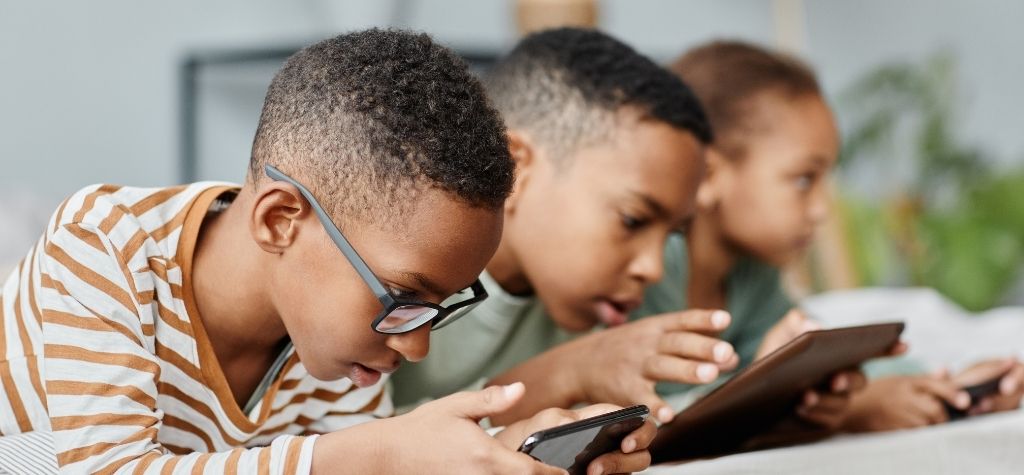
How Screen Time Affects Vision
Screen time is not inherently bad—digital devices can support learning, social connection and entertainment. However, prolonged near‑focus activities cause the eye to adapt in ways that encourage elongation of the eyeball, resulting in myopia. Children’s eyes, still developing and more malleable than adult eyes, are particularly susceptible.
A 2024 meta‑analysis of 17 studies examined global myopia prevalence among children using digital devices. The researchers found that the prevalence of myopia among children using computers and video games was 28.8 %, while television watching was associated with a 35.4 % prevalence and smartphone use with 31.4 %. The study concluded that all digital screens and smart devices have the potential to increase myopia risk and urged families to reduce children’s screen use.
Another 2024 meta‑analysis looked at the association between screen time exposure and myopia across cohort and cross‑sectional studies. It reported that children with high screen exposure had more than double the odds of developing myopia compared with those with low exposure (pooled odds ratio [OR] 2.24 in cross‑sectional studies; OR 2.39 in cohort studies). Continuous exposure analysis revealed that each additional hour of screen time per day increased the risk (OR 1.07). Computer use showed the strongest association (OR 8.19 for high vs. low exposure in cross‑sectional studies).
Screen Time Guidelines vs. Real‑World Behavior
The WHO’s 2019 guidelines recommend no screen time for 1‑year‑old children and no more than 1 hour per day for children aged 2–4 years. The American Academy of Pediatrics echoes these limits and encourages high‑quality, educational content for older children. For school‑aged children and teens, the AAO offers practical tips: encourage blinking and lubricate eyes, maintain proper distance from screens and adjust brightness and contrast.
In practice, many families struggle to follow these guidelines. Children frequently exceed 4–6 hours of daily screen time. Screen use also extends into the evening; research shows that using screens close to bedtime harms sleep quality, which in turn may impact healthy eye growth. The WHO emphasizes the importance of replacing sedentary screen time with interactive play and storytelling. Without conscious limits, 2026 could become the year when excessive screen habits solidify for a generation.
The Role of Outdoor Time & Natural Light
Spending time outside is one of the simplest and most effective ways to protect children’s vision. The AAO notes that more time outdoors reduces a child’s risk of nearsightedness. Exposure to natural daylight stimulates dopamine release in the retina, which slows axial elongation (the eye’s growth in length). Studies suggest that children who spend at least two hours a day outdoors are less likely to develop myopia. Conversely, near work and screen use are associated with higher risks.
Outdoor play also encourages physical activity, supports vitamin D production and improves overall mental health. The WHO guidelines call for at least 180 minutes of physical activity per day for children aged 1–4 years and stress that screen time for preschoolers should be kept below one hour. Unfortunately, urban living often limits access to safe outdoor spaces, and academic pressures reduce free playtime. In 2026, policymakers and communities will need to prioritize outdoor opportunities—such as safe playgrounds, school‑based recess and nature programs—to combat the myopia surge.
Environmental and Lifestyle Factors
Urbanization and Education Pressure
Modern city life contributes to myopia in several ways. Dense urban environments often lack green spaces; children may have limited access to parks or natural light. High academic expectations lead to long hours of homework and tutoring, meaning more near work and less outdoor play. Researchers note that urban children exhibit higher myopia rates than rural children. Moreover, the increasing competition for academic success encourages early reading and screen use, even in preschool.
Sleep, Diet and Sedentary Behaviors
Sleep quality is essential for overall health and eye development. Screen exposure near bedtime delays melatonin release and disrupts sleep. The WHO guidelines highlight adequate sleep as a key component of child development. Poor sleep has been linked not only to myopia but also to obesity and cognitive issues.
Diet and general physical health also play roles. Sedentary screen time often goes hand in hand with snacking on high‑calorie foods. Excessive indoor time leads to reduced vitamin D levels, which some studies suggest may be linked to myopia progression. Encouraging a balanced diet, regular exercise and limiting sugary drinks can support overall eye health.
Long‑Term Health Risks of Myopia
High myopia is more than a need for thicker glasses. Elongated eyes stretch retinal tissues, making them susceptible to retinal detachment, lattice degeneration and vitreoretinal traction. Myopic maculopathy—progressive retinal atrophy—affects around 12 % of children and teens with high myopia within four years. Myopia also increases the risk of glaucoma and cataracts, and the risk of glaucoma rises about 20 % for every diopter of myopia.
Even low to moderate myopia carries lifelong risks. Studies show there is no “safe” level of myopia: every diopter increases the risk of myopic maculopathy by 67 %, while slowing progression by just 1 D can reduce this risk by 40 %. Because myopia typically begins in childhood and stabilizes in early adulthood, early intervention is crucial.
Prevention and Management Strategies

While the statistics may seem daunting, several evidence‑based approaches can slow or prevent myopia progression. Below are the strategies recommended by experts:
Encourage Outdoor Play
- Aim for at least 2 hours outside per day. Natural light helps regulate eye growth and reduces myopia risk.
- Incorporate outdoor learning. Schools can conduct some lessons outdoors or offer “nature breaks” between classes.
- Organize family activities such as hiking, biking or gardening to make outdoor time enjoyable.
Limit and Optimize Screen Time
- Follow age‑appropriate limits. For children under two, avoid screens altogether. Preschoolers should have less than one hour of screen time each day; school‑aged children benefit from keeping recreational screen use under two hours.
- Implement the 20‑20‑20 rule. Encourage kids to look at something 20 feet away for at least 20 seconds every 20 minutes to reduce eye strain.
- Maintain proper viewing distance. Screens should be positioned an arm’s length away and slightly below eye level.
- Prioritize educational content and co‑view media with young children to promote learning and discussion.
Promote Healthy Sleep and Habits
- Establish consistent bedtimes and avoid screens at least one hour before sleep.
- Create tech‑free zones such as bedrooms and dining tables.
- Encourage balanced diets rich in fruits, vegetables and omega‑3 fatty acids for overall eye health.
Use Optical and Pharmaceutical Interventions
When lifestyle measures aren’t enough, eye care professionals can recommend treatments that slow myopia progression:
- Low‑dose atropine eye drops: Daily use at bedtime can slow progression in about 80 % of children. These drops require a prescription and should be used under an ophthalmologist’s supervision.
- Peripheral defocus contact lenses: Special contacts blur peripheral vision, which slows eye growth. Children aged 6–12 may benefit, though proper hygiene is critical to prevent infections.
- Orthokeratology (ortho‑k): Rigid contact lenses worn overnight temporarily reshape the cornea. Ortho‑k can slow progression but carries a risk of infection and requires diligent care.
- Spectacles for myopia control: New designs incorporate special zones to reduce eye growth. These glasses may be a safer alternative for children who cannot manage contact lenses.
Regular Eye Exams
Early detection is vital. Children should have comprehensive eye exams at least every one to two years, starting before age six or whenever parents or teachers notice vision problems. Young children may not complain of blurry vision, so routine screenings are critical.
What Parents, Schools and Policymakers Can Do

The fight against myopia requires collective action. Here’s how different groups can contribute:
- Parents: Establish screen‑time rules, encourage outdoor play, schedule regular eye exams and model healthy habits. Consider forming community playgroups or advocating for safe neighbourhood parks.
- Schools: Integrate outdoor breaks into the day and adjust curricula to reduce unnecessary screen use. Provide eye‑health education to students and parents. Ensure classroom lighting is adequate and allow frequent breaks for near‑work tasks.
- Policymakers: Support initiatives that create green spaces, regulate advertising of digital devices to young children and ensure equitable access to eye care. Encourage research into myopia prevention and treatment.
- Healthcare providers: Educate families about myopia risks, offer screening and refer to specialists when needed. Stay informed about emerging treatments such as atropine drops and myopia‑control lenses.
Conclusion: Taking Action Before It’s Too Late
The numbers are clear: myopia is on a steep upward trajectory, and 2026 could mark a rapid worsening of children’s vision. The combination of increasing screen use, younger age of first exposure, diminished outdoor time and urban lifestyle pressures create a perfect storm. But it’s not inevitable. By embracing evidence‑based strategies—promoting outdoor play, limiting and optimizing screen time, ensuring adequate sleep, and seeking early intervention—parents and communities can protect children’s eyes. Myopia may be a global epidemic, but with collective action, we can slow its advance and help future generations see a clearer world.
