

A Familiar Scene

Have you ever watched a movie where a shy girl removes her glasses and suddenly becomes the belle of the ball? Or a sitcom where the awkward guy’s thick frames signal his nerdy persona? These familiar scenes are the “glasses girl” and “glasses guy” tropes at work. They reflect long‑standing stereotypes that people who wear glasses are intelligent but socially awkward or less attractive.
Despite changing fashion trends, high‑tech designer frames and more inclusive storytelling, these stereotypes persist. In this article we explore why the tropes remain, drawing on research from psychology and media studies. We will see how cultural shortcuts influence how we view glasses wearers and provide tips on challenging these outdated ideas.
The Glasses Stereotype: What Research Says
Perceptions of Attractiveness and Confidence
Psychologists have studied how glasses affect first impressions. A 2022 cross‑sectional study on university students in Jordan examined perceptions of attractiveness, confidence and intelligence by showing pictures of people with and without glasses. The results were striking:
- Lower attractiveness and confidence: The study found that pictures without glasses received higher attractiveness and confidence scores than identical pictures with glasses. For male faces, the difference in attractiveness ratings ranged from 1.4 to 1.56 points on a 10‑point scale, while for female faces the gap was even larger—between 1.97 and 2.33 points.
- Gender differences: The negative effect of glasses was more pronounced for female images. Participants rated women without glasses significantly more attractive and confident.
- Intelligence perceptions: Ratings of intelligence were less affected. For male faces, there was little difference, and for one male picture the difference was not significant. For female images, glasses slightly increased perceived intelligence (0.47–0.70 points).
These results echo earlier studies. A Japanese study published in the Romanian Journal of Applied Psychology asked participants to choose between photos of a woman with and without glasses. It found that the woman without glasses was judged to be prettier and better‑looking, whereas the woman wearing glasses was judged more elegant. The study noted that eyeglasses can increase perceived intelligence and honesty but often reduce perceived physical attractiveness.
The glasses stereotype—that people wearing glasses are smart but less attractive—has been recognized for decades. Psychologists Helmut Leder and colleagues described this pattern as a “nerd stereotype” in a 2013 article for The Jury Expert. They noted that individuals wearing glasses are perceived as more intelligent but less attractive. These perceptions can influence juror judgments: appearance of intelligence may reduce harsh sentencing, while lowered attractiveness can have the opposite effect.
Glasses and Trustworthiness
Research also suggests glasses influence perceptions of honesty. Early psychological studies found that people with glasses were rated higher for trustworthiness, diligence and honesty than people without glasses. In legal contexts, defense attorneys sometimes encourage defendants to wear glasses in court—a practice dubbed the “nerd defense.” The idea is that glasses make an individual appear more intelligent and trustworthy. While this tactic may increase credibility, it also reinforces the stereotype that glasses equal nerdiness.
Media Stereotypes: Lazy Storytelling and Gendered Tropes
Stock Characters and Cultural Norms
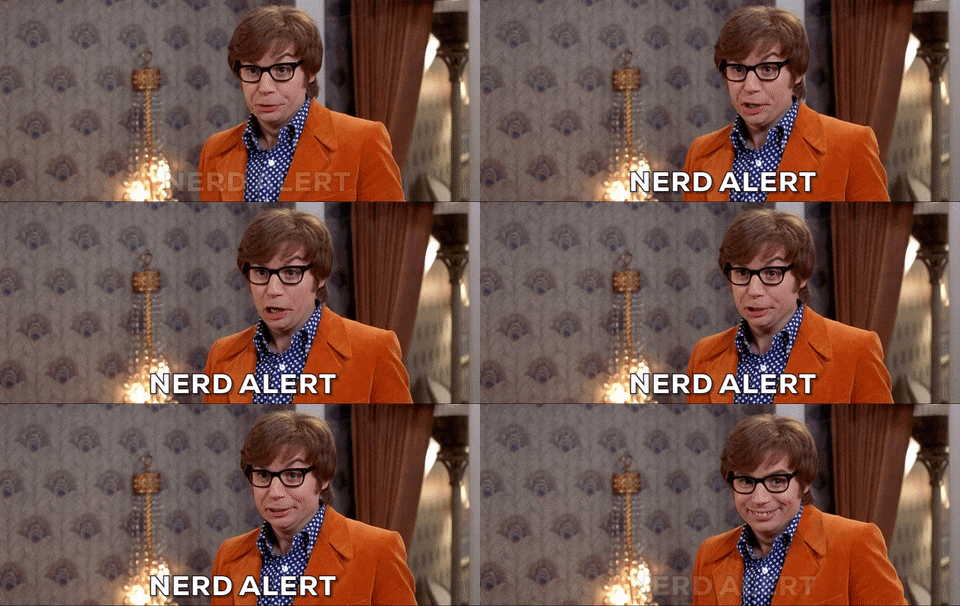
Media producers often rely on tropes—simplified character types—to quickly signal personality traits to audiences. According to an article from Journalism University, the computer expert is often portrayed as a “nerd with glasses,” while athletes are “dumb jocks” and grandmothers only bake cookies. These shortcuts help viewers instantly recognise a character, allowing stories to unfold quickly. But they flatten individuals into one‑dimensional roles and reinforce stereotypes.
The nerd archetype in popular culture usually includes glasses. A University of Illinois News Bureau article on geek culture notes that the negative nerd stereotype persists despite the popularity of geek culture. Professor Lori Kendall points out that the stock character of a nerd is often depicted as a white male with glasses who is socially awkward and deeply knowledgeable. This stereotype discourages women and minorities from entering computer science and reinforces the idea that tech expertise belongs to a specific demographic.
“Glasses Girl” Transformation: Makeover Trope
One of the most enduring tropes is the “makeover” scene. In movies like She’s All That and The Princess Diaries, a shy girl removes her glasses, undergoes a makeover and suddenly becomes desirable. This narrative suggests that a woman cannot be both intelligent and attractive with glasses on. It reinforces the notion that femininity requires physical beauty, while glasses are a sign of awkwardness or bookishness. The 2022 study’s finding that female faces with glasses were rated significantly less attractive and confident illustrates how this trope mirrors real perceptions.
Male Nerd: Social Awkwardness and Genius
The “glasses guy” trope portrays male characters with thick lenses as socially inept geniuses. Classic examples include characters like the scientist or the computer hacker who can solve any problem but struggles with social interactions. The University of Illinois article notes that this stock character is usually a white male and is contrasted with other groups; it reinforces the perception that only a certain type of person can be a “nerd”. While this portrayal highlights intelligence, it also implies that intellectual curiosity is incompatible with social ease, especially for men.
Why Do These Tropes Persist?
Cognitive Shortcuts and Heuristics
Our brains use stereotypes as mental shortcuts to navigate complex social information. According to Journalism University, stereotyping simplifies the world by applying oversimplified and often inaccurate beliefs about a group to individuals. Media creators take advantage of this mechanism to establish characters quickly. Because audiences instantly recognise a glasses-wearing character as a “nerd,” writers can focus on plot rather than character development. This efficiency, however, comes at the cost of authentic representation.
Under‑Representation and Symbolic Annihilation
Media portrayals matter because they shape our perceptions of who belongs in certain roles. When glasses-wearing women and men appear only as nerds or social misfits, it limits the roles we imagine for glasses wearers. Journalism University notes that under‑representation of certain groups in media, or showing them only in specific roles, leads to symbolic annihilation—the implicit message that these people don’t “count”. When glasses-wearing characters are rarely shown as successful leaders, athletes or love interests, the stereotype persists.
Gender Expectations and Beauty Standards
Gender norms also play a role. The “glasses girl” trope reflects societal expectations that women should prioritise physical attractiveness and conform to narrow beauty standards. Glasses have historically been associated with seriousness and intellectualism—traits valued in men but often deemed at odds with traditional femininity. The Japanese study highlighted that while glasses increased perceptions of elegance and intelligence in women, they decreased perceptions of beauty. This tension between femininity and intellect fuels the makeover trope, where removing glasses symbolizes shedding intelligence in favour of beauty.
Intersection of Race and Technology
Stereotypes intersect with race and technology as well. The University of Illinois article points out that the nerd stereotype is heavily racialized and gendered. In pop culture, the “nerd” is typically a white male with glasses and encyclopedic knowledge. This narrow portrayal can discourage women and minorities from pursuing technology careers because they don’t see themselves represented. It may also contribute to biases in hiring and promotion when decision-makers unconsciously associate technical competence with the stereotypical nerd image.
Stereotypes as Self‑Fulfilling Prophecies
Stereotypes can become self‑fulfilling prophecies. When glasses-wearing people internalise the idea that they should be less attractive or socially awkward, their behaviour may align with the stereotype. Conversely, those who defy the trope—embracing fashionable frames and confident personalities—help break it down. But because stereotypes are persistent, dismantling them requires both individual agency and systemic change in media representation.
Signs of Change: Fashion, Representation and Empowerment

Glasses as Fashion Statements
In recent years, eyewear has become a fashion accessory. Thick, retro frames and colourful designs appear on runways and red carpets. Designers collaborate with celebrities, and social media influencers proudly show off their frames. This shift challenges the idea that glasses are purely functional or unflattering. Glasses now signal creativity and personal style rather than nerdiness alone. New frames emphasise individuality and empower wearers to express themselves.
Changing Media Narratives
While old stereotypes linger, there are examples of media challenging the tropes. Characters who wear glasses are portrayed as multidimensional—competent professionals, superheroes, detectives, love interests—without needing to ditch their frames to prove their worth. Diverse casting also plays a role. When people of different genders, races and body types wear glasses on screen, it expands the range of possibilities for glasses wearers.
How to Challenge the Glasses Tropes
Here are steps you can take to help dismantle the glasses stereotypes:
- Recognise stereotypes. Awareness is the first step. Recognise when a movie or show uses the glasses trope as a shortcut. Ask yourself if the character has depth beyond their appearance.
- Support diverse media. Seek out and support films, shows and books that feature glasses wearers in varied roles. Diversity in casting and storytelling reduces symbolic.
- Embrace glasses as part of your identity. If you wear glasses, choose frames that reflect your personality. Confidence in your appearance challenges the notion that glasses are unattractive or awkward.
- Speak up about representation. Engage in discussions about media portrayals. Encourage writers and creators to craft nuanced characters rather than relying on tropes.
- Educate others. Share research and articles on the glasses stereotype. Explain that glasses can increase perceived intelligence without making someone less attractive. People may reconsider their assumptions when presented with evidence.
- Encourage STEM participation. Support initiatives that encourage women and minorities to pursue science and technology careers. Challenge the idea that tech expertise is the domain of “white male nerds”.
Conclusion: Seeing Beyond the Frames
The “glasses girl” and “glasses guy” tropes continue to appear in movies and television because stereotypes are convenient for storytellers. Psychological studies show that glasses can reduce perceptions of physical attractiveness and confidence but increase perceptions of intelligence. Media rely on these associations to quickly define characters, and audiences’ brains accept them as mental shortcuts. Gender norms, under‑representation and racialized expectations also keep the tropes alive.
Yet, the world is changing. Glasses are now fashionable, and more diverse characters wear them proudly. By challenging the stereotypes—through our media choices, conversations and personal style—we can help rewrite the narratives. Removing glasses should not be a prerequisite for beauty or confidence. Instead, glasses can be a symbol of individuality, creativity and intelligence. When we see beyond the frames, we recognise the full person behind them.
