Why those tiny numbers matter
Have you ever glanced at your eyeglass prescription or the inside of your frames and wondered what the jumble of numbers and abbreviations actually means? You’re not alone. Many people leave the optometrist’s office clutching a piece of paper filled with acronyms like SPH, CYL and PD, or see a series of numbers printed on their frame’s temple arm, and have no idea how to interpret them. While you don’t need to become an eye‑care professional, understanding these measurements can help you order glasses with confidence, gauge changes in your vision and communicate more effectively with your eye doctor. In this guide we’ll break down the common numbers on both your prescription and your frames, explain what each measurement does, and offer tips for keeping your eyes healthy.
Prescription basics: right vs. left and plus vs. minus
When you look at an eyeglass prescription form, the first thing to notice is that there are separate lines for each eye. O.D. stands for oculus dexter (the right eye) and O.S. stands for oculus sinister (the left eye). Medical News Today notes that it’s perfectly normal for your two eyes to need different corrections. A third acronym you might see is O.U., which means oculus uterque—both eyes.
Next, look at the signs in front of the numbers. A plus sign (+) denotes farsightedness (hyperopia) where you see distant objects more clearly than close ones, while a minus sign (–) denotes nearsightedness (myopia) where close objects appear clearer. The larger the number, the stronger the correction needed. For example, a −6.00 prescription means greater nearsightedness than a −1.25 prescription. Positive and negative numbers are measured in diopters, a unit that describes the optical power of a lens.
Common abbreviations on prescriptions
Your prescription form often looks like a table with several columns. Here’s what the most common abbreviations mean:
| Abbreviation | Meaning | Purpose |
|---|---|---|
| SPH (Sphere) | The basic lens power needed to correct overall nearsightedness or farsightedness. | A minus sign indicates the eye is nearsighted; a plus sign means farsighted. |
| CYL (Cylinder) | Indicates the amount of astigmatism, which occurs when part of the cornea curves differently. | Only present if you have astigmatism; blank fields mean no astigmatism. |
| Axis | Shows the orientation (1–180°) of the astigmatism correction on the cornea. | Works with CYL to properly align the lens. |
| ADD | An “add power” for people who need help focusing up close, such as bifocal or progressive lenses. It magnifies reading or near tasks. | Usually needed after age 40 due to presbyopia. |
| Prism | A special correction that fuses two images together for people with double vision. | Not common; helps align eyes that don’t work together. |
| PD (Pupillary Distance) | The distance in millimetres between the centres of your pupils. | Ensures the optical centre of each lens aligns with your pupils. Typically measured by your optician or an eye‑care professional. |
How to read the numbers
On a prescription chart, each eye usually has numbers in this order: SPH, CYL, Axis, ADD and sometimes Prism. For example, a right‑eye prescription of OD −2.50 / −1.00 × 180 / +1.50 means:
- Sphere (−2.50) – You’re moderately nearsighted in your right eye.
- Cylinder (−1.00) – You have one diopter of astigmatism.
- Axis (180) – The astigmatism correction is oriented at 180 degrees.
- Add (+1.50) – You need an extra 1.50 diopters of magnification for reading (presbyopia).
- Prism – If omitted, no prism is prescribed.
- PD – Usually listed elsewhere or measured separately; this ensures the lenses are centred correctly.
The left eye might have a different set of numbers because our eyes aren’t identical. Always double‑check that the correct numbers are entered for OD and OS when ordering glasses online. Mistakes can cause eye strain or blurred vision.
What those frame numbers mean
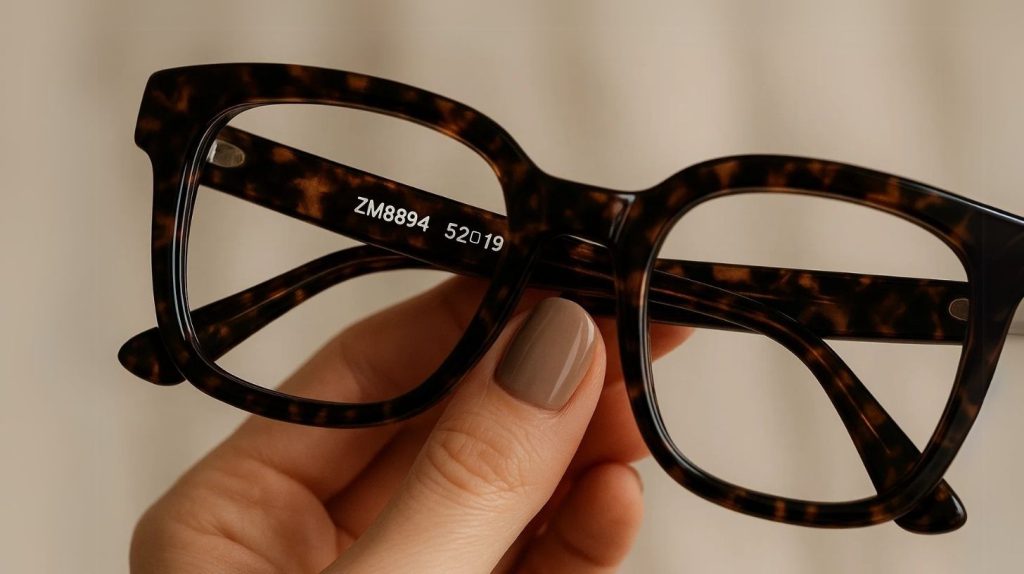
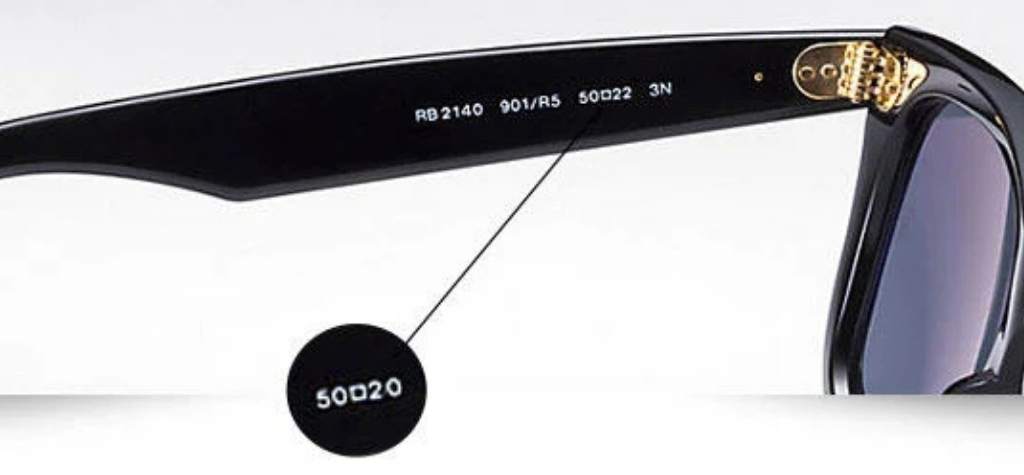
If you remove your glasses and examine the inside of the temple arm, you’ll often see a series like 52‑18‑140. These three numbers describe the physical dimensions of your frames:
- Lens width (52 mm): The horizontal width of each lens at its widest point. Typical lens widths range from 40 mm to 60 mm.
- Bridge width (18 mm): The distance between the two lenses, measured across the bridge of your nose.
- Temple length (140 mm): The length of the arm from the frame front to the tip that rests behind your ear.
Some frames also include a fourth measurement for lens height (vertical depth), which is particularly important when fitting progressive lenses. Understanding these numbers helps you find frames that fit comfortably on your face. If you already have a pair that fits well, look at these measurements and choose new frames with similar dimensions.
Why prescriptions change
It’s natural for your vision to evolve. Medical News Today notes that children’s eyes continue to change rapidly as they grow; therefore they should have yearly eye exams. Adults’ prescriptions tend to change more slowly but are influenced by aging, health conditions and lifestyle. Common reasons for changes include:
- Presbyopia: As we age, the eye’s lens becomes less flexible, making near‑vision tasks harder. More than one‑third of Americans develop presbyopia.
- Cataracts: Clouding of the eye’s lens. The National Institutes of Health projects that over half of Americans will develop cataracts by age 75.
- Glaucoma: Increased pressure inside the eye that can damage the optic nerve. Untreated glaucoma can cause vision loss.
- Age‑related macular degeneration (AMD): A leading cause of vision loss in adults over 65.
- Health conditions: Diabetes and high blood pressure can affect the blood vessels in the eye and lead to changes in vision.
Changes don’t always mean disease; sometimes the eye simply elongates slightly or the cornea’s shape shifts, altering refractive errors. However, sudden blurriness, flashes of light or a curtain‑like shadow over your vision are emergency signs—call your eye doctor immediately.
Why regular eye exams matter
A comprehensive dilated eye exam is the best way to detect problems early. The National Eye Institute (NEI) explains that a dilated exam allows your doctor to view the inside of the eye and spot diseases that may not cause symptoms in their early stages. Even if your eyes feel fine, you could have an underlying problem.
The Centers for Disease Control and Prevention (CDC) reports that an estimated 93 million adults in the United States are at high risk for serious vision loss, yet only about half visited an eye doctor in the past year. Early detection and timely treatment can prevent or delay many cases of vision loss. Regular checkups also ensure your prescription is up‑to‑date, reducing headaches and eye strain from outdated lenses.
How often should you get your eyes checked?
- Children: Once a year during the school years to ensure healthy visual development.
- Adults aged 18–60: At least every two years, or as recommended by your optometrist. People with existing eye conditions may require more frequent exams.
- Adults over 60: Annually. Age‑related diseases like cataracts and glaucoma become more common.
- People with diabetes, high blood pressure or a family history of eye disease: Follow your doctor’s recommendations; you may need exams more often.
During a comprehensive exam, an ophthalmologist will dilate your pupils, review your medical history and perform tests for visual acuity, peripheral vision and eye pressure. They will also examine your retina, optic nerve, lens, cornea and eye muscles.
Keeping your eyes healthy
Healthy habits can lower your risk of vision problems. The NEI suggests:
Get a comprehensive dilated eye exam: It’s the most important step for protecting your vision.
- Eat a balanced diet: Dark leafy greens and fish rich in omega‑3 fatty acids support eye health.
- Stay active: Physical activity reduces your risk of diseases like diabetes and high blood pressure that can damage your eyes.
- Don’t smoke: Smoking increases the risk of macular degeneration and cataracts.
- Wear sunglasses: Protect your eyes from ultraviolet (UV) light by choosing sunglasses that block 99–100 percent of UVA and UVB rays.
- Use protective eyewear: When playing sports, working with tools or using chemicals, wear safety glasses or goggles.
- Take screen breaks: Follow the 20‑20‑20 rule—every 20 minutes, look at something about 20 feet away for 20 seconds—to reduce eye strain.
- Know your family history: Certain eye diseases run in families; tell your doctor about any relatives with glaucoma, AMD or other vision problems.
Practical tips for ordering glasses online
Ordering eyewear online can be convenient and cost‑effective. To make sure you get a comfortable, accurate pair:
- Have an up‑to‑date prescription. Don’t use an old prescription—vision can change subtly over time.
- Check the signs and numbers carefully. Make sure each value for your right (OD) and left (OS) eye is entered exactly as written, including plus or minus signs and decimals.
- Measure or obtain your PD. This small number determines where the optical centre of the lens sits relative to your pupils. Many retailers will measure it for you or provide tools to measure at home, but the most reliable measurement comes from an eye‑care professional.
- Review frame measurements. Compare lens width, bridge width and temple length to a pair you already own. Don’t forget to check the “lens height” if you’re ordering progressives.
- Use a reputable retailer. Look for sites with return policies and customer service support. Check that the lenses meet safety standards such as ANSI Z87.1 for impact resistance if you need safety glasses.
Common questions about eyeglass prescription numbers
- What does a “+0.25” prescription mean?
A +0.25 prescription indicates mild farsightedness; you may have slight difficulty focusing on close objects. It’s a small correction and often doesn’t require full‑time wear, but your eye doctor will advise whether you need glasses. - Is a −1.75 or +1.75 prescription considered “bad”?
A 1.75 prescription—whether negative (nearsighted) or positive (farsighted)—indicates moderate vision impairment. “Bad” is relative; what matters is whether your glasses help you see comfortably and safely. Regular checkups ensure your correction meets your needs. - Why are the numbers different for each eye?
It’s common for one eye to have better vision than the other. Each eye is measured separately, so your right and left prescriptions often differ. - Do I need glasses if my numbers are close to zero?
Not necessarily. A prescription like −0.25 or +0.25 is very mild. Your eye doctor may recommend wearing glasses only for specific tasks, such as driving at night or reading fine print. - What is the “axis” and why is it important?
The axis is a value between 1 and 180 degrees that tells the lens maker where to place astigmatism correction. Without the correct axis, your vision may remain blurry even with CYL power. - What’s the difference between eyeglass and contact lens prescriptions?
Contact lenses sit directly on the eye, so their prescriptions include additional measurements such as base curve and diameter. Glasses sit further away, so sphere, cylinder and axis values may differ. Always use the correct prescription for the type of lenses you’re ordering. - Can I change my prescription numbers myself?
No. Never adjust your prescription without consulting an optometrist or ophthalmologist. Incorrect lenses can strain your eyes, cause headaches and lead to accidents. If your vision feels different, schedule an eye exam.
Conclusion: knowledge empowers healthy vision
Understanding what the numbers on your glasses mean demystifies the process of ordering eyewear and encourages proactive eye care. While it’s helpful to know that SPH shows whether you’re nearsighted or farsighted, CYL and axis correct astigmatism and PD ensures the lenses sit correctly in front of your eyes, remember that these numbers are part of a medical prescription. They change over time due to aging and health, so regular comprehensive eye exams are essential. By maintaining healthy habits, wearing correctly fitted glasses and consulting your eye‑care professional, you can keep your vision sharp and enjoy the world in focus.
